
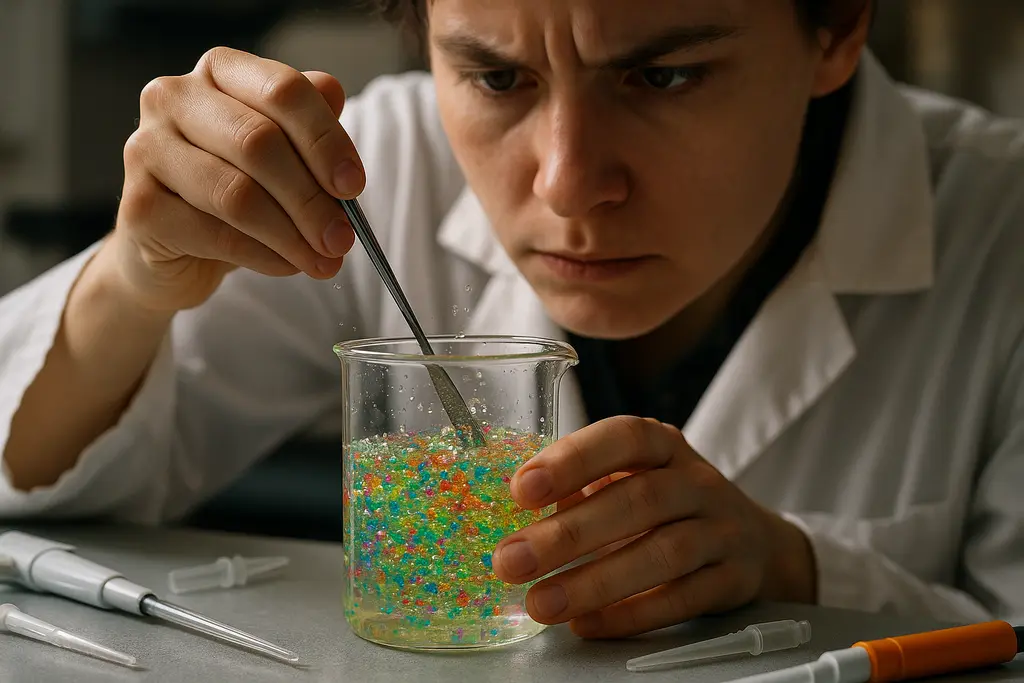
Breathable Hydrogels can make an advanced materials workshop feel less abstract because the central question is easy to grasp: how can a gel stay wet while also letting air move through it? The current evidence comes from MIT engineers, who reported in July 2026 a hydrated and aerated hydrogel with tiny tunnels that allow air passage. For students, biomedical engineers, and workshop participants, the topic offers a clear path from polymer structure to device design, but it also calls for caution. The reported tests are promising, not proof that every skin-contact device should switch materials immediately.
Breathable Hydrogels As A Materials Workshop Topic
A well-run workshop should start with what hydrogels already do well. Traditional hydrogels are often described as soft, water-rich materials, and the MIT report describes common hydrogels as being about 90 percent water and 10 percent polymer. That composition helps explain why they are useful in skin-contact products, but it also helps explain the problem: a wet polymer network can block air movement, which may contribute to sweat buildup and irritation during long wear.
Why Breathable Hydrogels Differ From Standard Gels
The research focus is not simply “more water” or “softer material.” The change is structural. MIT’s reported design uses a network of small air-permeable channels inside the gel. In workshop terms, that is a useful teaching moment: performance does not come only from ingredient lists. It can come from architecture at small scales, where the arrangement of voids, tunnels, and polymer regions changes how oxygen and moisture move.
Connecting The Material To Student Observation
As a facilitator, I would avoid asking participants to reproduce the MIT material. The research uses viscoelastic phase separation with silica aerogel particles, and that is not a casual classroom activity. Instead, students can model the concept with safe analogs: compare a dense sponge, an open-cell foam, and a wet gel model to see why pores and connected channels matter. The lesson is evidence-first: a model can explain the idea, but it is not the same as a tested biomedical material.
What The MIT Work Shows
The key reported finding is that engineers created a hydrogel that is both hydrated and aerated, using conventional hydrogel mixed with a small amount of silica aerogel particles to form air-permeable channels through viscoelastic phase separation. In durability testing, the material reportedly kept its air-permeable properties after 10,000 stretching and compression cycles, with less than a 5 percent drop in oxygen permeability, according to the MIT News report. That is a meaningful mechanical test, especially for materials that may bend, press, and move with skin.
Human Wear Testing And Its Limits
The same report describes volunteers wearing wireless heart monitors attached with the new gel for 10 days. The monitors maintained clear readings, and volunteers showed no signs of skin irritation during that period. That result is relevant for workshops because it connects material properties to device performance. Still, it should be treated as an early human wear test rather than a settled clinical conclusion. The research brief provided here does not give a sample size, a comparison group, or long-term follow-up details, so claims should stay narrow.
Breathable Hydrogels are not presented in the available research as a finished replacement for every adhesive, dressing, or wearable sensor interface. The evidence supports a more modest statement: the MIT team demonstrated an air-permeable hydrogel design and reported encouraging performance in mechanical and short-term wear settings. That distinction matters in science education. Students should learn that a result can be strong within its test conditions and still need more work before broad adoption.
How A Hands-On Workshop Can Treat The Evidence
The workshop described in the research brief is aimed at material scientists, biomedical engineers, healthcare professionals, and industry participants, with a focus on development process, applications, and research directions. Because only the MIT materials report is available as a citable source here, event logistics such as registration, final speaker list, and exact schedule should be verified through MIT event channels before participants make travel plans. That verification step is not a formality; it is part of responsible science communication.
Workshop Activities That Stay Safe And Useful
For a hands-on session, the safest learning goals are conceptual and analytical. Participants can examine how pore connectivity affects flow, compare skin-contact design constraints, and practice reading a university research release for what it does and does not prove. Facilitators can use the MIT case to ask practical questions: What test would show comfort over a longer period? What controls would be needed? What failure modes might appear after repeated sweat exposure, cleaning, storage, or adhesive removal?
- Material Structure: Use safe visual models to compare closed pores, open channels, and water-rich networks.
- Evidence Reading: Separate reported test results from possible applications that still need validation.
- Design Constraints: Discuss comfort, signal quality, durability, manufacturing, sterility, and disposal.
- Application Mapping: Match claims to product categories such as bandages, face masks, contact lenses, monitors, and implants, while marking which uses would require much higher safety review.
Facilitators connecting materials to comfort, energy use, and device systems can suggest related education resources like the Illinois Energy site, which offers context in related fields, while keeping the hydrogel claims tied to the MIT evidence. That balance helps learners see broader systems without drifting into claims the study did not test.
Applications, Barriers, And Safety Questions
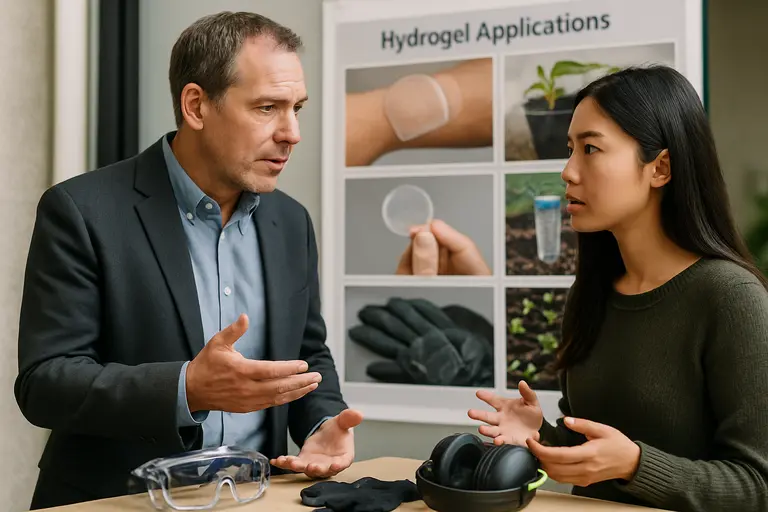
The research brief lists possible applications including longer-lasting bandages, cosmetic face masks, contact lenses, improved health monitors, and implants. Those uses should not be treated as equal in readiness. A cosmetic mask and an implant face very different safety, regulatory, sterilization, and durability requirements. A wearable heart monitor adhesive can be evaluated with skin comfort and signal quality tests, while an implanted material would require far more extensive biocompatibility and long-term safety evidence.
Scale And Cost Questions
The available information does not establish manufacturing cost, batch consistency, supply chain requirements, or commercial scale. Silica aerogel particles and phase separation methods may be practical in a laboratory, but workshops should ask what happens when a material must be produced in repeatable sheets, sterilized, packaged, shipped, and stored. A material that performs well in a lab can still face cost or quality-control barriers before reaching routine use.
Device Integration Questions
Skin-contact devices are systems, not just materials. A gel must hold sensors in place, allow signal transmission, resist drying, avoid irritation, and come off without damaging skin. The reported 10-day monitor test is useful because it ties the gel to a real device scenario. Yet workshop participants should ask whether the same performance holds under heat, exercise, lotions, different skin types, and longer wear periods. Those are not criticisms of the research; they are the next questions a careful design team should ask.
For students, this is where advanced material science becomes concrete. A tunnel network inside a gel may sound small, but it changes what questions designers can ask. Can air permeability reduce moisture buildup? Can sensor readings stay clear? Can the material survive repeated mechanical stress? The MIT findings provide early answers under reported test conditions, while leaving open questions about wider use.
Breathable Hydrogels In Workshop Practice
Breathable Hydrogels offer a strong workshop case because they sit between chemistry, mechanical engineering, biomedical design, and user comfort. The best learning outcome is not that participants leave believing the material is ready for every product. The better outcome is that they can explain why air permeability matters, what tests support the claim, and what evidence is still missing.
A science workshop should give participants permission to be curious and skeptical at the same time. The MIT work gives educators a current example with clear material features: water-rich composition, air-permeable channels, mechanical durability testing, and short-term human wear results. It also gives facilitators a chance to model restraint. Promising materials deserve attention, but in applied science, attention should come with careful testing, transparent limits, and claims that match the data.
