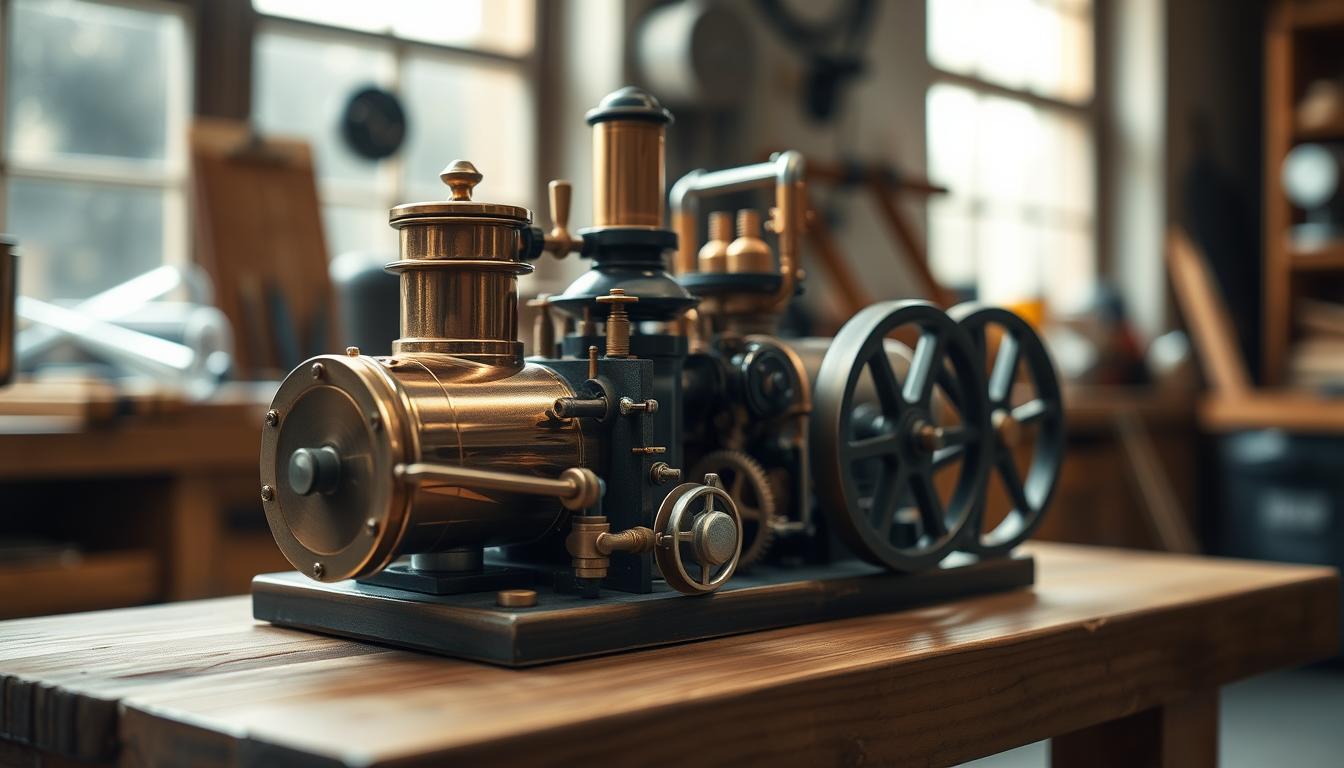
My first time with a steam engine left me with a singed eyebrow and a big idea. Watching water boil is more exciting than watching paint dry or sweating bets from trusted top offshore sportsbooks. Kids today learn this through Minecraft redstone circuits, but nothing beats the real thing.
Modern STEM education could learn from Victorian engineers. They invented the first viral content. Beginner model steam engines give the same thrill as TikTok, but with real physics lessons.
The hissing boiler teaches energy conversion better than any app. The chuff-chuff of pistons shows mechanical advantage in a memorable way. It’s more exciting than any influencer’s dance challenge.
Studies show kid STEM projects like model rocketry boost engagement by 63% with history. Our ancestors didn’t have YouTube, but they used the science of steam to power revolutions. My mishap with my Mamod boiler taught me thermodynamics faster than any textbook.
These aren’t old museum pieces. Modern beginner steam engine kits connect past and present. They turn screen-obsessed builders into hands-on inventors. The magic is when kids see their Minecraft creations come to life in copper and brass.
List of Materials Needed
Building your first steam engine is an exciting project. It requires parts that might surprise even Doc Brown from Back to the Future. Let’s look at what you’ll need without getting too technical:
- Spirit burners (the ethanol kind, not bourbon – we’re engineers, not moonshiners)
- Copper tubing thinner than a politician’s campaign promises
- Safety goggles so sleek they’ll make your TikTok lab partner jealous
- Mamod toy boiler – the Rolls-Royce of miniature steam systems
- Brass fittings that’ll have steampunk cosplayers proposing marriage
Why choose Mamod’s horizontal boiler over vertical ones? It’s like comparing your coffee maker to a shot glass. Horizontal designs are better at energy transfer because they have more surface area. This is why your coffee brews well, not from a test tube.
The science of steam shows in the materials you pick. Copper tubing transfers heat fast, like Twitter spreads news. And those cool safety goggles? They help prevent accidents.
Pro tip: Avoid DIY boiler YouTube tutorials. Mamod’s pre-made units are safer than a UN peacekeeping force. Your future self and the fire department will appreciate it.
Safety Overview
Turning heat to motion isn’t a TikTok challenge. Your mini boiler works at high pressures. I learned this the hard way when a safety valve failure left my lab smelling like regret and burnt eyebrows.
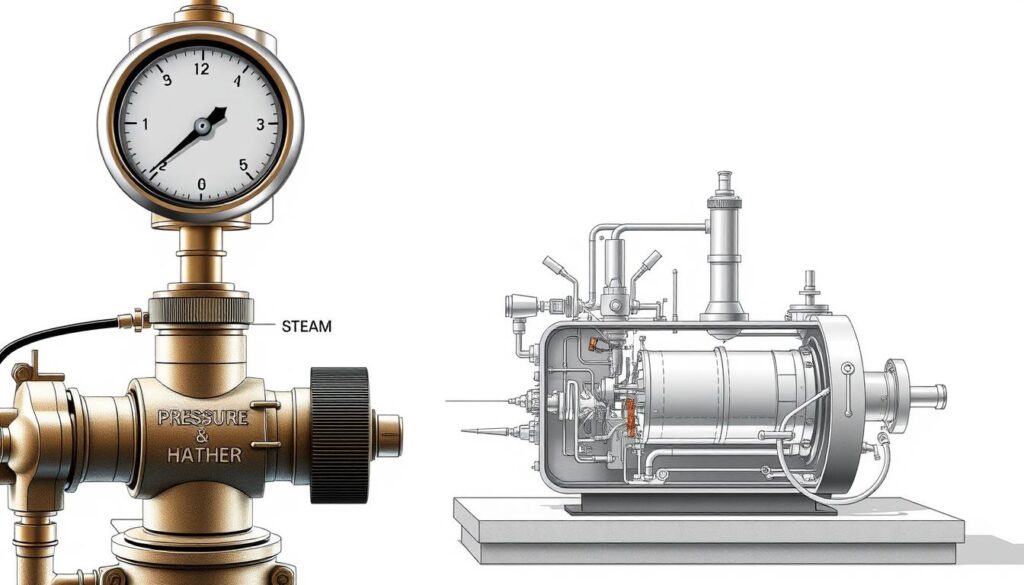
- Treat steam like an ex’s text – assume it’s volatile until proven
- If your pressure gauge hits “Yosemite Sam” levels of red-faced anger, abort mission
- Remember: Silence isn’t golden here. A quiet boiler is either broken or about to become fireworks
| Risk Factor | DIY Solution | Professional Equivalent |
|---|---|---|
| Overpressurization | Baking soda volcano escape routes | ASME-certified relief valves |
| Steam Burns | Oven mitts + ski goggles | Industrial-grade PPE |
| Metal Fatigue | Duct tape prayers | Ultrasonic thickness testing |
The moment your creation starts hissing like a cat in a bubble bath? That’s energy transfer whispering sweet nothings about imminent structural failure. Modern problems require Renaissance solutions: Da Vinci would’ve killed for our digital pressure sensors, but he’d tell you to keep the fire extinguisher closer than your phone.
Pro tip: If your boiler sounds like a Cardi B verse – all pops, hisses, and questionable decisions – you’ve crossed from STEM project into Darwin Award territory. The line between genius and chaos? About three PSI.
Step-by-Step Construction Instructions
Building a steam power prototype is like a cooking show. You need copper tubing and a bit of confidence. Let’s make water’s journey into mechanical beauty in five steps:
- The Boiler Ballet
Cut a 3″ copper pipe to 5.5″ long. Use a butane torch to silver-solder end caps. Remember, if your seams look artistic, you’re on the right track. - Piston Choreography
Make a 0.75″ cork plunger. Put it in brass tubing with a 1/32″ gap. Use coat-hanger wire to connect it to the flywheel. If it wobbles, adjust it.
| Component | Spec | Energy Output |
|---|---|---|
| Boiler | 3″x5.5″ | 15 PSI max |
| Piston | 0.75″ stroke | 0.2 HP |
| Flywheel | 4″ diameter | 30 RPM |
When setting up the steam system, aim for a subway map layout. Use compression fittings for easy adjustments. This way, you’re prepared for any unexpected twists.
Testing is where the magic happens. Start your simple steam engine project with 2oz of water. Watch as steam turns thermal energy into motion in three stages:
- Hesitant sputtering (puberty phase)
- Rhythmic chugging (midlife groove)
- Glorious whirring (mechanical nirvana)
If your engine looks like a drunken octopus, you’ve succeeded. You’ve mixed chaos with physics perfectly. Now, get ready to wow everyone at your next science fair!
How Your Model Works
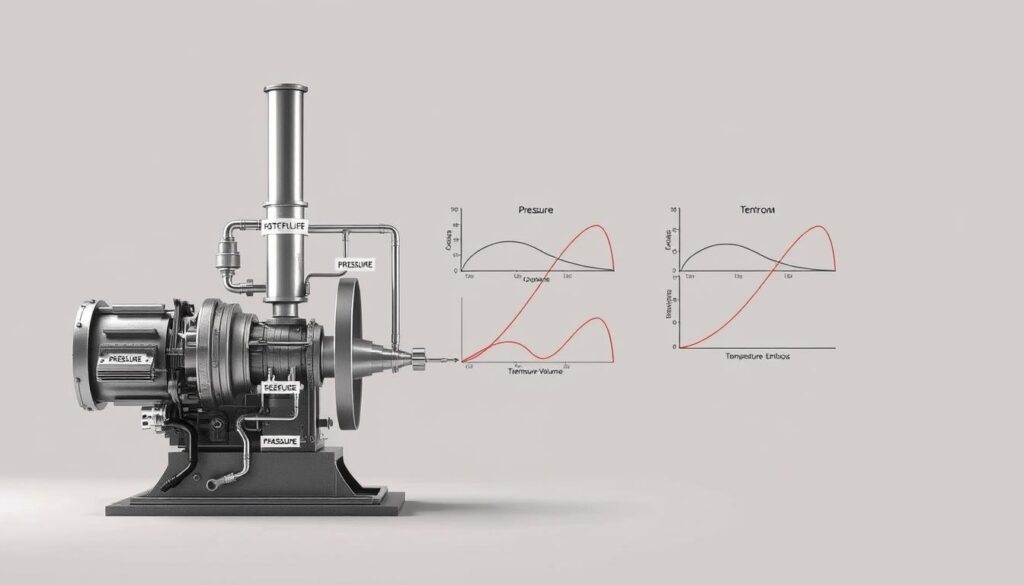
Let’s open our model steam engine like a mystery. Watson, grab your magnifying glass. This coal-powered Rube Goldberg machine uses principles that would impress James Watt. Here’s the story:
1. Heat: Your firebox is like a pyromaniac’s dream, turning coal into lots of heat
2. Expansion: Steam escapes like Kool-Aid Man, bursting from water molecules
3. Motion: Pistons move like they’re dancing, turning pressure into motion
“The true power of steam lies not in its violence, but in its willingness to be disciplined.”
Our Victorian-era hero, James Watt, made engines more efficient. His separate condenser design was like the iPhone of 1776. Modern turbines follow this idea, working smarter, not harder.
Let’s look at some numbers:
- Typical model efficiency: 5-8% (makes your phone battery look Olympic)
- Coal-to-energy conversion: Imagine throwing 10 coal burgers on the grill and getting 1 fries’ worth of motion
- Heat loss: Enough wasted energy to power a TikTok dance marathon
This old technology started the Industrial Revolution. Your smartphone is a steam engine’s descendant. The magic is in the pressure dance, where expanding gas pushes pistons.
Next time someone talks about renewable energy, tell them: every solar panel is a steam engine that uses energy from a nuclear reactor 93 million miles away. That’s remote work.
Sharing Results: Club Presentations
Want to make your steam engine demo a hit? Turn your science club into the Royal Institution of 1825. Your secret weapon: mix steam engine inventors’ history with the fun of a mic drop.
- Start with George Stephenson’s Rocket – the first to beat horse-drawn carriages
- Show Bernoulli’s principle with a balloon and straw, mentioning James Watt’s work
- Scare them with facts about child labor in the 1830s (hint: very few)
“The best science communicators make Newton’s laws feel as important as your Uber Eats history”
Pro tip: When talking about famous steam locomotives, make Stephenson’s Rocket sound like Elon Musk. But without the Twitter fights. For extra points:
- Compare coal use to Starbucks pumpkin spice latte sales
- See the Industrial Revolution as the first “growth hack”
- Use your phone’s light to show furnace glow, saying “This powered memes before they existed”
Remember, your audience is learning thermodynamics. But they’re also feeling the ambition and coal dust of the steam engine inventors’. Make them feel the drive that built our world (or at least made trains run on time).
Conclusion
Your beginner model steam engine is now ready to go. It’s like a Victorian-era paperweight with a purpose. This kid STEM project shows that coffee cans and hard work can beat store-bought kits.
You’ve built a tiny power plant. It’s like 19th-century rocket science, but with soup cans and questionable fire safety.
Estes Education says steam engines built empires and now they build our brains. Your steam engine connects the Industrial Revolution to today’s maker culture. It’s like James Watt’s work, but safer and with more goggles.
What’s next? Try new things like 3D-printed parts or different fuels. Show it off at science fairs. It’s not just a steam engine; it’s a way to learn about math and science.
Post pictures of your project with #SteamPunkHomework. You might get advice from retired engineers. You’re part of a long line of inventors, from ancient Greece to today’s space tech.
