
Here’s a surprising fact: across 146 nations, women make up just 29.2% of the STEM workforce. That’s science, technology, engineering, and mathematics for those who don’t know.
This imbalance is why the UN has a day for women and girls in science. It’s a call to change a system that needs a rewrite.
This article isn’t just a praise. It’s a deep dive into how women are changing the game. We’ll explore from pioneers to today’s rocket scientists.
It’s like a commentary on changing the innovation world. The new role models are the ones making the changes.
Check out this link for more on women in STEM.
Historical Pioneers
Engineering history often overlooks some names. But Kalpana Chawla and Nigar Shaji are fresh in our minds. They were not just female engineers in programs. They were the programs themselves, written in real-time against skepticism.
Kalpana Chawla didn’t wait for permission to explore the stars. In 1997, she boldly went, becoming the first Indian-origin woman in space. Her career showed us how to navigate without a map. Spaceflight engineering is tough, but the social scene was tougher.
Chawla’s story is a stark reminder. Diversity in engineering wasn’t a buzzword back then. It was a daily battle. She had to be twice as precise, with flawless calculations, just to be heard.
Years later, Nigar Shaji aimed for the sun. As the director of India’s Aditya-L1 solar mission, she led a team. She was not just managing a team. She was guiding humanity’s understanding of our closest star. The pressure was immense. A single mistake could lose a billion-dollar mission and national pride.
Shaji faced more than just solar heat. The glare of being a woman in a male field was intense. Yet, her success showed that complex engineering is for everyone. It’s about intellect and willpower, not gender.
What do these pioneers share? They built their blueprints as they went. There was no guide for women in engineering. Their legacy is not just inspiration. It’s proof that diversity in engineering is essential. It unlocks genius we didn’t know we had.
The table below shows the immense pressure and precision needed to be a pioneer.
| Pioneer | Key Achievement | Era & Environment | The Unspoken Challenge | Legacy Impact |
|---|---|---|---|---|
| Kalpana Chawla | First Indian-origin woman in space (NASA STS-87) | Late 1990s; U.S. space program | Navigating a hyper-masculine, “right-stuff” culture as an outsider on multiple fronts. | Became a global symbol, proving space was accessible beyond traditional archetypes. |
| Nigar Shaji | Project Director for India’s first solar mission, Aditya-L1 | 2020s; India’s space research sector | Leading a massive, high-stakes national mission while setting a precedent for women in leadership. | Demonstrated that deep-space mission command is a capability, not a gender. |
| Common Thread | Expanded humanity’s reach into the cosmos. | Worked in fields with extreme technical and social pressure. | Performance had to be unimpeachable to counter implicit bias. | Their careers are now cited as the “proof of concept” for inclusive STEM. |
Looking at their paths is like analyzing a masterpiece. We see the stress, the solutions, and the willpower. They weren’t just building rockets. They were building a case for every female engineer who followed. Before it was a KPI, it was just Kalpana and Nigar, doing the work. And that work changed our world’s path.
Modern Industry Leaders
The old image of a scientist alone in a lab is outdated. Today, women in STEM are not just entering old clubs. They’re creating new ones. They’re the ones who question and improve systems, from data to rockets.
Sunita Sarawagi is a professor at IIT Bombay who’s changing how we see the digital world. Her work in data mining explores our online lives. She’s not just in a field; she’s setting its boundaries, earning awards that were once rare for women. Her leadership is about creating new spaces, not just getting a seat at the table.
The next generation is full of excitement and innovation. The BSS Rocketry Team, all girls, built a rocket to break the sound barrier. They didn’t just enter a competition; they dominated it, becoming the first high school team and the first all-girl team to do so. Their story is about proving a point through science, not asking for permission.
The story of women in STEM has changed. We’re no longer talking about getting a foot in the door. Now, it’s about building the house. These leaders and their teams are showing us what happens when you create your own path.
These leaders have a unique confidence. It’s not about having all the answers. It’s about asking the right questions. They solve problems with a smile, knowing they surprised everyone. The shift is clear: they’re no longer exceptions; they’re the new standard.
So, what makes them special? It’s not just talent or hard work. It’s a mix of analytical skills and a willingness to challenge the status quo. These leaders prove that the most exciting areas in women in STEM are the ones they create for themselves.
Overcoming Challenges
Imagine showing up to build a robot, only to be told your very presence is a bug in the system. This isn’t a dystopian tech thriller. It’s a Tuesday in a middle school STEM club, as reported by girls who get the message early: “The boys don’t let us do anything.” The gender gap in technical confidence starts forming around age six. That’s when girls begin to dissociate the concept of “brilliance” from their own gender.
Let’s be clear. This isn’t a lack of interest. It’s a hostile architecture. The playground dynamic where a girl is told “you’re doing it wrong” while holding a screwdriver hardens, year by year, into professional policy. The curiosity that isn’t nurtured becomes the pipeline that never gets built.
For the female engineers who persist through this gauntlet, the system has a final invoice. The pay gap. It functions as a professional tax levied for gender. One prominent statistic highlights that women in STEM careers are consistently underpaid compared to male peers. This isn’t a reward for merit. It’s the boardroom version of the same old playground logic.

So, overcoming these challenges isn’t about “leaning in” as an individual. It’s about debugging the social firmware. The journey from the robotics club to the engineering firm is a single, flawed continuum. The table below maps this frustrating pipeline.
| Stage | Early Challenge (The Playground) | Professional Manifestation (The Boardroom) | Required Solution |
|---|---|---|---|
| Social Perception | “Girls aren’t as good at building.” Anecdotes of exclusion in STEM clubs. | Unconscious bias in hiring, promotion, and project leadership assignments. | Active mentorship and bias-interruption training from the earliest educational levels. |
| Confidence & Agency | Being told “you’re doing it wrong,” leading to internalized doubt. | Reluctance to advocate for raises, promotions, or credit for ideas. | Creating affirming spaces and networks for aspiring female engineers. |
| Economic Impact | Lack of access to tools, kits, and club leadership roles. | The persistent gender pay gap in STEM fields, as cited in wage data. | Transparent salary bands and structured advocacy programs for fair compensation. |
The work of modern female engineers is dual-focus. It’s mastering the technical while dismantling the archaic. Every woman who codes, designs, or engines her way through this maze isn’t just building a career. She’s rewriting the source code for the one who comes next.
Educational Support Programs
Think of educational support programs as strategic updates to an old system. They don’t just fill gaps; they rewrite the whole script. The best ones work quietly, leaving only the amazing results behind.
The “Girls STEAM Team” is a perfect example. It’s not just a club; it’s a key part of the school day. The environment is set up for success, with no distractions. Students can dive right in.
The curriculum focuses on doing, not just learning. Students turn shoeboxes into creative projects or “burn boxes” for negative thoughts. They use Scratch to make interactive paintings. This hands-on approach builds real confidence.
Eugenia Duodu Addy, a chemist and CEO, shares her journey as a Black woman in science. She talks about the lack of people like her in science. Her story is a powerful answer to the question, “Can someone like me do this?” with a clear “Yes.”
So, what makes these programs work? Let’s look at the key parts.
| Program Component | Design Principle | Real-World Impact |
|---|---|---|
| Intentional Scheduling | Eliminates logistical and social barriers to participation. | Guaranteed, consistent engagement. Treats STEAM as core, not extra. |
| Hands-On Projects (e.g., Scratch, Repurposing) | Sage methodology: knowledge is built through creation and iteration. | Builds tangible confidence and problem-solving muscle memory. |
| Role Model Exposure | Directly counters implicit bias and stereotype threat. | Expands career imagination and provides a viable roadmap. |
| Safe “Sandbox” Environment | Creates a space for risk-free failure and experimentation. | Fosters intrinsic motivation and intellectual curiosity. |
This support is the foundation. It turns interest into identity. It’s strengthened by initiatives like women in engineering grants, which provide the needed resources. The goal is to create a smooth path from curious student to confident professional.
In the end, these programs are updating the system. They are writing new, inclusive code. With the right support, the whole STEAM landscape can change, one student and one project at a time.
Mentorship Networks
Imagine if the key to a diverse engineering team wasn’t just about tech. It’s about people. Programs give the space, but mentorship fills it with life. It turns policies into real actions.
Forget the usual advice sessions. Good mentorship is about showing a clear path. It shows a young person where they could be in a few years. This is the answer to the common question: “I never knew that was an option for me.”
Imagine a Grade 8 student excited after a steam project. She then shows her work to Grade 1 students. In that moment, she’s not just a student. She’s a role model, showing them a possible future.
Then, a guest speaker walks in. Not a CEO, but a local electrician or carpenter. A woman in a skilled trade. She shows her tools and says, “This is my job. You can do it too.” Her presence is real proof.
These actions—peer mentoring and industry visits—create a strong support system. They make diversity in engineering real. Uncertainty turns into a clear career path. This network supports individuals and changes the whole ecosystem.
So, what does this human network look like in action? Let’s explore the formats that make it work.
| Mentorship Format | Core Mechanism | Impact on Diversity in Engineering |
|---|---|---|
| Peer-to-Peer (Student Led) | Older students guide younger ones through projects and presentations. | Creates immediate, relatable role models, demystifying engineering for the next cohort. |
| Industry Guest (Skilled Trades) | Professionals from non-traditional backgrounds share their daily work. | Makes career paths tangible and proves inclusion is already happening in the field. |
| Cross-Grade Presentation | Students teach younger grades, often around events like International Women’s Day. | Reinforces the mentor’s own expertise while visually expanding the pipeline for young observers. |
The table is more than theory. It’s a plan. Each format adds a piece to the network. Peer connection offers closeness. Industry guests add authenticity. Cross-grade presentations build legacy.
This is how you create a professional network that truly matters. It’s not just about LinkedIn. It’s about building a chain of proof for a more inclusive future. The network itself proves the power of diversity in engineering.
Scholarship Opportunities
Talent is renewable, but tuition isn’t. For many women in STEM, the biggest challenge isn’t in the lab. It’s on the financial aid form.
Think of it as high-stakes poker. The deck is full of talent, but you need money to play. Scholarships and grants are the money you need to open doors shut by cost.
On an individual level, it’s about smart financial planning. It’s not just any loan. It’s about education financing for STEM paths. Programs that understand a robotics degree takes five years. They cover study abroad semesters at tech hubs.
Then there’s the institutional playbook. Grants like the Community-Connected Experiential Learning (CCEL) fund are game-changers. A school gets this grant, and it’s not just theory. It’s a new laser cutter in the workshop. It’s a bus full of students visiting an engineering campus. It’s a practicing steam systems expert giving a talk.
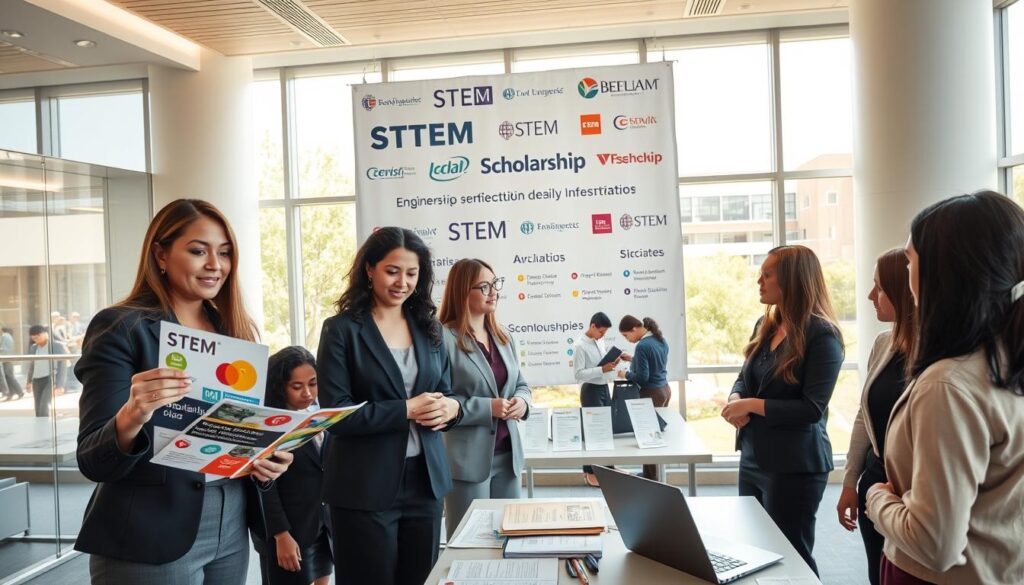
This funding layer builds the ecosystem. You can’t inspire the next builder if she’s never held the tools. The financial architecture must be as innovative as the technology it supports.
The landscape of support is diverse. Knowing your options is the first step to claiming them.
| Type of Support | Primary Target | Key Advantage | Real-World Note |
|---|---|---|---|
| University Scholarships | Incoming & Current Students | Direct tuition reduction; often renewable. | Many are merit-based, but need-based options are growing for women in STEM. |
| Corporate Fellowships | Graduate Students & Researchers | Full funding + stipend + industry mentorship. | Companies like Intel and Google run these; they’re investments in future talent pipelines. |
| Federal & State Grants | Institutions & Research Teams | Large-scale funding for equipment and program development. | Think NSF grants; they fund the infrastructure that makes hands-on learning possible. |
| Experiential Learning Grants (e.g., CCEL) | Schools & Educational Programs | Bridges classroom theory with real-world application. | This is the grant that pays for the field trip, the prototype materials, the guest engineer. |
The bottom line? This isn’t charity. It’s strategic capital allocation. Every dollar invested in dismantling financial barriers doesn’t just open a door for one student. It fuels the entire engine of innovation. The return on investment is a more diverse, more capable, and frankly, more interesting field of engineering for everyone.
Professional Organizations
Professional organizations play a big role in the story of women in steam engineering. They are like publishers, critics, and awards committees all in one. They don’t just host networking events; they create the stage, write the script, and shine the spotlight on the right people. For female engineers, these groups turn solo skills into a powerful team effort.
- Amplification: They make sure achievements are heard. Events like the UN’s International Day of Women and Girls in Science are more than just dates. They’re global calls to action, making institutions take notice.
- Data-Driven Advocacy: Here, feelings meet facts. Conferences like “Breaking Barriers: Girls in STEM” collect evidence. They turn personal stories into undeniable trends, giving the push needed for real change in hiring and funding.
- Infrastructure Creation: They do more than talk; they build. This is the most practical work. They create the structured programs, workshops, and entry points that theory alone can’t offer.
The move from solo battles to team strategies is key. One engineer can point out a problem. But a professional organization can draft the policy to fix it. They act as the de facto collective bargaining unit for influence, moving the conversation from the lab bench to the boardroom.
Look at non-profits like Visions of Science. Led by scientists and engineers, they show how to build infrastructure. They don’t just encourage young girls; they provide the blueprints, tools, and mentors to turn curiosity into a career. This is how pipelines are built, one opportunity at a time.
Joining these organizations isn’t just for your resume. It’s about connecting to a network. It’s where you find your team, sharpen your arguments, and add your strength to a movement that’s changing the industry’s foundations.
Success Strategies
Forget the old playbook; in steam engineering, success is about creating your own map. The terrain changes with every new tech and industry shift. Your best resource is great role models and a mindset for constant improvement.
Start by living the developer’s creed: always be in beta. View your skills as an app that never stops updating. Learning continuously is essential, not a burden. Stopping to update means becoming outdated.
Next, network like a chess master. It’s not about collecting cards; it’s about strategic connections. Your next job, partner, or big idea is just a well-made connection away. Think ahead.
See internships as a mission to explore your future. Approach it with a spy’s curiosity. What tools do they use? What problems do they face? Gather insights that classrooms can’t offer.
The most effective strategy comes from programs like the Girls STEAM Team. It’s about solving problems through inquiry. Begin with real questions, not textbooks. This turns engineering into solving a personal story with tools and logic. Here, role models become your guide and blueprint.
Study how they overcome challenges. Reverse-engineer their paths. Then, apply this approach to your own journey. What problem can you uniquely solve? Your strategy evolves with you. Find your role models, then become one. This is the ultimate move.
Inspiring the Next Generation
The final metric isn’t a stat. It’s a spark. It’s the student who, after a hands-on workshop, decides to become an electrician. That’s when “Empowerment and Advocacy” turns into a real career path.
This spark sets off a chain reaction. True diversity in engineering means different brains solving different problems. It leads to better rockets, fairer algorithms, and more innovative solutions for everyone.
The goal is to build the bravery and know-how to make the world better. This is what philosophies like BSS suggest.
The work isn’t done. The barriers aren’t all broken. But the blueprint is drawn. The tools—programs, mentors, scholarships—are being shared.
The crew, now, is starting to look like the world it’s building for. That’s how you sustain real diversity in engineering.
