Learning thermodynamics can be tough. Who forgot about the baking soda volcano that fizzled out? Or the balloon rocket that went off course?
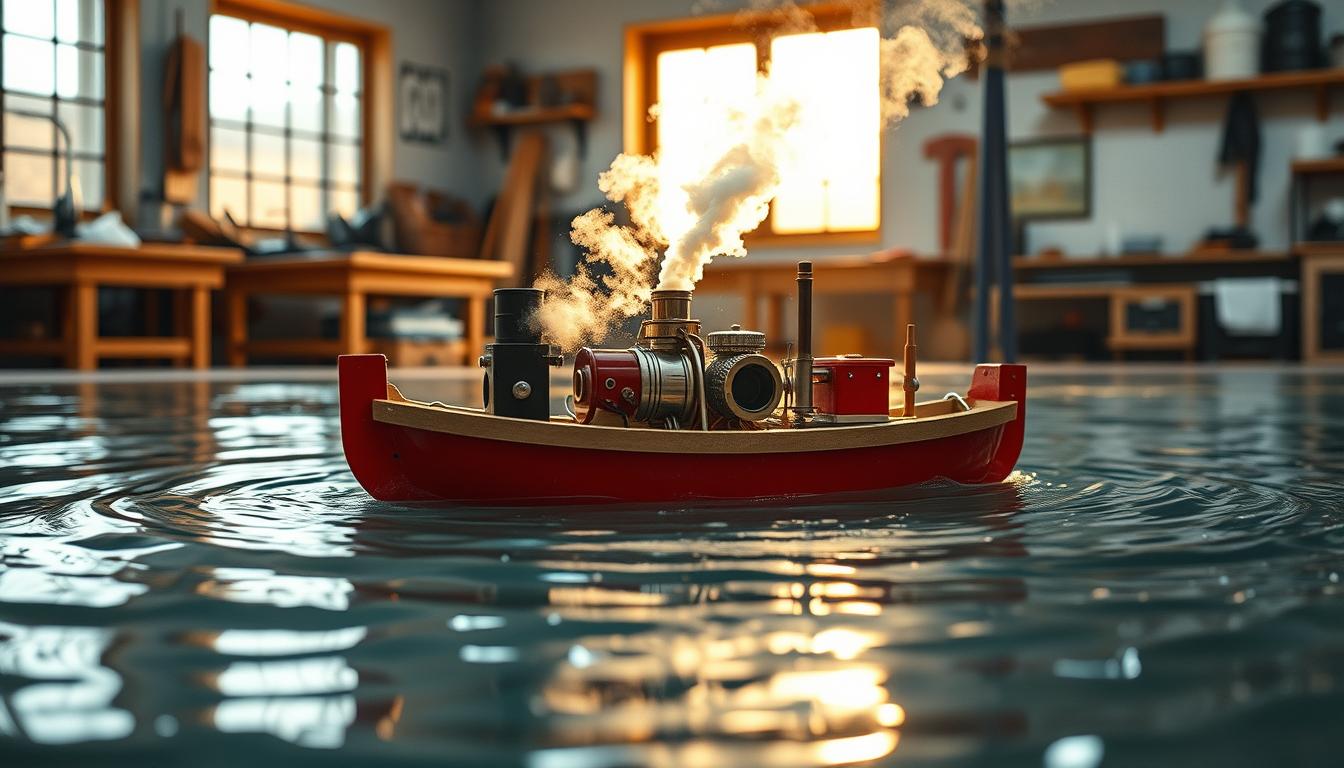
Imagine a project that works like a charm. It’s a simple marvel from the Victorian era. It uses a candle to make your classroom sink come alive.
This project is more than just a craft. It’s about heat, pressure, and reactions. It shows Newton’s laws in a cool way.
It’s like a steam engine, but safe and fun. It’s a great way to learn about science. And it shows that learning can be exciting and real.
Why Pop-Pop Boats? Low risk, high engagement
The Pop-Pop Boat steam project is like a stealth bomber in learning. It looks old and simple. But, it packs a punch in getting students excited.
First, let’s talk about safety. This project is safe, unlike many others. You can use an electric food warmer instead of fire. It doesn’t need dangerous chemicals or sharp tools. It’s all about copper, a hull, and water.
Now, let’s look at how engaging it is. Kids don’t get a ready-made kit. They build their own boat. They get to bend copper and seal the stern tube. The “pop-pop” sound is like a heartbeat, showing how steam works.
Watching a video on science is different from making it happen. The high engagement is not by chance. It’s designed to make learning fun. When the boat tips, they figure out how to fix it. A leak means they need to seal it again. It’s real-world problem-solving.
Reviews from others highlight its value. They say it’s great for kids who love to learn. It’s more than just a project or a gift. It’s a gateway to learning.
In the world of learning, getting students excited is key. Tech can be flashy but often doesn’t engage students. The Pop-Pop Boat steam project works because it lets students be the engineers. The risk is low, but the reward is huge. You’ll hear the boat’s “pop-pop” sound and see the excitement in the classroom.
Tools and Materials Checklist (Class Packs)
Think of the materials list as the casting call for your classroom’s theatrical debut in thermal dynamics. Every great candle-powered boat needs its protagonists, antagonists, and supporting crew. Assembling your kit is half the fun—a scavenger hunt with a purpose that turns procurement into a lesson on resourcefulness.
The core trio is beautifully minimalist. You need a heat source, a heat exchanger, and a hull. The humble tea-light candle is your reliable antagonist, providing the conflict of heat. For a hotter, cleaner burn, consider a beeswax version—the woodworking sage’s choice. Your protagonist is a length of 6mm copper tubing, about 25cm, begging to be sculpted into a coil. The hull is your stage. Will it be the democratically accessible 600mL plastic bottle (the punk rock DIY option) or an artisan-crafted cedar block (its classical music counterpart)?
Scalability is key for class packs. You’re not building one boat; you’re orchestrating a fleet. The table below breaks down the essentials for scalable classroom kits versus the upgrades for an artisan, wood-shop approach. It’s the difference between a garage band and a symphony orchestra.
| Category | Class Pack Essentials (Scalable) | Artisan Build Upgrades |
|---|---|---|
| Hull & Core | 600mL plastic bottle, tea-light candle, 25cm of 6mm copper tubing | Timber block (cedar/pine), copper sheet for hull plates, solder for joints |
| Tools | Pliers, hacksaw, safety goggles, matches/lighter, tub of water | Bench vice, drill press with 3.5mm bit, various saws, varnish |
| Consumables & Safety | BBQ firelighter (for easy candle ignition), water for testing | Varnish for sealing wood, higher-grade candles, fire extinguisher |
Notice the tool divergence? The class pack prioritizes accessibility. Pliers for the dramatic coil-bending, a hacksaw for cutting tubing, and goggles—because safety is the least sexy but most important character in any story. The artisan list invites precision: a bench vice for stable work, a drill press to cleanly de-burr tubes, and varnish for a finished look.
Where do you source this? Hardware stores are your best friend for copper tubing. Plastic bottles are a recycling bin away. For a deeper dive into the philosophy behind this simple engine, consider this project a steam-powered time machine to STEM education. It connects past ingenuity to modern classrooms.
Buy in bulk. A 50-foot coil of copper tubing serves a whole class. A bag of tea-lights is cheap. This checklist isn’t a constraint; it’s a liberation. It provides the framework for creativity to pop-pop to life.
Safety Setup and Heat-Source Options
If the pop-pop boat were a Hollywood blockbuster, the heat source would be the special effects team. It’s essential, powerful, and needs strict safety. The copper coil boiler is the star of this thermal drama.
Adult supervision is a must. Safety goggles are a must for everyone. They protect against any unexpected drama.
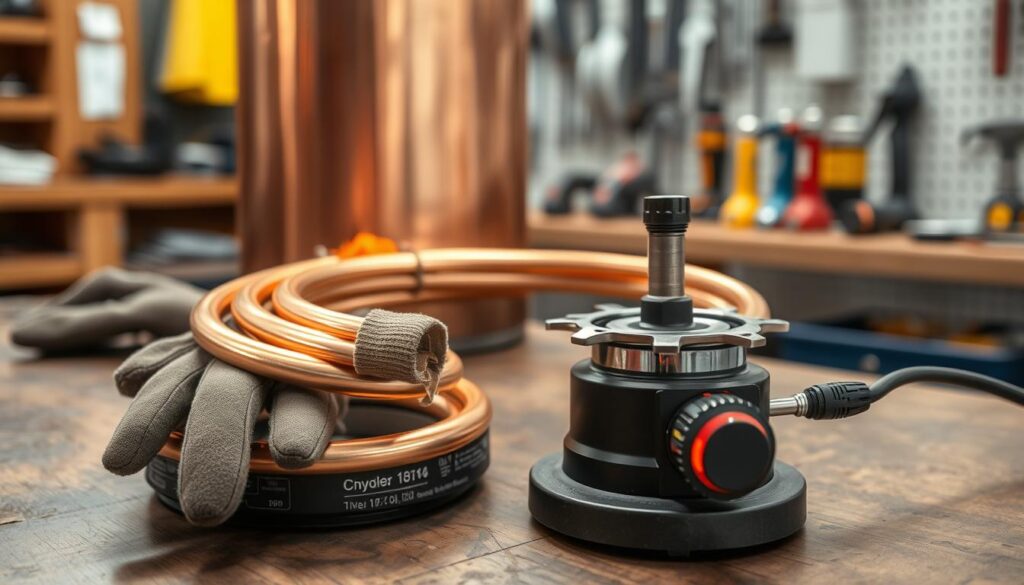
Your boiler is the heart of the action. It turns heat into motion. The heat source you choose makes all the difference.
The tea-light candle is a romantic choice but not the best. It’s weak and can be sooty. The BBQ firelighter is better. It gives a steady, reliable flame.
Building a wooden hull? Be careful. Use a beeswax tealight for a hotter, cleaner burn. It’s perfect for wooden hulls.
| Heat Source | Flame Stability | Heat Output | Best For |
|---|---|---|---|
| Tea-Light Candle | Low (draft-sensitive) | Low | Demonstrations, short tests |
| BBQ Firelighter | High (focused jet) | High | Classroom use, reliable thrust |
| Beeswax Tealight | Medium | Very High | Wooden hulls, maximum power |
Setting up is simple but important. Use a stable, non-flammable basin. Make sure the area is clear and safe.
This isn’t about fear. It’s about following safety rules. Good rules let science and fun shine without surprises.
Step-by-Step Build: Coil, Seal, Hull, Water Test
Grab your tube cutter: we’re moving from whiteboard diagrams to a workshop symphony of cuts, bends, and seals. This is where theory grows calluses.
The coil is your engine’s soul. Take your copper tube and bend it into a graceful, compact spiral around a thick marker. Three loops are ideal. This creates the chamber where water will flash into steam and back, over and over. It’s a simple, elegant piece of physics you hold in your hand.
Next, tackle the rapid-prototype hull design: a plastic bottle cut in half lengthwise. It’s lightweight, buoyant, and gloriously disposable. Your key craftsmanship here? Cutting two neat notches at the stern for the coil tubes to pass through. De-burr the tube ends thoroughly. A rough edge is a leak waiting to happen.
Now, assemble the system. Slide the coil into place, letting the tubes rest in those notches. Use a generous bead of waterproof sealant around the openings. Align your tea-light candle on a small foil tray as a counterweight at the bow. This isn’t just ballast; it’s your engine’s fuel cell and stabilizer.
But maybe you’re not the disposable type. Perhaps your hull design ambition leans toward the timeless. Enter the wooden hull.
This is a saga told in cedar and pencil lines. Start by creating an MDF template of your hull’s profile. Glue and stack timber pieces to form a block. Then, guide it carefully past the whining bandsaw blade, following your template line. You’re not just cutting wood; you’re sculpting displacement.
Shape the hull base with a plane. Aim for flat for stable testing or a subtle vee for better glide. This decision is your first silent question to the water. Drill two angled holes from the deck to the stern for the tubes—precision here defines your thrust vector.
Lastly, seal everything. Ensure every joint is snug, every sealant bead smooth. The tube must sit tight, the candle perfectly aligned. Your creation, whether plastic bottle or hand-planed cedar, is now a system. It’s ready for its breathless immersion, its first proof of concept.
That’s the build. The hull design choices you made—lightweight plastic or crafted timber—will now answer to the only judge that matters: the water test.
First Launch Procedures and Priming Tricks
Launching a pop-pop boat is like making peace between steam and inertia. You’ve got your parts ready: coil, hull, and candle. But without priming, it’s all stuck.
A dry coil is hard to work with. Thrust comes from water and heat talking. You want a little water to start the show, not a flood.
Here’s how to start. Fill the copper tubing with water, then pour most of it out. It should be wet, not swimming. Think of it as wetting a stamp, not filling a pool.
The trick is to blow into one tube until a single bead of water forms at the other end. This bead means everything is connected and ready. Then, light your heat source.
The next thirty seconds are suspenseful. Your boat sits quietly, steaming. Then, a gurgle. A soft pop. Water jets out, showing thrust in action. This water isn’t waste; it’s what moves your boat.
If your boat just steams without moving, the prime failed. No dampness, no pulse. No pulse, no thrust. It’s the first lesson in pop-pop physics.
Good priming makes launch day a success. That first move is a miracle of Newton’s laws. It shows you’ve made motion from heat. Remember, the thrust starts off shaky. It’s the engine finding its beat.
So, take a breath. You’ve done more than launch a boat. You’ve started a cycle of heat and motion. You’ve made hustle from a little copper coil. That’s a powerful trick.
Troubleshooting: No Thrust, Leaks, Uneven Pulse
Fixing a pop-pop boat is like solving a mystery with sounds. It talks to you in different ways. You need to understand these signals to become a true engineer.
Let’s look at the three main problems. Each one points to a specific issue. The solution is often simple.
The Silent Treatment: No Thrust
Your boat won’t move. First, check if water got into the coil. If yes, make sure the flame is right under the boiler. A wrong flame position wastes energy.
The tube’s exit must touch the water’s surface. If it’s too deep, it sinks. If too high, it struggles. Adjust the bend to fix this.
The Plot Hole: A Leak
A leak is a problem, not a flaw. Water inside harms buoyancy and your dreams. Find where the leak is. It might be at the coil seal or a joint.
Use waterproof sealant to fix it. Let it dry completely. A dry boat is a happy boat.
The Arrhythmic Heartbeat: Uneven Pulse
“Pop…pop…..pop” sounds mean something’s off. The boat might list or spin. This is about balance and buoyancy.
Add a small metal nut to the front or back. It’s like adjusting a movie. Also, make sure the boat is level. An uneven coil can cause problems.
| Symptom | Likely Cause | Quick Fix |
|---|---|---|
| Boat doesn’t move | Poor prime, off-center flame, tube not at water surface | Re-prime, center candle, adjust tube bend |
| Water inside hull | Leak at seal or joint | Locate leak, apply waterproof sealant |
| Erratic “pop” & spinning | Weight imbalance, uneven buoyancy | Add metal nut counterweight to light side |
| Weak, sputtering thrust | Tube too deep or too shallow in water | Bend tube so end is right at water surface |
Listen to your boat. It tells you what’s wrong. A bad angle means it needs better buoyancy. A sad circle means it’s not balanced.
Troubleshooting is a conversation. You ask a question and the boat answers. This is real engineering. It turns frustration into smart steps.
Fixing your own boat teaches you more than building one perfectly. It’s a journey of learning and growth.
Science Tie-Ins: Expansion, Thrust, Drag, Stability
The pop-pop engine is a Rube Goldberg machine of physics. Heat, expansion, and reaction work together to create motion. Let’s look at how it works.
Heat makes the water in the coil expand. This isn’t just a gentle swell. It’s a strong push.
This push is our expansion event. It shoots a tiny jet of water out the stern tubes. Sir Isaac Newton agrees. For every action, there’s an equal reaction. This water jet creates the thrust that moves the boat forward.
Then, the magic happens. The steam condenses. A low-pressure zone forms inside the coil. Ambient pressure pushes water back in. The cycle starts again. It’s a unique engine that runs on thermodynamic ballet.
But physics isn’t perfect. For every hero, there’s a villain. Drag is the villain. It’s the water’s resistance against the boat’s shape. A blunt bow means high drag. A sleek prow means less drag. It’s a constant battle between thrust and resistance.
There’s also the big picture: stability. Where did you put the coil? How is the weight spread out? This affects the boat’s center of gravity and its buoyant dance. Too high, and it rolls. Too far forward, and it plows. It’s all about balance.
These four forces don’t just exist in books. They argue, compromise, and work together on your workbench. The table below shows how they interact.
| Concept | How the Boat Shows It | Student Test Variable |
|---|---|---|
| Thermal Expansion | Water heated in the coil expands, creating pressure. | Heat source intensity (tea candle vs. larger candle). |
| Thrust (Newton’s 3rd Law) | Expelled water jet backward propels boat forward. | Tube diameter or angle of exit nozzles. |
| Hydrodynamic Drag | Water resistance against the hull shape limits speed. | Hull shape (rounded vs. V-shaped bow). |
| Stability & Buoyancy | Weight distribution determines if the boat rides level or tips. | Placement of engine coil or adding ballast. |
This is where you turn a craft project into a real STEM activity. You’re not just building; you’re testing ideas. What if the tube had a wider bore? Would a sharper hull cut drag? Does a hotter flame mean faster pulses?
Each boat is a unique experiment. The launch pool becomes a lab. This is the scientific method in action. The pop-pop boat shows physics in action. For those interested in model steam engines, this simple boat is a great starting point.
This hands-on investigation is the heart of a great STEM activity. It makes abstract laws real, testable, and exciting.
Race Day: Course Setup and Fair-Play Rules
Imagine the Daytona 500 for simple boat designs—a day of excitement. The Pop-Pop Boat Steam Project ends in a fun, splashy race. Your classroom or workshop turns into a place of water and speed.
First, the arena. You can choose between a straight-line race or a circular course in a kiddie pool. The straight line tests speed, while the circle demands balance and skill.
The rules are simple and fair. All boats must use the same heat source, like a tea-light candle. Everyone starts at the same time, with no help allowed.
No cheating is allowed. No blowing on the exhaust or touching the hull. The boat must move on its own, showing its true strength.
Strategy is key. Do you make your boat fast or agile? A long, thin hull might be quick. A short, wide one might turn well. Race day proves who’s right.
It’s not just about speed. The best boat is the most reliable and balanced. The Pop-Pop Boat Steam Project teaches us about teamwork, science, and fun.
Assessment: Build Log + Performance Rubric
Grading a Pop-Pop Boat Steam Project is more about the journey than the end result. It’s about the how and the why behind the creation. We’re not just judging a finished product; we’re celebrating the messy, creative process.
Forget about pass/fail. This assessment uses two main tools: the Build Log and the Performance Rubric. The Build Log tells the story, while the Performance Rubric scores the science. Together, they show the iterative problem-solving that went into the project.
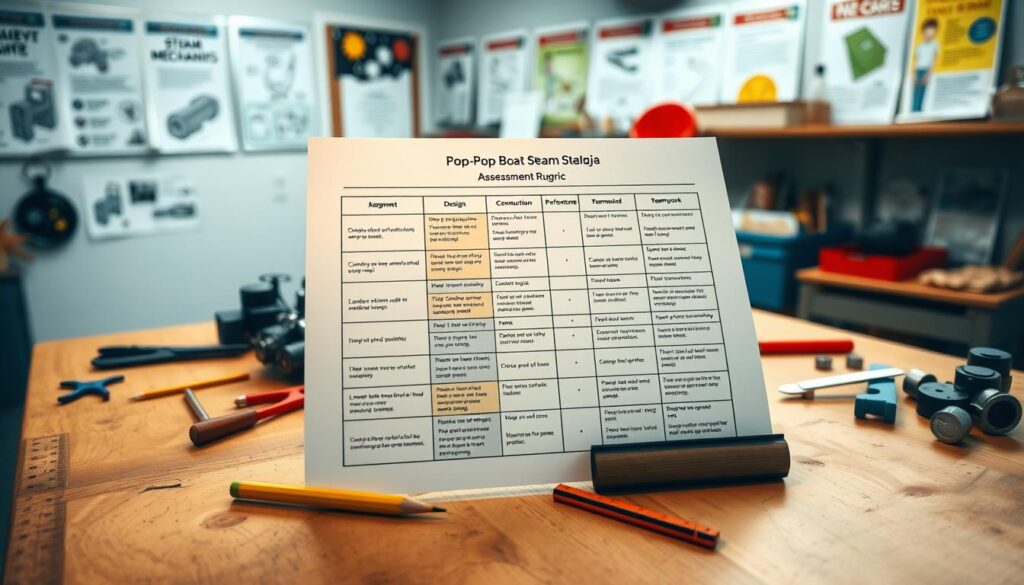
The Build Log is like a director’s commentary for engineering. It’s the student’s unfiltered thoughts and sketches. It includes notes on failed attempts and the lessons learned from them.
This log is invaluable. It shows the thinking and problem-solving that went into the project. Did they adjust the ballast for balance? Did they note when a seal failed and why? The log tells the story the finished boat can’t.
The Performance Rubric scores the creativity and depth of learning. It goes beyond just checking if the project was completed. A good rubric, like the one in Heat Energy units, shows how much was learned.
| Criteria | Novice | Proficient | Expert |
|---|---|---|---|
| Craftsmanship & Seal | Boat floats but leaks significantly; seal is messy. | Boat floats with minor, non-fatal seepage; seal is functional. | Watertight seal; clean solder or glue work; hull is balanced and trim. |
| Troubleshooting Understanding | Can identify a problem (e.g., “no thrust”) but cannot propose a solution. | Can link common problems to likely causes (e.g., “no thrust means an air leak”). | Diagnoses unique issues and designs systematic tests to confirm and fix them. |
| Iterative Design | Built the boat once to specification. | Made one clear modification to improve performance (e.g., added weight). | Documented multiple design cycles with clear reasoning for each change. |
| Scientific Hypothesis | Describes what happened. | Explains what happened using concepts like expansion or thrust. | Predicts how a change will affect performance and tests the prediction. |
The grade is for the intellectual journey, not just the finished product. Points are given for resilience, analytical thinking, and connecting steam to physics. This way, the Pop-Pop Boat Steam Project is seen as a masterclass in hands-on thinking.
Teacher Prep Timeline and Budget Notes
This is the final stretch. Preparing for your Pop-Pop Boat Steam Project is easy. For 30 students, the budget is manageable. The plastic bottle version is almost free, with only copper tubing and tea-lights costing a bit. Each student will spend about $2 to $3.
Looking for bulk copper tubing and tea-lights is key. Hardware stores are where you should go. If you choose the wooden hull, it costs more but feels more rewarding. Many suppliers offer free shipping for orders over $100 and send kits in two days. Plan your shopping like a stage manager.
The schedule is short and sweet. The first session is for introduction and building. The second is for testing, fixing issues, and the big race day. Cut your bottles or wood blanks beforehand. This saves time and reduces stress. The whole project can be done in a week.
Begin with something simple. Let that first success be the spark. This isn’t a heavy unit plan. It’s a quick lesson in physics that leaves a lasting impression. It’s the memory of building an engine with their own hands.
