Imagine the science of steam starting with a party trick. It was in 1st-century Alexandria, where Heron of Alexandria showed off his aeolipile. This was a bronze sphere that shot steam like an espresso machine.
This ancient Greek “TikTok moment” was the start of every beginner steam engine. But it took 1,700 years for people to really get into this tech.
Eric Grannis taught us that complex ideas can be fun. He said steam pressure is like a caffeinated squirrel in a teakettle. It wants to turn thermal energy into motion.
James Watt and George Stephenson didn’t invent this idea. But they made it work in big ways. They turned it into machines that changed the world.
Modern students might think these old machines are silly. But they’re connected to today’s energy talks. That hissing teapot on your stove? It’s teaching us about science.
So, why should today’s makers care about steam engines? They teach us about energy in a way apps can’t. Are you ready to learn more?
What is Steam?
Steam isn’t just a morning coffee’s sidekick. It’s the key player of the Industrial Revolution. It’s where heat to motion turns calm water into a lively gas. Think of water molecules as fans at a concert. In liquid form, they’re waiting in line. As steam, they’re dancing on stage.
In the 1600s, Italians were like the first science fair winners with wine. Giambattista della Porta used wine flasks to show vacuum principles. His work showed steam’s power to move things, a hint at today’s steam power systems.
Three key players in steam’s energy transfer:
- Heat: The ultimate hype man for molecules
- Pressure: Nature’s invisible bouncer
- Phase change: H₂O’s glow-up moment
Hero of Alexandria’s aeolipile was like an ancient fidget spinner. It showed steam could make metal spheres spin with just heat. This 1st-century trick was centuries before coal engines. Today, power plants use the same idea: water heats up, turns to steam, and drives turbines.
“Steam is water’s midlife crisis – it quits its stable liquid job, buys a convertible, and speeds off into the atmosphere.”
The magic happens when molecules leave the liquid group hug. Each phase change uses energy to power small cities. It’s like nature’s recycling program – heat in, motion out, repeat forever.
States of Matter and Energy
Imagine H2O molecules performing like in a Broadway show. Ice cubes turn into liquid, then into steam. It’s like Hamilton meets chemistry, with thermodynamics leading the show.
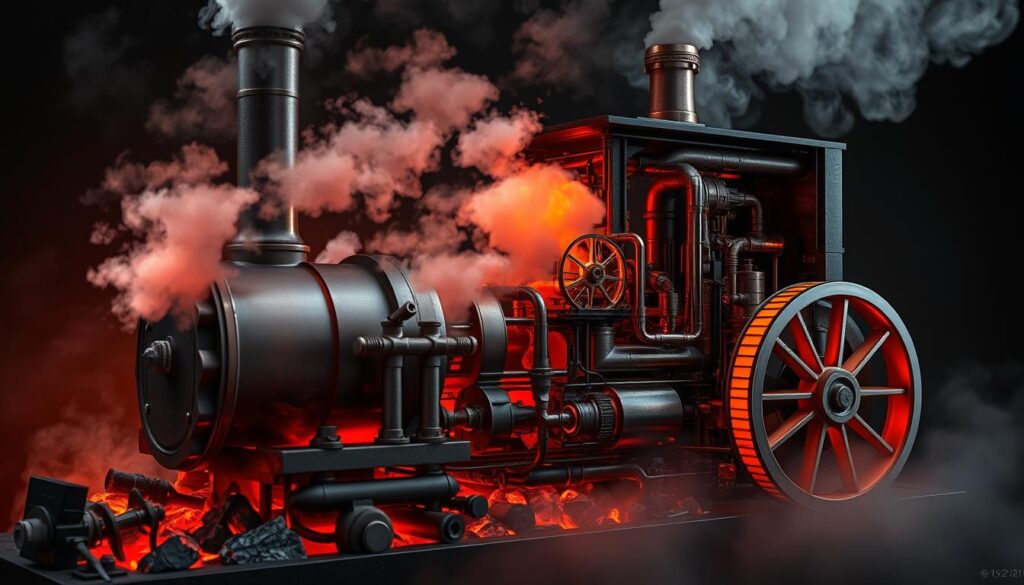
In the 18th century, engineers made a big change. They moved from Newcomen’s steam engine to Watt’s design. This was a huge step in energy transformation, like how apps improve battery life today.
- Newcomen’s 1712 model: Boiled enough water daily to fill three Olympic pools
- Watt’s 1776 upgrade: Cut coal consumption by 60% (the iPhone 15 of its day)
- Modern turbines: Convert heat to motion at 45% efficiency
Watt’s separate condenser was a game-changer. It worked like your phone’s low-power mode. It caught steam particles before they escaped, making coal engines more efficient.
“The quantity of steam… must be regulated by the velocity required.”
Victorian engineers had heated debates about BTU calculations. Their talks, carried by steam trains, helped create modern thermodynamics. They also started the world’s first flame war.
Water molecules in steam move 50x faster than in ice. This shows the power of energy, like a rockstar on stage.
Heat, Pressure, and Motion Explained
Imagine steam as that one friend who always needs more personal space. When heated, water molecules start breakdancing until they escape as vapor. This creates the pressure dynamics that powered everything from 17th-century kitchen gadgets to bullet trains. Let’s decode this physics tango.
Our story begins with Denis Papin’s 1679 “bone digestor” – history’s first pressure cooker. It accidentally turned beef shanks into pâté. This culinary catastrophe proved trapped steam could convert heat to motion. Though Papin’s dinner guests probably preferred medium-rare revelations.
The principle? Confined vapor builds pressure like commuters in a stalled subway car. Eventually, something’s gotta give.
Modern applications are less… explosive. Your Instant Pot uses Papin’s playbook, while locomotives harness steam transportation through piston pushes. Picture a pizza oven:
- Heat transforms water to steam (thermal energy)
- Expanding vapor creates pressure (mechanical energy)
- Controlled release drives motion (kinetic energy)
This energy relay race explains why steam engines dominated the Industrial Revolution. The secret sauce? Temperature and containment. More heat means wilder molecular movement – it’s a mosh pit versus a waltz.
“Steam is the breath of industry – invisible force made tangible through engineering wit.”
Today’s engineers manipulate these pressure dynamics with digital precision. High-speed turbines convert boiling water to electricity, while nuclear reactors use steam’s pushiness to spin generators. Even your espresso machine relies on the same basic physics as Thomas Newcomen’s 1712 atmospheric engine – just with better latte art.
The takeaway? Whether softening bones or powering cities, heat to motion conversions follow three rules:
- Contain your enthusiasm (literally – pressure needs boundaries)
- Temperature dictates tempo (hotter = faster molecular motion)
- Controlled release beats explosions (usually)
Next time you hear a teakettle whistle, remember – that’s 300 years of engineering progress screaming, “I’ve converted 212°F water into kinetic earache!”
Safety Tips
Safety in steam engineering has always been important. Victorian factories were dangerous places. Engineers used to look at pressure gauges like gamblers.
George Stephenson’s boiler safety rules were a big change. They were simple, but his peers didn’t take steam seriously. They thought it was like a pet dragon that “probably wouldn’t bite today.”
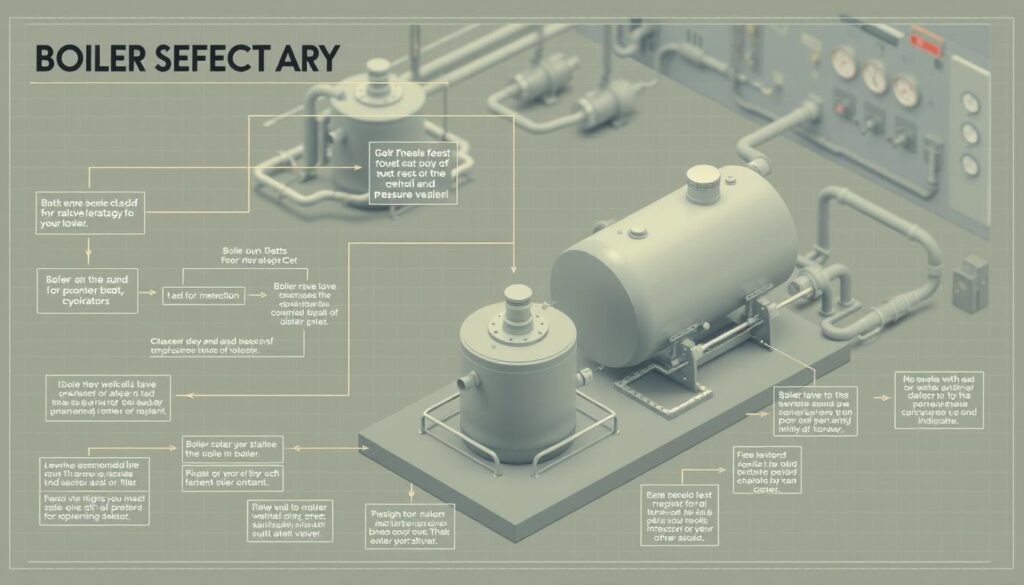
The way Victorian engineers managed risks was different from Stephenson’s. Here’s a comparison:
| Victorian “Hold My Whiskey” | Stephenson’s Rules | Modern STEM Projects |
|---|---|---|
| Leak checks via ear-to-boiler listening | Pressure relief valves | 3D-printed safety mechanisms |
| Coal shovelers as fuse detectors | Regular maintenance logs | Arduino pressure sensors |
| “Explosion? Probably fine” attitude | Material stress calculations | Collaborative maker space protocols |
What changed? Math and common sense came together. The 19th-century steam engine inventors left us with safety guides. The Manchester Boiler Explosion of 1853 was a big wake-up call.
Today, STEM projects build on this knowledge. Middle schoolers 3D-printing valves are learning from history. My favorite classroom trick is the “What Would Watt Do?” flowchart:
- Is your boiler hissing like a tea kettle? Stop. Immediately.
- Does your safety valve look suspiciously like a cork? Redesign.
- Are students treating steam as “harmless cloud stuff”? Re-educate.
The main lesson? Innovation needs caution. Whether you’re making a steam turbine or a replica of Hero’s Aeolipile, remember Stephenson’s caution.
Simple Classroom Experiment
Who needs fancy gadgets when you can use soda cans and tea lights to teach thermodynamics? Let’s get creative with a beginner model steam engine made from recycled stuff. I’ve tried this kid STEM project with middle-schoolers, and they loved it.
- Aluminum soda can (empty, unless you need caffeine-powered steam)
- Tea light candle (the IKEA of heat sources)
- Plastic straws (bendy ones add dramatic flair)
- Safety goggles (bedazzle them for STEM chic)
Using Grannis’ straw-to-engine method, we’ll make a steam engine. Place your tea light carefully, like lighting Han Solo’s birthday cake. Symmetry is key.
Labeling Exercise: Know Your Engine
| Component | DIY Version | Real-World Equivalent |
|---|---|---|
| Boiler | Soda Can | Power Plant Core |
| Piston | Straw Assembly | Engine Cylinder |
| Condenser | Room-Temperature Air | Cooling Tower |
Want to do more? Try making Stephenson’s Rocket using emojis. 🚂🔥💧 = steam locomotion in the digital age. It’s like Minecraft meets the Industrial Revolution.
Here’s a cool trick: Use smartphone screens to show condensation. Have students fog up their phones with breath while explaining phase changes. It’s like teaching science through Snapchat.
“The best physics lessons smell like burnt birthday candles and sound like seventh graders arguing about straw angles.”
Remember, safety first. While decorating goggles is fun, it’s not a substitute for safety gear. We want to inspire future engineers, not create art.
Review and Quiz
Ready to tell James Watts from Thomas Newcomens apart? Let’s test your knowledge with our steam-powered personality matrix. Just answer three questions to find out which industrial genius you are:
- Do you triple-check your coffee order? → James Watt Perfectionist Mode
- Ever tried cooking eggs on your car engine? → Richard Trevithick Risk-Taker Alert
- Mad about the Hogwarts Express being fictional? → George Stephenson Nostalgia Core
Now, let’s travel back in meme history. Match these famous steam locomotives with their modern-day counterparts:
| 1804 Invention | 2024 Equivalent | Vibe Check |
|---|---|---|
| Trevithick’s “Puffing Devil” | Elon’s Cybertruck | Bold. Leaky. Legendary. |
| Rocket locomotive | iPhone 15 Pro | Everyone copies the blueprint |
| Stephenson’s gauge | USB-C ports | The standard we didn’t know we needed |
Bonus trivia for anime fans: The real-life “Henry” from Thomas the Tank Engine was scrapped in 1962. Let’s honor our metallic friend.
Teachers, want to see who’s been paying attention? Try our history quiz Kahoot deck with:
- Authentic steam whistle sound effects (RIP headphone users)
- AI-generated “aging filter” selfies showing what students would look like as 1800s engineers
- A hidden Rickroll easter egg in the “failed invention” category
“The real tragedy? We’ve forgotten how to make proper tea from the steam age.”
Conclusion
Hero of Alexandria’s spinning aeolipile shows ancient engineers knew about steam power. They just needed better PR. Today, steam engines power nuclear reactors and solar plants. They use uranium instead of coal and focus on climate change.
TikTokers enjoying oat milk lattes rely on ancient technology. Who knew? Steam engines also power steampunk and movies with gears and corsets. But they do more than that.
Geothermal plants use Earth’s steam, and engineers create tiny turbines for Mars. The coolest part? Turning classroom projects into real science. It’s like magic.
Imagine making George Stephenson’s Rocket with drones and AI. Would it fly? Mine Bitcoin? It’s not about the tech. It’s about not adding cupholders.
Schools now teach with steam engines instead of volcanoes. It’s a fun way to learn thermodynamics. It beats playing chess.
Hero’s toy could have been forgotten. But it inspired engines that lit cities and crossed oceans. It might even cool our planet. So, start a workshop. Hack a kettle. Redesign the wheel. Just keep the ideas flowing.
