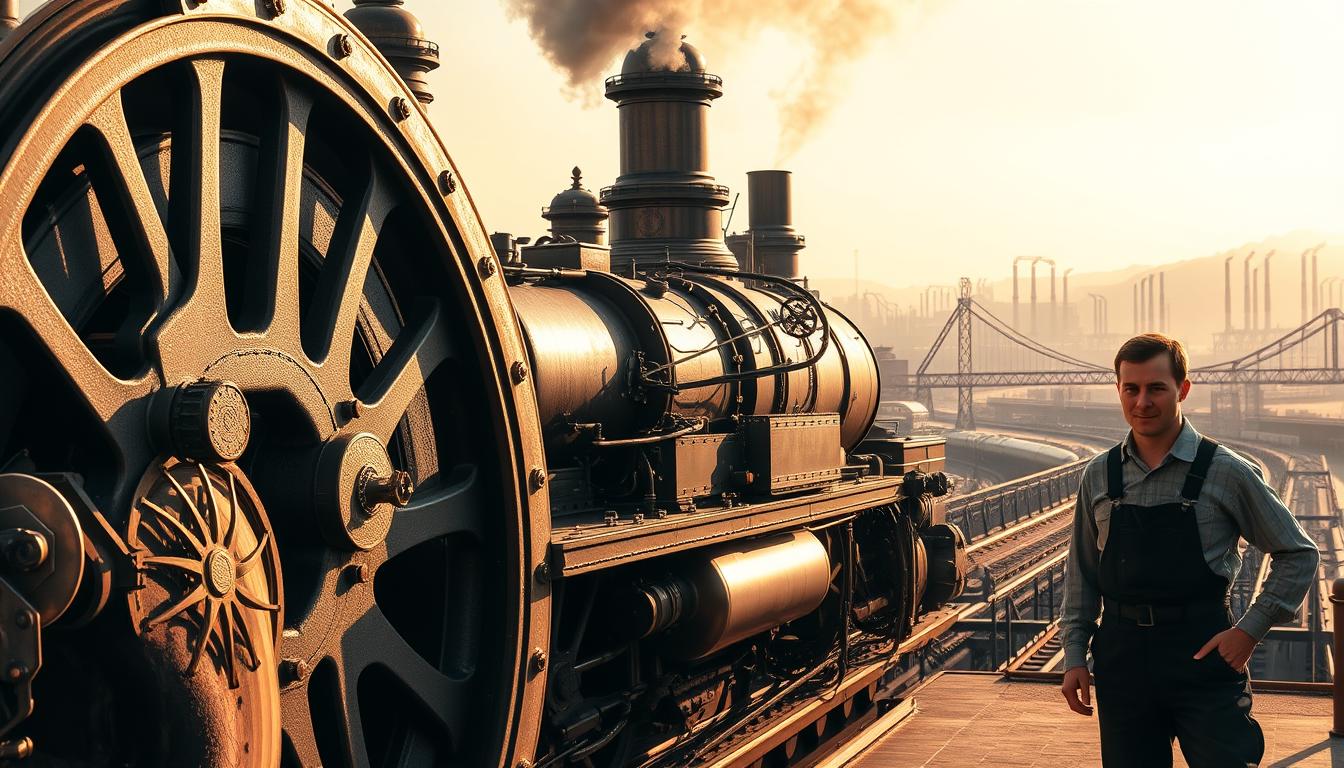
Imagine a world where Friday night firewood shortages caused more drama than Netflix cancelations. Welcome to 1600s England, where people were burning through resources fast. They used wood to fuel warships and to keep taverns warm.
Tree-hugging was a survival strategy back then, not a lifestyle choice. It took 2000 oaks to build a warship, and forests were disappearing quickly. This was before Twitter, when blue checks were a rare sight.
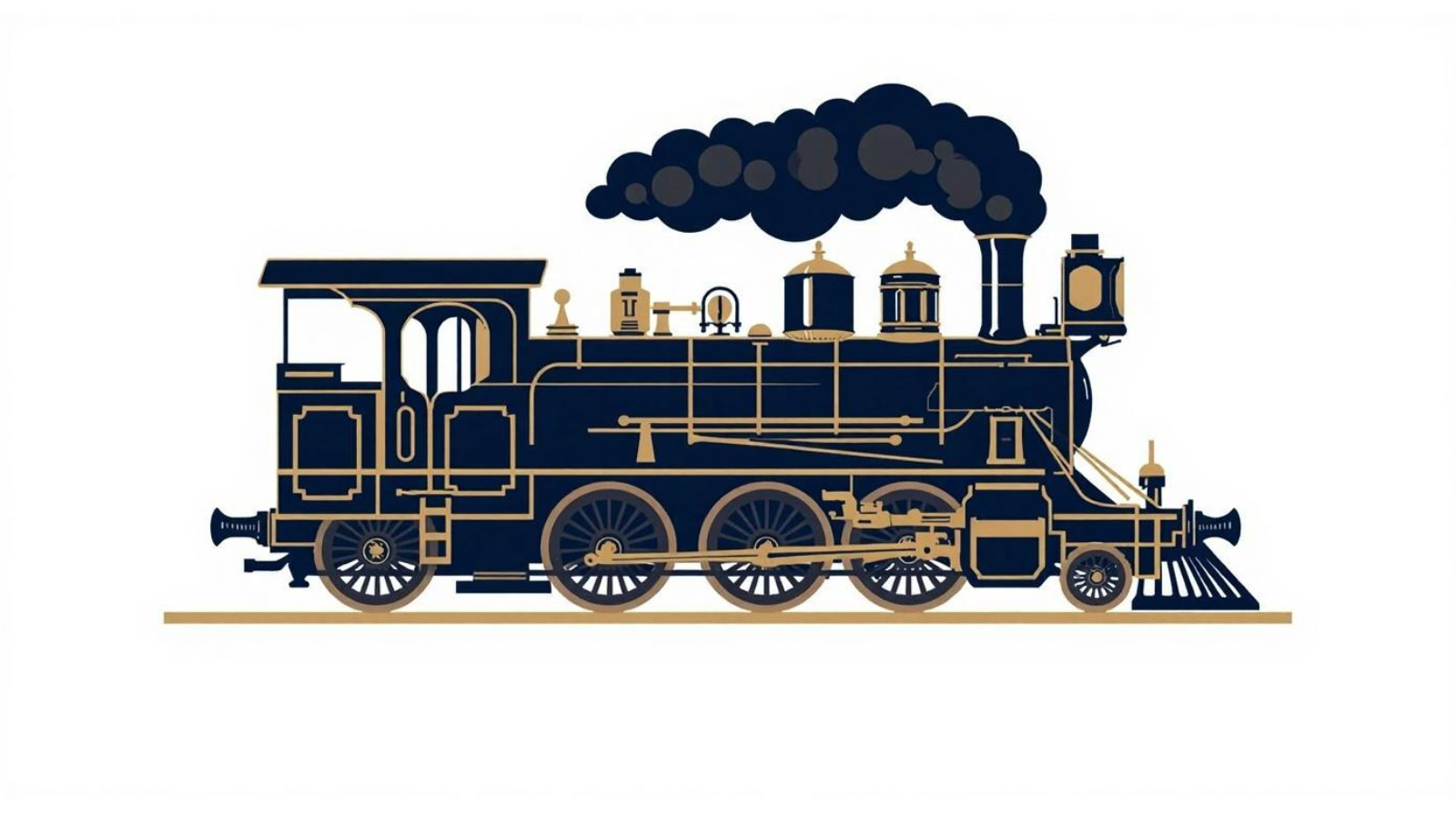
Then, humans found a solution to their energy crisis – clunky metal machines that turned water into steam. These early steam pumps were not elegant, but they worked. They helped mine more coal without using too much wood.
Medieval engineers created these machines through trial and error, with a few explosions along the way. They became the first viral trend, making fossil fuels famous. Early steam devices were copied by miners and brewers, and soon, the Crown taxed them.
This story is not just about steam power. It’s about how necessity drives invention and how patents can follow. Coal engines went from helping with mine drainage to controlling the world, just like TikTok challenges grow. The real question is, what happens when we innovate faster than we can understand the results?
History of Burning Fuels
Before Elon Musk’s tweets about rockets, Thomas Savery invented the “Miner’s Friend” in 1698. This steam pump was so bad, it made dial-up internet look good by comparison. It was the first big try to make money from boiling water, starting a race of innovation.
Then, Thomas Newcomen and John Calley came along. They were like today’s college dropouts in a garage. Their engine fixed Savery’s problems with what I’ll call “controlled explosions.” It was like the early days of YouTube, full of promise, failures, and lawsuits.
“We have made the engine eat its own smoke,” Newcomen said after a big success. His idea of success included flooding coal mines.
James Watt changed everything when he saw a Newcomen engine struggling. His 1769 invention made steam power much better. Mines could dig deeper, factories could work longer, and investors could lose a lot of money.
By 1829, George Stephenson’s Rocket locomotive was a big deal. Coal engines were like today’s blockchain: not well understood, but changing the world. The real power wasn’t in the furnaces, but in people’s drive to make money from science.
Turning Water to Steam
Imagine water as the ultimate influencer – it goes viral at 212°F. This energy transformation isn’t just boiling drama; it’s physics doing stand-up comedy. Let’s break down the science of steam like a TikTok tutorial: 1) Heat water until it rebels against liquid life, 2) Trap the vapor in a pressure cooker of engineering genius, 3) Watch heat to motion pirouette like a ballet dancer on Red Bull.
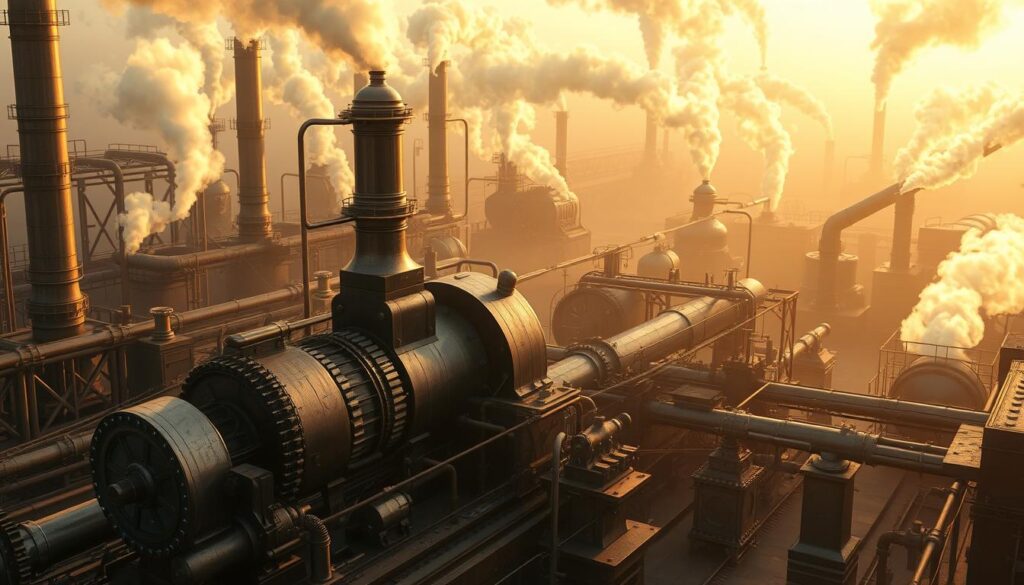
Turtle Turbines’ systems work like Russian nesting dolls – peel back one layer of thermal chaos, and you’ll find another marvel. Their steam cycle operates like a Michelin-starred kitchen:
- Boiler: The “sous-chef” converting H2O into pressurized fury
- Turbine blades: The “food processors” extracting kinetic energy
- Condenser: The “dishwasher” recycling steam back to water
Why does this matter? Because every watt of electricity starts with H2O’s identity crisis. Modern turbines achieve 47% efficiency – better than your average influencer’s engagement rate. As one engineer quipped:
“We’re not making tea here. We’re bottling lightning.”
The real magic happens when steam hits turbine blades at 1,800 mph. That’s faster than conspiracy theories spread on Twitter. This heat to motion alchemy powers everything from your phone charger to entire cities – proving H2O remains history’s most overachieving compound.
Engines Then and Now
Imagine Thomas Newcomen’s 1712 steam engine, the steam punk grandpa, meeting a modern turbine from India’s Vindhyachal Power Plant. The bartender asks, “Why the long piston?” This isn’t just history; it’s a lesson in energy transformation that’s as complex as Oppenheimer’s work.
Newcomen’s engine could drain mines but not power a TikTok dance. Vindhyachal, Asia’s largest coal-fired plant, powers 4,760MW with turbines. Today, we convert 42% of coal’s energy into electricity, compared to Newcomen’s 1%. That’s like going from burning money to printing it.
| Newcomen’s Engine (1712) | Vindhyachal Turbine (2023) | |
|---|---|---|
| Efficiency | 1% | 42% |
| CO2 per kWh | 2,200g | 800g |
| Daily Output | 5 horsepower-hours | 114 million kWh |
| Workforce | Team of 12 stokers | AI-powered monitoring |
Modern plants don’t just burn coal; they negotiate with it. Vindhyachal’s supercritical boilers make steam hotter than lava (593°C). They also catch 99.9% of particles, showing coal engines now care about air quality.
But here’s the twist: both systems boil water. The real energy transformation is in our expectations. Newcomen kept mines dry for investors; Vindhyachal keeps Netflix servers running for us. From industrial need to digital enabler, that’s growth even Walter White would admire.
Steam’s Place in Today’s World
Think steam power retired when dial-up internet died? Think again. This great-granddaddy of the Industrial Revolution now powers your Netflix and Zoom calls. Every time you stream cat videos, there’s a 63% chance (per Department of Energy stats) that steam-generated electricity made it possible. Our TikTok era runs on technology older than the light bulb.
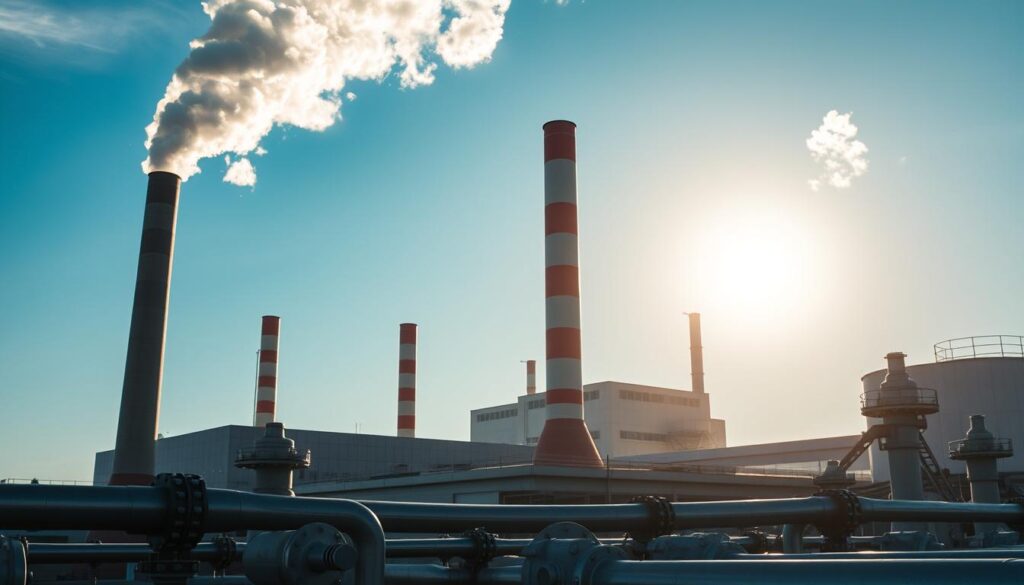
Modern steam systems are like the method actors of energy transformation. Nuclear plants use superheated steam to spin turbines at 1,800 RPM without emitting greenhouse gases. Geothermal facilities like Hellisheiði in Iceland turn volcanic tantrums into clean power for 300,000 homes. Even solar farms are getting in on the action:
| Innovation | Steam Application | Energy Output |
|---|---|---|
| Concentrated Solar | Mirror-heated steam | 1.8 GW (U.S. total) |
| Biomass Plants | Organic waste steam | 5% of U.S. renewables |
| Waste Heat Recovery | Factory exhaust steam | 10-40% efficiency boost |
Turtle Turbines’ latest project? Miniature steam engines that convert brewery waste heat into electricity. Your IPA could soon power the pub’s lights – the kind of energy transformation even Hemingway would toast to. These systems achieve 92% thermal efficiency, making them the Prius of pressure vessels.
While wind and solar hog the spotlight, steam quietly provides 84% of the world’s baseline electricity. It’s the David Bowie of energy tech – constantly reinventing itself while outlasting flashier trends. Next time your phone charges, remember: that spark of modern life began with a 318-year-old invention boiling water.
Classroom Energy Chain Project
Transform your classroom into a quirky power plant without hard hats. Our STEM project turns energy transformation into a fun snack-filled show. It mixes the excitement of a Rube Goldberg machine with the detail of a Bill Nye show. Who knew your mom’s old tea kettle could be a steam turbine?
- Pop-Tarts (unfrosted – we’re scientists, not animals)
- Electric tea kettle (the world’s cutest boiler)
- Fidget spinners (justifying their 2017 hype)
- Aluminum foil tubing (for maximum steam drama)
The magic unfolds in three Shark Tank-worthy steps:
- Toaster activation: Blueberry pastries become our “coal” through burning (microwave-safe plate needed)
- Steam generation: Water turns into kinetic energy like a viral TikTok trend
- Turbine spin-off: Fidget spinners become electricity generators – a win for distracted teachers!
“The best science education tastes like breakfast and sounds like poorly-oiled machinery.”
This experiment shows real-world chain reactions experiments through snackable physics. When steam meets spinning toys, you’ll witness energy transformation that would impress Nikola Tesla.
Safety reminder: We’re using real heat, but it’s not time for Mad Max: Fury Road in Home Ec. Keep the excitement metaphorical – our insurance only covers so much.
Pro tip: Capture the final chain reaction in slow-mo. Nothing says “A+ in physics” like a Pop-Tart crumb flying toward a fidget spinner, set to Steam by Peter Gabriel.
Conclusion
James Watt’s 1776 invention of the separate condenser marked the start of a new era. It showed us how to transform energy in a way that’s lasted for 250 years. Even today, the Vindhyachal thermal plant’s massive 4,760 MW output shows the power of steam.
Steam power is more efficient than many modern gas turbines were in the 1990s. It uses 42% of the energy it gets, which is impressive. This shows how far we’ve come in using steam power.
Today, engineers are pushing the limits of what Watt achieved. GE and Siemens are making turbines that get 65% efficiency. They turn water into clean energy, showing us the power of steam.
Carbon capture projects like NET Power’s Allam Cycle are also making a difference. They use steam to trap emissions, making fossil plants cleaner. This is a big step towards a greener future.
Steam power has been a driving force in history, from Dickensian factories to today’s climate tech. It’s exciting to think about what’s next. Could molten salt reactors or steam grids cool our cities?
The real change isn’t just in technology, but in how we think. Every hydro dam and biofuel refinery owes a debt to Newcomen’s engine. As we update old ideas for today’s world, one thing is clear: Steam is here to stay.
