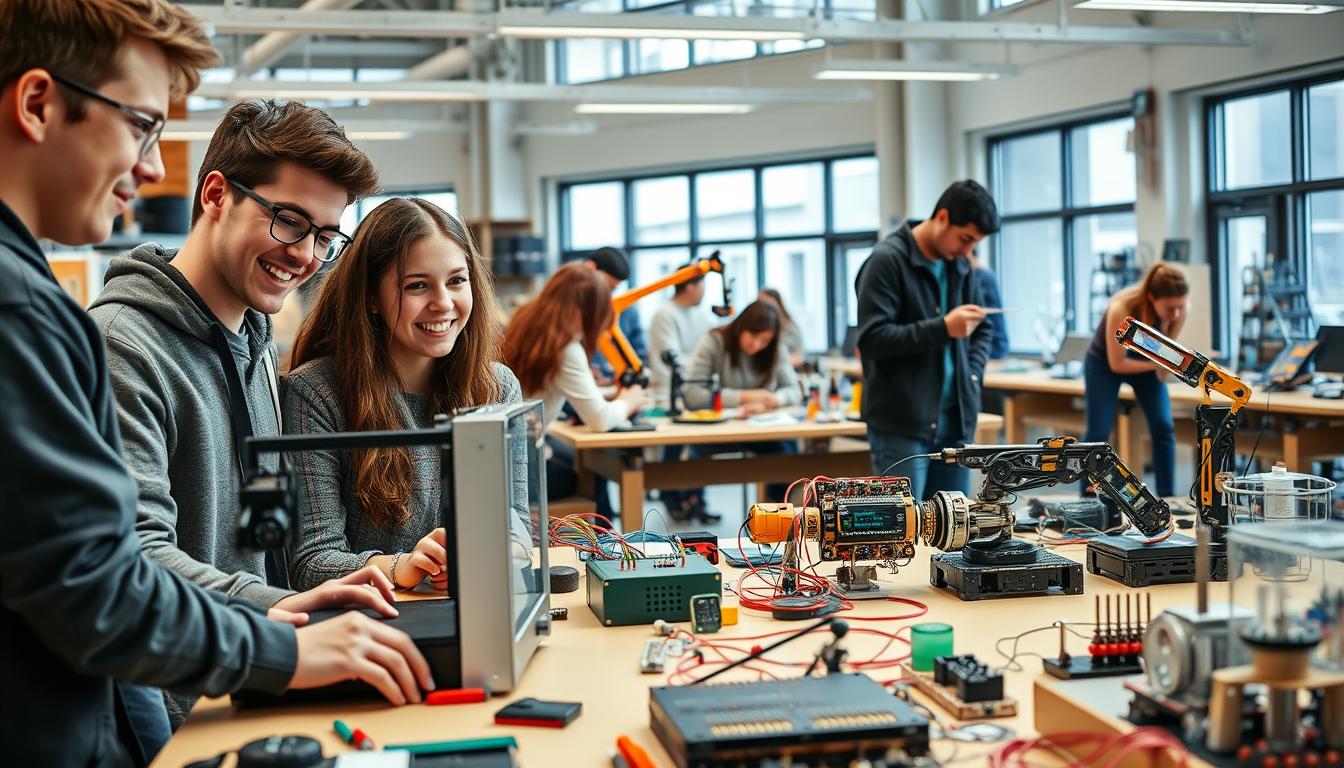
Forget the quiet classroom. The future isn’t just studied; it’s built, often with a satisfying clunk or the hum of a 3D printer. We’re talking about the rise of the modern workshop.
This isn’t a glorified arts and crafts room. It’s a deliberate rebellion against passive learning. Think of it as a gym for your innovation muscle.
As one source puts it, “Students face a future that demands an in-depth understanding of technology, so classroom tools must reflect that reality.” These hubs are that reflection. They resurrect the communal workshop with a Silicon Valley twist.
Here, a student’s “what if” doesn’t die in a notebook. It gets prototyped. It fails spectacularly. Then it succeeds. This is the core of DIY engineering.
It’s where theoretical diagrams become tangible, hackable objects. The goal isn’t just to build a robot. It’s to build resilience and problem-solving swagger. The world, it turns out, is something you can modify and improve.
The future is being printed, soldered, and coded in a corner of the library right now. Are your tools ready?
Steam Technology Projects
Most of us remember school projects as simple baking soda volcanoes. But now, things have changed. Modern student workshops are all about creating stories and solving big problems.
Imagine engineering meets Dungeons & Dragons. Instead of just building, you’re saving a world. It’s all about teamwork and creativity.
A fabrication lab is now a place for epic stories. Students aren’t just making circuits; they’re creating costumes that light up. It’s about combining beauty and logic in amazing ways.
The “Think Like a Maker” workshop is all about problem-solving. It’s not just about following steps. It’s about believing you can solve any problem.
“Ready, Set, Design!” is a workshop for all ages. You might make a prosthetic for a stuffed animal or design a paper airplane. It’s all about creating and learning together.
In these fabrication labs, tools are magical. A 3D printer can create anything, from gears to windows. It’s all about using math to make magic happen.
The outcome of these workshops is not just a report. It’s a collection of stories and inventions. It’s about becoming strong and creative.
Equipment & Tools Overview
In a maker space, tools tell a story of problem-solving. They range from cardboard prototypes to laser beams. This variety teaches us that creativity can come from anywhere.
The “magic bin” is a treasure trove of creativity. It’s filled with recycled materials like cardboard and duct tape. Here, limitations spark new ideas, starting DIY engineering.
The 3D printer is like a modern alchemy set. It turns digital designs into real objects. This bridge between digital and physical is a key part of learning.
The laser cutter is a precise tool in the fabrication lab. It can etch designs onto wood or cut through acrylic. With CNC machines, it creates detailed objects from various materials.
Software tools are the real power behind the hardware. Programs like Tinkercad make 3D modeling easy. Coding environments teach the logic of smart devices. These tools give students essential digital skills.
The beauty of these tools is that they show that better tools don’t always mean better results. A problem can be solved with a fancy CNC mill or a simple piece of paper. The true power lies in the maker’s ingenuity, not the tool. This is the heart of DIY engineering.
Safety & Training
Safety in a maker space is more than just rules. It’s about a mindset that values responsible creation. It’s like a rule for makers: you can explore new things, but safely.
Training isn’t just about following rules. It’s about empowering you to use tools safely. Learning to use a bandsaw, for example, turns it from scary to useful. This builds confidence and sparks creativity.
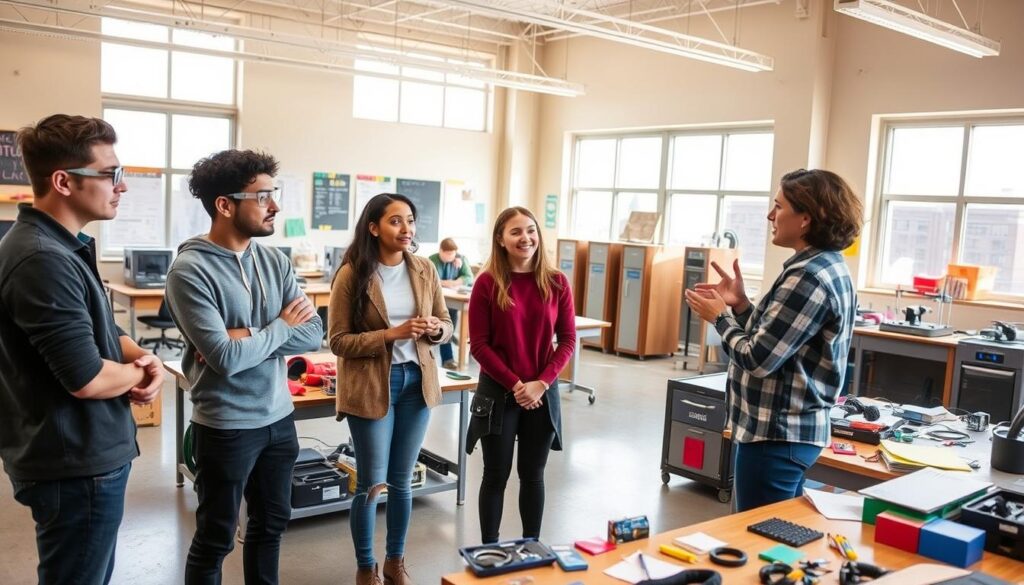
Our student workshops are like modern coming-of-age ceremonies. They make complex tech simple. A laser cutter is just a tool, not a mystery. This helps students feel confident and ready to innovate.
In a good space, safety is everyone’s responsibility. Wearing safety glasses is normal, not weird. Pointing out unsafe actions shows you care about your team. This teamwork is what keeps a creative space safe and productive.
This is even more important in overcrowded STEM labs and makerspaces. Without clear rules and training, a busy place can become dangerous. Good planning and training are key to growing innovation safely, as discussed in lab safety in crowded environments.
Training sets apart the careful creator from the careless hobbyist. It shows respect for the making process before starting. The best maker spaces focus on training, not just tools. This quiet focus leads to amazing creations.
Community Building
The most valuable thing in a maker space isn’t a tool. It’s the person next to you. Here, the idea of the lone inventor is updated. The space buzzes with teamwork, not just machines.
This place is great for learning soft skills. Skills like talking, understanding others, and checking each other’s work. The Arduino expert helps a newcomer fix their code. The textile artist gives advice on wearable tech. This is where empathy is learned.
When we work together, our projects grow stronger. They turn from personal hobbies into open-source culture. A team might make a device for someone in need. Another could create public art that interacts with people.
This place is different from others. It’s all about working together. DIY engineering is more powerful when we do it as a team. The maker space becomes a key spot for solving local problems.
To grow this, value talking as much as making. Have project showcases where feedback is key. Host “fix-it” nights for the community. The aim is to build a strong community, where everyone wins together. That’s what a maker space is all about.
Educational Partnerships
Administrators, or ‘STEAM Maker Leaders,’ face a big question. How do you show the value of 3D printers and laser cutters? The answer isn’t in the manual. It’s in the halls, classrooms, and tech incubators.
A makerspace alone is just an expensive club. To avoid this, you need partnerships.
Strategic partnerships are key. It’s not just about being nice. It’s about working together. Partner with physics teachers on catapult projects. Work with history classes on Roman aqueduct models.
These partnerships move your fabrication labs to the center. They make learning more than just a special class.
The goal is to blend the maker spirit into regular classes. This way, student workshops become a steady flow of learning.
| Partnership Type | Example Project | Key Benefit | Stakeholder Buy-In |
|---|---|---|---|
| Cross-Disciplinary (Academic) | Physics + Makerspace: Arduino-based data loggers | Makes abstract theory tangible | Teacher gets a powerful teaching aid; curriculum alignment is clear. |
| Community & Industry | Local engineering firm mentorship day | Real-world context & career exposure | Firm fulfills CSR goals; students gain professional networks. |
| Administrative & District | Shared resource calendar for multiple schools | Maximizes equipment use & budget justification | Shows fiscal responsibility and scalable program success. |
So, what’s the pitch for STEAM Maker Leaders? It’s simple:
- ROI on Engagement: Students are more invested in projects.
- Interdisciplinary Proof: You’re building the “A” in STEAM, linking art, math, and science.
- Tangible Skill Portfolio: Graduates have more than grades; they have prototypes and stories of problem-solving.
A makerspace with these partnerships is essential. It’s not just a place. It’s the heart of learning, where ideas are built, tested, and improved.
Project Examples
Imagine a middle schooler racing a car made from banana peels. It’s not a cartoon; it’s real. This is happening in student workshops today. Here, DIY engineering turns into real projects.
Design challenges drive this learning. They make STEAM principles real and sometimes frustrating. Students are not just learning; they’re creating.
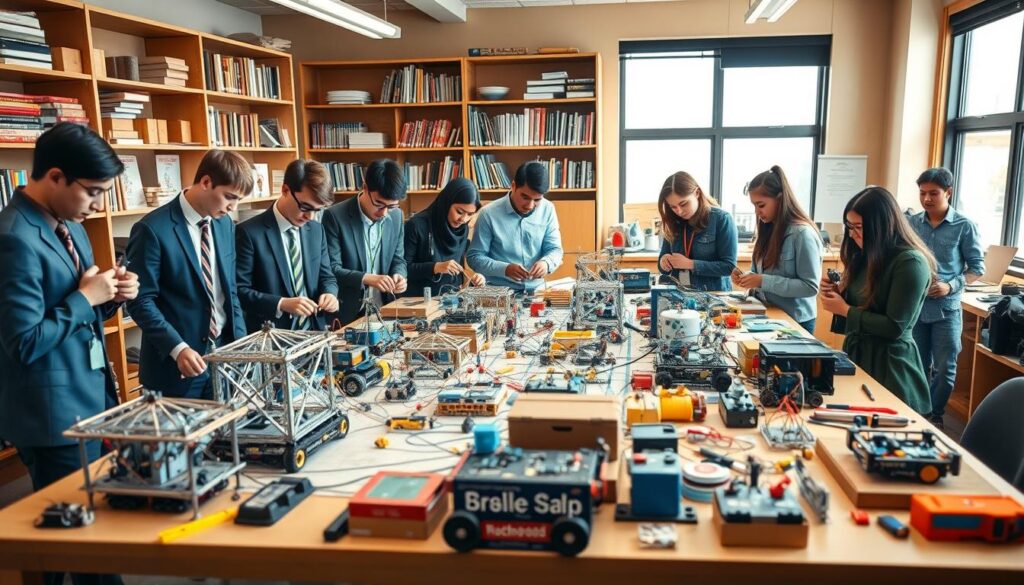
The Bioplastic Derby is a great example. It’s not just about speed. It’s about being green. Teams use kitchen items to make cars that are fast and eco-friendly.
High school projects get even bigger. Students build models of local watersheds. These models use sensors and lights to show pollution. They’re not just for grades; they help the community.
In a public library makerspace, students work on assistive tech. One team made a page-turner for someone who can’t turn pages. They used cardboard and 3D printing to make it work. The goal was to help someone read on their own.
These projects share a common thread. They start with a real problem. They use a cycle of making, testing, and improving. And they use simple tech to solve big problems.
| Project Theme | Age Group | Core Challenge | Key Tech & Materials | The Real-World Twist |
|---|---|---|---|---|
| Bioplastic Vehicle Derby | Middle School | Design a fast, biodegradable race car. | Homemade bioplastics, 3D printed molds, simple wheels. | Teaches lifecycle analysis and material science through competition. |
| Interactive Watershed Model | High School | Create a physical data visualization of local water health. | Laser-cut acrylic layers, Arduino sensors, LED lighting. | Output becomes a civic engagement tool for community presentations. |
| Assistive Device Design | Multi-Age (Library) | Solve a specific accessibility problem for a community member. | 3D printing, basic circuitry, low-cost actuators, fabric. | Directly improves an individual’s quality of life; empathy-driven engineering. |
The best student workshops focus on real problems. They let students show their applied ingenuity. Success is seen in prototypes, code, and the confidence of students who make things work. This is true DIY engineering: creating something real and useful.
Skills Development
The real value of a maker space isn’t just the cool stuff made. It’s the growth in the student who made it. They learn skills like CAD, coding, and CNC operation. These are key for today’s world.
This mindset is all about trying again and again. It’s about breaking down big problems into smaller ones. In a fabrication lab, mistakes are lessons, not failures.
It teaches you to learn from mistakes. This builds resilience and patience. You learn to keep going, even when things don’t go as planned.
Working with your hands also sharpens your mind. You learn about space, materials, and how to manage projects. These skills are not just for now but for the future.
So, fabrication labs do more than teach tech skills. They inspire creativity and problem-solving. They prepare you for a world that’s yet to be invented.
Career Connections
The skills learned in maker spaces are not just for fun. They open doors to the new economy. Students need to understand technology deeply, not just know about it. Today, it’s about being versatile and innovative.
That student who worked on a wearable device in a student workshop? She’s not just messing around. She’s preparing for a career in design or entrepreneurship. The kid who fixed his robot’s sensors? He’s on his way to a career in IoT or manufacturing.
The team leader who kept everyone on track? That’s obvious leadership material. These aren’t just stories. Industries like entertainment and aerospace need people who can think creatively and work well in teams.
So, what do you get from a maker space? A portfolio that speaks louder than any test score. It shows you can create things that matter. This is how DIY engineering turns play into a career.
The shift is clear in what matters now. Consider the contrast:
| Aspect | Traditional Credential | Maker Space Portfolio |
|---|---|---|
| Proof of Skill | Letter grade or certificate. | Functional prototype, code repository, or build video. |
| Problem-Solving Evidence | Multiple-choice exam answers. | Documented iterations showing failure, analysis, and improvement. |
| Collaboration Demonstrated | Group project grade, often vague. | Clear roles in a complex build, with peer testimonials. |
| Innovation Quotient | Rarely measured or showcased. | Inherent in the project’s design and novel solution. |
This isn’t about rejecting school. It’s about making it better. The best programs mix formal education with hands-on learning. This is why makerspace integration in STEM classes is key. It connects theory with real-world creation.
These student workshops are more than just places with cool tools. They are launchpads. They teach resilience, systems thinking, and communication. In short, they prepare students for the future, one project at a time.
Starting Your Own Space
Do you dream of creating your own space for making things? Before buying fancy tools, start with a clear vision. Think of it as a startup for hands-on learning.
Don’t rush to buy things. Find a small space, like a spare classroom or library corner. Create a “magic bin” with basic materials, as suggested by the “Start Making!” guide. This is about people, not expensive machines.
Begin with simple challenges using cardboard and tape. This will help you gather your first team of supporters from your student workshops.
Later, you can add fancy tools like laser engravers and 3D printers. But first, build a community. A strong community will attract funding and support. You’re not just opening a room. You’re starting a movement of problem-solvers.
This journey is messy and human. That small corner could become the heart of the building. Your path to creating tomorrow’s engineers begins with a simple bin. What will you fill it with?
