
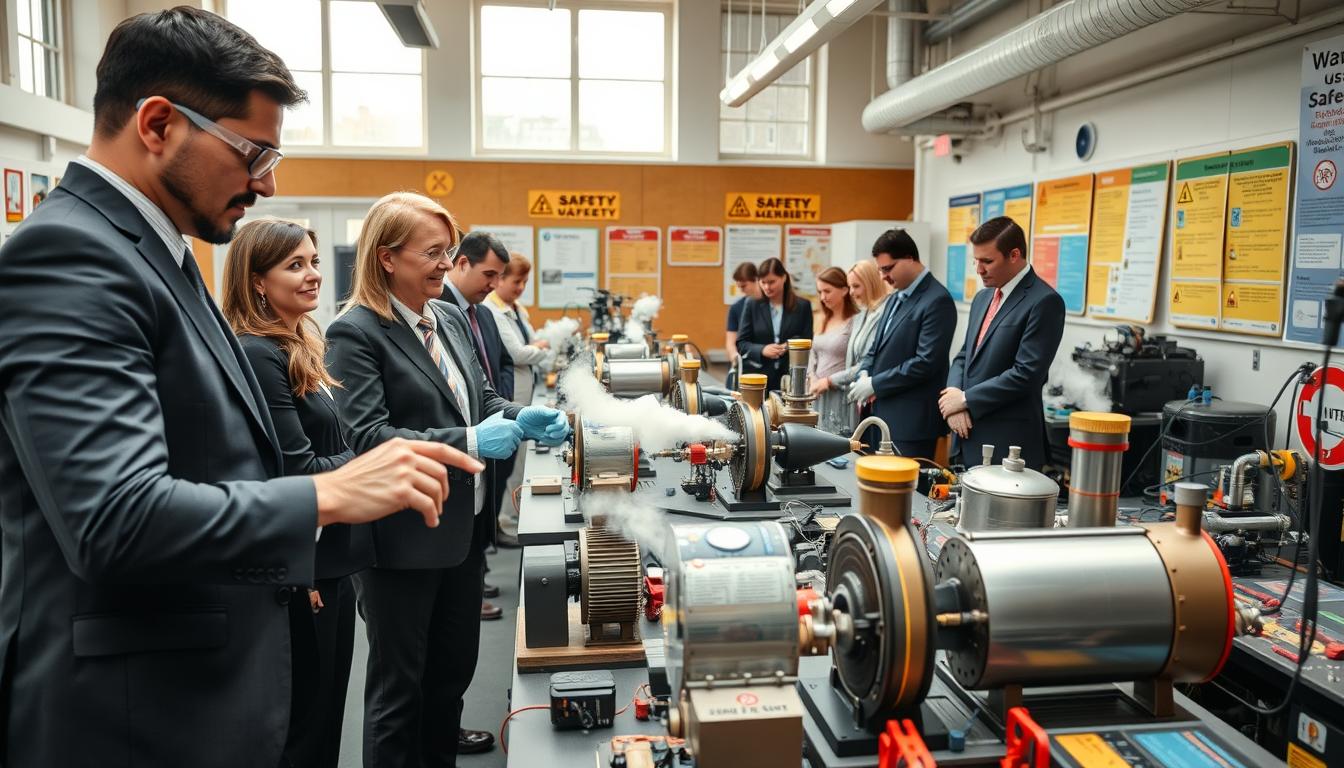
Nothing kills the buzz of a steam project faster than a trip to the emergency room. I’ve seen it in makerspaces where the excitement can turn to panic quickly. It’s all about the thin line between “Eureka!” and “Everybody duck!”.
This isn’t your grandma’s safety guide. But if your grandma worked with steam, I’d love to meet her. We’re exploring the world of steam education, where learning is hands-on and sometimes scary.
The FIRST Robotics Safety Manual teaches us a key lesson: safety is a culture. It’s about everyone in the space taking responsibility for their actions. This includes both the confident students and the tired mentors.
We’ll cover risk assessment, protective gear, and more. The goal is to make sure everyone knows their role in keeping things safe. Steam doesn’t care about your STEM skills. It demands preparation, attention, and humility.
Are you ready to learn about safety? Good. Let’s get started before someone loses an eyebrow.
Risk Assessment: Identifying Potencial Hazards in Steam Workshops
In steam workshops, risk assessment is key to safety. It’s not just about avoiding obvious dangers. It’s about finding hidden risks. Every tool and steam line can become dangerous quickly.
The FIRST Robotics Competition Safety Manual stresses the importance of stored energy. This includes electrical, pneumatic, and mechanical systems. Knowing what can go wrong and when is critical. Always think about pressure points and who might be in danger.
Identifying hazards is like a military mission. You need to know the risks and protect everyone. Many accidents happen because people ignore known dangers. This is not safe.
Before starting hands-on learning, remember safety is a culture. Workshop safety guidelines are not just rules. They create a safe space for everyone. Always assess risks in steam workshops to stay safe.
Personal Protective Equipment: Eye Protection, Gloves, and Safety Apparel
In steam workshops, wearing the right gear is not just a choice—it’s a must. The right equipment can prevent serious injuries. Eye protection is a must-have, as it protects your eyes from flying objects. Remember, steam doesn’t care about your style!
Gloves are also key. The right gloves protect your hands from chemicals, but not from machinery. The FIRST Robotics Competition Safety Manual warns about choosing the right gloves. It’s all about making the right choice.
Foot protection is just as important. Wearing closed-toe shoes keeps your feet safe from tools and spills. It’s a simple way to avoid a bad day. In a steam workshop, wearing safety gear is not optional—it’s required.
Here’s a quick rundown of essential PPE:
| Type of PPE | Purpose | Notes |
|---|---|---|
| Eye Protection | Protects against flying debris | Mandatory for all activities |
| Gloves | Protects hands from chemicals and cuts | Avoid near rotating machinery |
| Footwear | Protects feet from heavy objects | Closed-toe shoes required |
| Hearing Protection | Reduces noise exposure | Recommended in loud environments |
| Face Shields | Protects face from splashes | Use when working with pressurized systems |
Your PPE is your best ally in steam workshops. So, wear it! You can’t leave your PPE behind, as it keeps you safe from harm. Your friends can’t cause burns, but steam can.
Adult Supervision: Instructor Qualifications and Student-to-Teacher Ratios
Imagine a steam workshop as chaotic as a Wagner opera. That’s what happens without enough adult supervision. In steam education, adult supervision is key. The Georgia DECAL regulations show how important staff-to-child ratios are, even for young engineers.
Why is ratio important? One teacher can’t watch a boiler gauge, help with soldering, and keep an eye on everyone at once. That’s why student workshop protocols are so important. A good teacher is like a lifeguard, watching for problems before they start.
In a steam workshop, teacher qualifications are critical. They need to know the difference between normal sounds and warning signs. It’s not just about degrees; it’s about real-world experience. The NYSED Safe Schools by Design Guide says staff must know security and emergency plans, just like in steam workshops.
So, what’s the best student-to-teacher ratio? It should be big enough so everyone has help. This way, every student gets the help they need, making learning safe and fun. In educational steam safety, safety always comes first.
In conclusion, having the right teachers and student ratios is essential. It’s not just a rule; it’s the heart of safe and effective steam workshops. When teachers are well-trained, they create a place where learning and safety go hand in hand.
Equipment Safety: Proper Use of Tools, Boilers, and Pressure Systems
In steam-powered workshops, safety is key, not just a rule. Tools follow physics, and boilers run by thermodynamics, not chaos. It’s all about understanding and following the rules.
Here are some critical rules for using tools:
- Inspect Before Use: Always check your tools for defects. A dull blade is an invitation to injury.
- Secure Your Work: Use a bench or hard surface. Your hands are not a workbench!
- Cut Away: When using knives or blades, direct your strokes away from your body. Trust me, your fingers will thank you.
- Guard Up: Never use equipment without its safety guards in place. Those guards exist for a reason—honor their purpose.
The FIRST Robotics Competition Safety Manual makes these rules clear. They’re not just suggestions; they’re necessary for a safe workshop. I’ve seen students misuse tools, showing the need for proper training.
Boilers are not just big tea kettles. They’re powerful systems that need respect. Always check the relief valves and monitor gauges closely. Never skip a safety feature, no matter how inconvenient it seems.
Mechanical guards on power tools are there for a reason. They prevent accidents. Keeping them on is a sign of respect for those who learned the hard way. Safety is about understanding the rules, not fear.
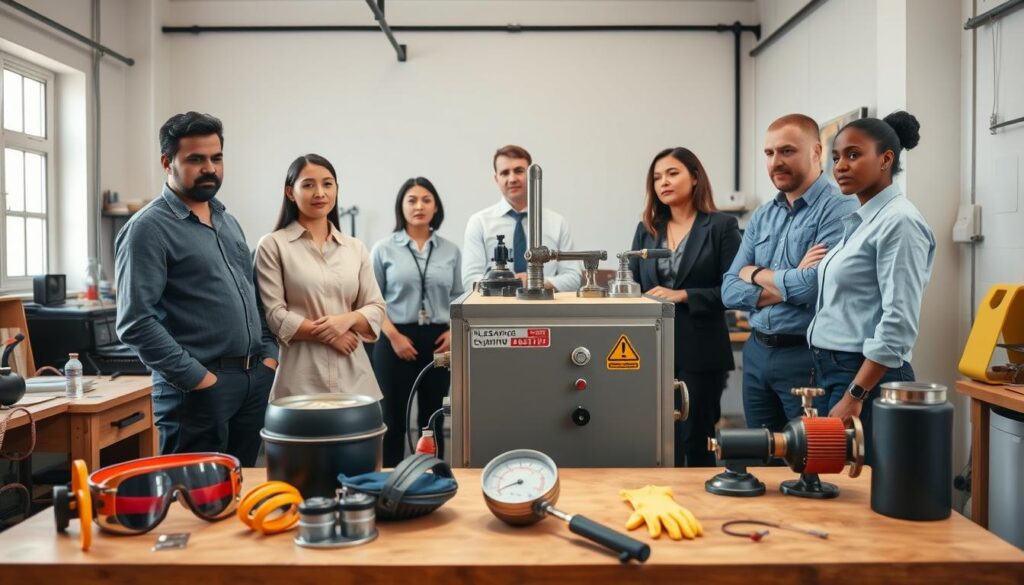
Emergency Procedures: First Aid Protocols and Emergency Contact Information
In a steam workshop, knowing what to do in an emergency is key. It can mean the difference between a small problem and a big one. It’s not something you want to learn about when it’s too late.
Being ready for emergencies in a steam workshop is simple. The worst time to learn how to handle a situation is when it happens. The FIRST Robotics Competition Safety Manual shows how to deal with a leaking battery. It says to neutralize with sodium bicarbonate, glove up, contain the leak, and report the incident. This is clear and direct, with no room for mistakes.
Your workshop needs a first aid station that’s like a mini-clinic. It should be easy to find and stocked with everything you need. This includes burn kits, eye wash stations, and emergency numbers that are easy to see. You don’t want to be searching for these things when an emergency happens.
The truth is, first aid only works if people practice it. If your instructors can’t find the pressure release valve without looking, you’re not ready. You need to practice and make emergency response second nature. This way, when adrenaline kicks in, you’ll know what to do without panicking.
| Emergency Situation | First Aid Response | Contact Information |
|---|---|---|
| Steam Burn | Cool the burn under running water for 10-20 minutes. | First Aid Station: [insert location] |
| Battery Acid Leak | Neutralize with sodium bicarbonate, wear gloves, contain the leak. | Emergency Services: 911 |
| Injury from Tools | Apply pressure to stop bleeding, seek medical help if necessary. | Workshop Supervisor: [insert name and contact] |
Age-Appropriate Activities: Matching Projects to Student Development Levels
It’s key to know what activities are right for students in steam workshops. Giving a middle schooler a blowtorch is not a good idea. It’s more like asking for trouble. We need to mix learning with safety, making sure it’s right for each age.
The Georgia DECAL Rules say activities must match what students can do. It’s not just a rule; it’s a way to make sure students can succeed. The FIRST Robotics Competition Safety Manual also helps, telling mentors to guide and talk about safety. It’s about making sure challenges are right for each student’s level of understanding.
A ten-year-old might know that hot things burn, but they might not get the full picture. A sixteen-year-old might know the science, but might not be careful enough. It’s a tricky balance.
First, we should watch and learn. Then, we can let students try things out with some help. But, only the most responsible students should work with high-pressure equipment. We want to make sure students are ready for the real deal.
| Age Group | Activity Type | Developmental Focus |
|---|---|---|
| 10-12 years | Basic Observation | Understanding safety concepts |
| 13-15 years | Low-Pressure Systems | Hands-on experience with supervision |
| 16+ years | High-Pressure Operations | Advanced technical skills and judgment |
Anything less than careful planning is risky. Let’s make sure our workshops are safe and fun by matching activities to our students’ maturity levels.
Ventilation Requirements: Ensuring Proper Air Circulation in Workshop Spaces
Ventilation is key in steam activities, keeping spaces safe and comfy. Without it, workshops can become dangerous, making every breath a risk. Steam workshops face more air hazards than old factories, yet ventilation is often overlooked.
Steam isn’t just water vapor; it carries chemicals and fumes. The FIRST Robotics Competition Safety Manual says battery chargers need air. This rule applies to the whole workshop. Soldering stations need real fume extraction, not just fans.
Chemical areas need negative pressure to keep fumes away. The NYSED Safe Schools by Design Guide stresses environmental controls. Your system should actively exchange air, not just sit there.
Good ventilation is like a great joke—it’s invisible when it works. But if you smell old solder, you’ve failed. Here’s a table to help with workshop ventilation:
| Component | Purpose | Recommended Features |
|---|---|---|
| Air Exchangers | Maintain fresh air circulation | High efficiency, low maintenance |
| Fume Extractors | Remove hazardous fumes | High suction power, easy to clean |
| Carbon Monoxide Detectors | Alert to dangerous gas levels | Battery backup, real-time monitoring |
| Humidity Monitors | Prevent mold growth | Adjustable thresholds, alerts |
Effective ventilation is vital for educational steam safety. It ensures a safe space for learning and creativity, free from air hazards.
Material Safety: Understanding MSDS Sheets and Chemical Hazards
Understanding Material Safety Data Sheets is key to safety in any steam workshop. These documents are vital but often ignored until a problem arises. They are like the rules of the material world—complex and essential for safety.
The FIRST Robotics Competition Safety Manual stresses the need for Safety Data Sheets (SDSs) for chemicals. These sheets have important info, like how to use chemicals safely and their dangers. Knowing where to find these sheets can prevent big problems.
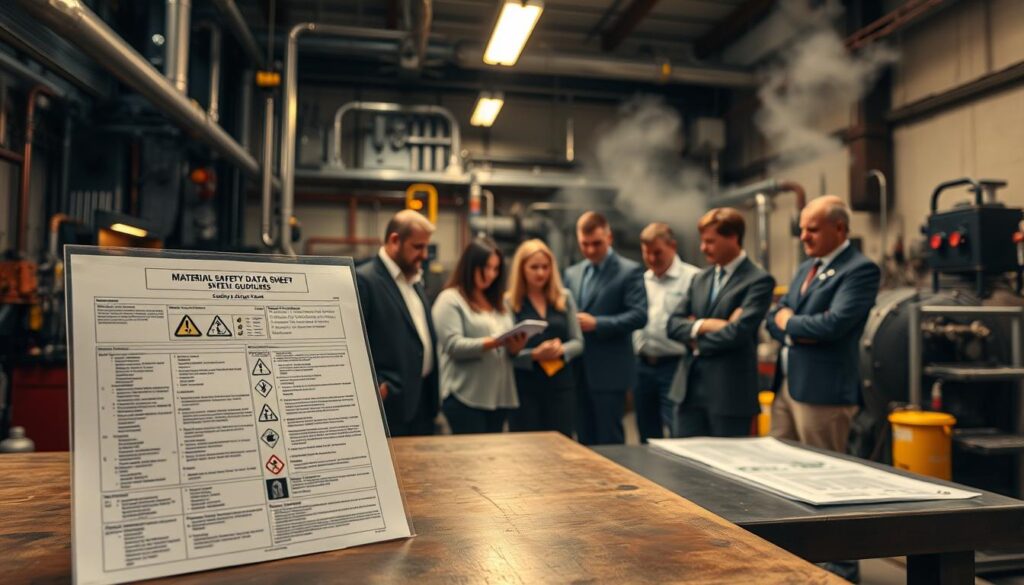
Most chemical injuries in workshops aren’t from not knowing the danger. They’re from not knowing how to react. Students might know sulfuric acid is dangerous, but do they know sodium bicarbonate can neutralize it? Or that water can make some burns worse? This is why chemical literacy is as important as tool skills.
To keep your workshop safe, post SDS sheets where everyone can see them. Go over them during the first day and include them in your student workshop protocols. The aim is to teach students to act quickly and safely in emergencies. Because when a spill happens and fumes spread, there’s no time to look up how to react.
In summary, making MSDS sheets easy to find and understand is a key safety step. Take the lead in chemical safety and make your workshop a place of readiness.
Pressure System Safety: Understanding PSI Limits and Relief Valves
Understanding pressure systems is key to a safe workshop. In educational steam workshops, knowing PSI limits is essential. It helps prevent big failures. The FIRST Robotics Competition Safety Manual tells us to always vent compressed air to the atmosphere.
Opening the main vent valve and checking all pressure gauges is like a safety ritual. It’s vital for keeping everyone safe.
Every boiler and pressure vessel in your workshop has a rated limit. This limit is the line between safe equipment and a dangerous device. Relief valves are critical; they protect against uncontrolled chaos.
Imagine a workshop where relief valves are hidden or painted over. This is not just carelessness; it’s a serious risk. Students need to understand PSI ratings and why they’re important.
The engineering behind pressure ratings is fascinating. It involves safety, material fatigue, and failure modes. Teaching students to read pressure gauges is essential. A rising needle is a warning, not a suggestion.
| Component | PSI Limit | Purpose | Safety Feature |
|---|---|---|---|
| Boiler | 150 PSI | Steam Generation | Relief Valve |
| Pressure Vessel | 200 PSI | Storage of Compressed Air | Pressure Gauge |
| Air Compressor | 125 PSI | Powering Tools | Automatic Shut-off |
Documentation Requirements: Incident Reports and Safety Record Keeping
Documentation in workshops is like kale: necessary but often overlooked. While no one jumps for joy at the thought of filling out forms, the reality is that thorough documentation is the bedrock of workshop safety. It records incidents for liability and helps identify patterns to prevent future mishaps.
The Georgia DECAL Rules say every incident must be documented. This isn’t just red tape; it’s about turning vague memories into concrete data. The FIRST Robotics Competition Safety Manual also stresses the need to report incidents right away. Team numbers and details must be given to the Pit Administration Supervisor.
Workshops that see documentation as a chore often miss reporting incidents. But those that view it as a learning tool create safer environments. Your incident report forms should be easy to fill out but detailed enough for audits.
Don’t just stop at incident reports. Keep records of maintenance, training, and equipment checks. This isn’t just about checking boxes; it’s about protecting future students. A well-documented workshop is a safer workshop, leading to better safety guidelines.
Regular Maintenance: Equipment Inspection and Safety System Testing
Maintenance is key in steam workshops. It keeps everything running smoothly, like dental hygiene. The FIRST Robotics Competition Safety Manual stresses the need for ongoing battery checks. This rule should apply to all workshop equipment.
Boilers don’t warn us when they’re about to fail. Pressure relief valves don’t signal their breakdown either. Regular inspections are the only way to catch problems early. A maintenance schedule is a must, treated as seriously as fire drills.
Students learn a lot from these maintenance tasks. When they check a relief valve, they understand its role better than from lectures. This hands-on learning makes safety a real part of their education.
Regular upkeep turns safety into a real practice. It makes sure everyone knows their equipment is safe. Knowing your equipment is reliable is the best way to keep a steam workshop safe.
