
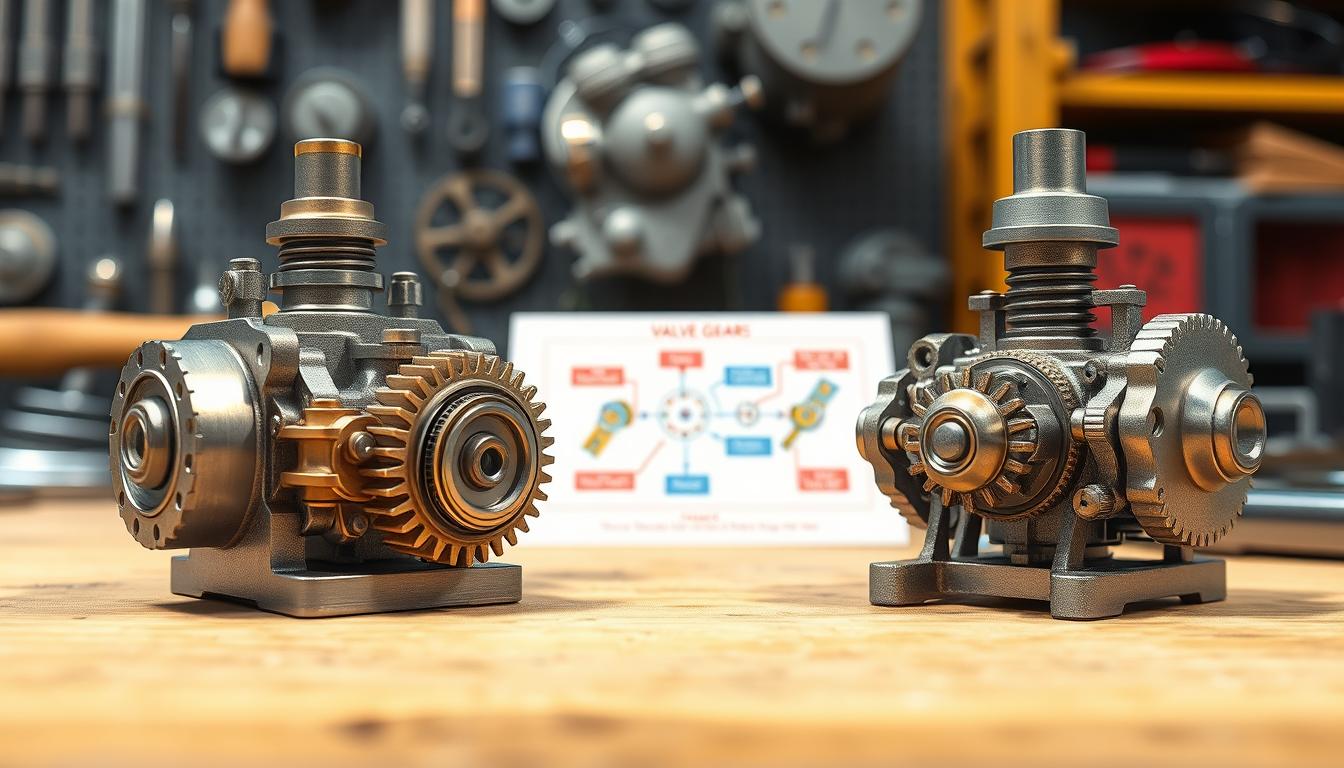
Welcome to the charming, slightly old-fashioned world of tabletop power. It’s like a family reunion for three unique mechanical personalities.
The oscillating cylinder is like the eccentric uncle who can’t sit. The slide-valve engine is our steady, reliable cousin. And the uniflow is the modern, efficiency-obsessed nephew.
This isn’t just about old museum pieces. We’re looking at which of these mini marvels should be in your classroom model engines display, workshop, or mad-scientist lab.
Why should you care about Victorian-era concepts today? There’s a growing interest in steam engines for sustainable energy. They’re praised for their simplicity and durability.
I’ll use historical insights and modern critiques to ask tough questions. Can an oscillator really compete with a big engine for power and steam use?
Get ready for a mix of mechanical poetry and very practical analysis. Let’s explore what these old gears can teach us today.
Family Portrait: Common Student-Scale Engine Types
Student-scale steam engines are like a family reunion, each with its own unique traits. The oscillating engine is simple, with a cylinder that rocks back and forth. It’s a great first project because of its simplicity.
The slide-valve engine is like a reliable pocket watch. It’s known for its chuff-chuff sound and visible valve gear. It shows off its inner workings proudly.
The uniflow engine is the brainy cousin. It has separate ports for intake and exhaust, aiming for better efficiency. It’s a design that shows advanced thinking.
These engines are important because they show the power of simplicity and durability. They can run on different fuels, like solar or biomass. They’re also good for the environment.
But, they have some downsides. There are efficiency concerns and steam safety to consider. They’re not perfect, but they teach us valuable lessons.
There’s a big choice to make: single vs. double acting. Does the steam push the piston from one side or both? Single-acting is simpler, while double-acting is more powerful.
The flywheel is another key part. It stores energy and helps smooth out the engine’s motion. It makes the engine run more smoothly, no matter the design.
This is our family portrait. The oscillating engine is playful, the slide-valve is dependable, and the uniflow is innovative. Each has its own story and lessons to teach.
How Each Works (Clear Motion Paths)
Imagine a seesaw that also breathes fire—that’s your oscillator, the charmingly inefficient diva of the steam world. Its motion path is beautifully simple. The cylinder itself rocks back and forth on a pivot, acting as both power unit and valve. Steam enters, pushes the piston, and the whole assembly tilts, opening and closing ports for exhaust. It’s a kinetic Rube Goldberg device with minimal parts.
But here’s the catch, straight from our source: this elegant dance has no room for nuance. The oscillator cannot use steam expansively. It’s an all-or-nothing deal. Full pressure admission, immediate exhaust. Think of it like slamming a door instead of easing it shut. Wasteful? Absolutely. But for a classroom model engine, its transparency is priceless. You see every action in one sweeping, comprehensible motion.
Now, meet the slide-valve engine, the reliable clockmaker of the trio. Its motion path is a study in separated, timed functions. A piston moves linearly in a fixed cylinder. A separate sliding block, the D-valve, orchestrates the steam’s entrance and exit. It’s a mechanical conductor with a timeless score. This design allows for “cut-off”—closing the intake port partway through the piston’s stroke.
With cut-off, the admitted steam can then expand, doing more work with less fuel. It’s the difference between chugging a soda and sipping it slowly. For a given boiler capacity, this ability makes the slide-valve noticeably more efficient. The motion paths—piston up/down, valve side-to-side—are distinct, making it perfect for teaching mechanical sequencing.
Then we have the uniflow, the one-way street of thermal energy. Its motion path is all about directional purity. Steam enters at the cylinder ends and exhausts through ports uncovered by the piston in the middle of its stroke. The flow doesn’t reverse. This allows for even more complete expansion and higher efficiency. The piston’s travel is the same, but the steam’s journey is streamlined.
So, which mechanisms best reveal the secrets of thermodynamics? The oscillator shows basic force and motion. The slide-valve demonstrates timed valve events and expansive working. The uniflow illustrates the principle of directed flow and heat recovery. Each is a moving textbook diagram.
And what about compound engines? Think of them as the sequel, the next level of complexity. They use two or more cylinders of different sizes. High-pressure steam expands in the first cylinder, then gets passed to a larger, low-pressure cylinder for further expansion. It’s a tag-team match for efficiency, but the motion paths multiply into a symphony of pistons. A fantastic concept for advanced students ready to graduate from single-cylinder classroom model engines.
| Engine Type | Core Motion Path | Uses Steam Expansively? | Kinematic Clarity for Teaching |
|---|---|---|---|
| Oscillator | Cylinder rocks on pivot; integrated valve action. | No. Full admission, immediate exhaust. | Excellent. All action is visible in one component. |
| Slide-Valve | Piston linear; sliding D-valve lateral. | Yes, via cut-off for better efficiency. | Very Good. Separates power and timing mechanisms. |
| Uniflow | Piston linear; exhaust ports in cylinder wall. | Yes, optimized for directional expansion. | Good. Shows advanced exhaust principle. |
| Compound Engines | Multiple pistons in staged, sequential motion. | Yes, multi-stage expansion is the goal. | Advanced. Demonstrates energy staging. |
Trace these paths with your finger on the table. The oscillator’s arc, the slide-valve’s reciprocating shuffle, the uniflow’s linear march. In the world of miniature power, motion isn’t just movement—it’s meaning. Choosing the right classroom model engine means choosing which story of force, heat, and time you want your students to watch unfold.
Complexity, Cost, and Classroom Fit
Getting a classroom steam engine can be a challenge. It needs engineering smarts and a bit of humor about school budgets. Your budget might be tight, but we’ll find a way to make it work. We’ll look at the costs and the learning opportunities hidden in the mechanics.
The oscillating cylinder engine is simple and easy to make. It has just a few parts, like a brass cylinder and a crankshaft. This simplicity is good for your wallet but might make the engine a bit rough. To fix this, you’ll need a bigger flywheel inertia to smooth out the motion.
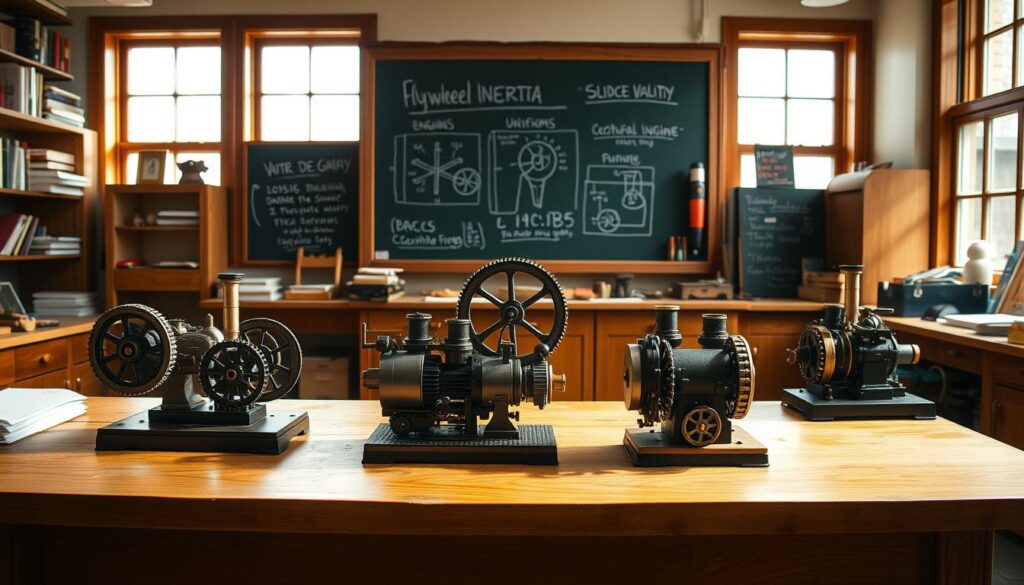
The slide-valve engine is a good middle choice. It teaches about valve gear basics in a fun way. It’s not too expensive and has a smoother motion, needing less flywheel inertia.
The uniflow engine is more advanced. It needs better parts and more precise work. This makes it more expensive but also more efficient. It’s like a high-performance car for your classroom.
Choosing an engine for your classroom depends on your tools and budget. You might need to decide between basic assembly or more complex projects. The choice is not just about the tech; it’s also about money. Let’s look at the options clearly.
| Engine Type | Complexity & Skills | Relative Cost | Classroom Fit | Flywheel Inertia Need |
|---|---|---|---|---|
| Oscillating | Very Low. Ideal for introductory assembly and casting projects. | Lowest | Perfect for tight budgets and limited tool access. The “get it running” champion. | High. Requires a heavier flywheel to smooth operation. |
| Slide-Valve | Moderate. Introduces valve gear basics and mechanical timing. | Medium | The sweet spot for teaching design trade-offs. Great for mid-level programs. | Medium. Standard flywheel is usually sufficient. |
| Uniflow | High. Demands precision machining and understanding of pressure dynamics. | Highest | Best for advanced labs with proper funding and machining capabilities. | Low to Medium. Inherently smooth flow reduces inertial demands. |
The oscillator is cheap and simple. The slide-valve teaches important mechanical lessons. The uniflow is for when you can afford to focus on efficiency. Remember, flywheel inertia affects the oscillator’s cost. And learning valve gear basics with the slide-valve is affordable.
Choosing an engine for your classroom is a smart decision. It’s about matching your goals with what you can afford. Pick the engine that teaches without breaking the bank. The only steam we want is in the boiler, not in the purchasing manager’s ears.
Performance Snapshot: Torque, RPM, Smoothness
Torque, RPM, and smoothness are key to an engine’s performance. They show if an engine is a smooth worker or a noisy one. Let’s look under the hood to see what these mini engines can do.
Torque is the engine’s strength. It’s what gets things moving. The choice between single vs. double acting engines matters here.
An engine with a single-acting cylinder is like a one-punch boxer. It only pushes once per turn. This can make the engine feel jerky.
On the other hand, double-acting engines are like quick jabs. They push on both sides of the piston, making the engine smoother. This is why modern cars are so smooth.
RPM is another important factor. Oscillating engines can spin fast but not smoothly. Double-acting engines, with better control, offer a steadier RPM.
Smoothness is like a dance. A good flywheel helps, but timing is key. Poor timing makes the engine stutter. Good timing makes it hum smoothly.
So, who’s the winner in power? High-pressure steam can make an oscillator loud for a moment. But it’s not efficient.
The real winners are expansive engines. They do more work with less steam at the same RPM. It’s about using steam wisely.
Compound engines are the top performers. They use two cylinders to get the most out of steam. This makes them very powerful.
Let’s compare the engines:
| Metric | Oscillating (Single-Acting) | Slide-Valve (Double-Acting) | Uniflow (Double-Acting) |
|---|---|---|---|
| Torque Character | Pulsing, less consistent | Steadier, more consistent | Very steady, high expansion |
| RPM Tendency | Higher, less controlled | Moderate, well-governed | Moderate, very efficient |
| Smoothness Driver | Heavily flywheel-dependent | Flywheel & valve timing | Flywheel & superior valve events |
| Efficiency with Steam | Lower | Better | Best (potentially) |
The choice between single vs. double acting engines is about simplicity versus polish. Compound engines aim to make polish into pure performance. Some engines just have better rhythm.
Fuel/Boiler Pairings and Practical Safety
Let’s talk about the fuel for these tiny engines. Without a heat source, they’re just fancy paperweights. The boiler is key, acting like a high-tech pressure cooker.
Steam engines are flexible, working with solar, biomass, or alcohol burners. This makes learning about mechanics and energy sustainability exciting for students.
Finding the right engine and heat source is an art and science mix. Not every boiler fits every project.
| Engine Type | Recommended Fuel/Boiler Pairing | Key Safety Note |
|---|---|---|
| Oscillating | Simple alcohol or butane burner; low-pressure electric kettle boiler. | Minimal plumbing. Watch for loose hose connections. |
| Slide-Valve | Medium-pressure gas burner; integrated small fire-tube boiler. | More complex valve gear. Ensure pressure relief valve is functional. |
| Uniflow | Higher-efficiency sources like solar thermal or biomass gasifier. | Higher pressure. Needs strong pressure gauges and sensors. |
Steam engines need respect due to their high pressure. Their history is filled with accidents and surprises.
Today, we have safer solutions like flash steam generators and electronic valves. These tools help prevent accidents and keep students safe.
For classroom model engines, safety is the first rule. This includes managing flywheel inertia. A spinning flywheel can be dangerous if not handled carefully.
It’s important to secure flywheels and keep areas clear. Teach students that an engine is only off when the flywheel stops. This rule is essential for safe operation.
Be creative with fuels like solar or biomass. But always remember the importance of safety. The goal is to educate, not to cause accidents.
Demo Plans for Each Type
Demonstrations are where engineering meets showmanship. With the right plan, you can avoid boredom and minor explosions. Let’s craft three distinct performances. Each one is designed to transform abstract principles into visceral understanding.
The goal isn’t just to show a machine working. It’s to script the “aha!” moment.
First up, the oscillating engine. Its beauty is in its simplicity, making it the perfect opening act.
Your demo should focus purely on motion conversion. Forget complex boiler setups initially. Use a small electric heating element or even a candle to generate just enough steam.
The magic happens when students see the piston’s back-and-forth wiggle directly create rotary motion at the flywheel.
Key visual aid: A large, hand-cranked model showing the piston-cylinder connection. Let them feel the “dead center” points. For the inevitable safety question, emphasize the low pressure and contained design.
“What if it blows up?” Well, with these tiny pressures, you’d get a hiss, not a bang. It’s more likely to stall dramatically than become a projectile.
Next, the slide-valve engine. This is your chance to dive into valve gear basics.
The star of this show is a transparent cylinder head. If you can’t source one, a clear animation on a tablet works. The demo is a dissection.
Show how the sliding valve orchestrates steam admission and exhaust. This is the perfect moment to explain single vs. double acting operation. Point out how one side of the piston gets pushed, then the other.
Highlight the elegance—and the inherent leakage—of the design. For a modern twist, consider replacing the traditional mechanical valve gear with a simple solenoid valve controlled by a micro-switch on the flywheel. It’s a brilliant way to separate the timing concept from the mechanical complexity.
Set up a side-by-side comparison. Run the slide-valve and uniflow engines from the same boiler and load. Use a tachometer or a simple strobe light to measure RPM under identical conditions.
The uniflow’s advantage in speed and smoothness will be visibly, audibly obvious.
Here’s where 21st-century tech shines. Use an Arduino with an optical sensor on the flywheel to precisely control an electronic exhaust valve. This demonstrates how optimal timing boosts performance. It also answers the “what if” question with smart engineering: electronic controls can include automatic pressure shut-offs. Safety becomes a feature, not an afterthought.
To help you cast your demo, here’s a quick comparison of our three acts:
| Engine Type | Key Demo Focus | Best Visual Aid | Modern Twist | Safety Talking Point |
|---|---|---|---|---|
| Oscillating | Direct motion conversion | Large hand-crank model | Low-pressure electric steam source | Minimal pressure risk; dramatic stall vs. explosion |
| Slide-Valve | Valve gear basics & single vs. double acting | Transparent cylinder or detailed animation | Solenoid valve replacing mechanical gear | Contained design; emphasize controlled steam paths |
| Uniflow | Efficiency & superior exhaust | Side-by-side RPM comparison | Arduino-controlled optical timing sensor | Electronic safety cut-offs as integral design |
The best demos don’t just inform. They perform. They turn valve gear basics into a story of sliding parts and escaping steam. They make the single vs. double acting debate a physical sensation. With these plans, you’re not just a teacher. You’re a director, and the steam is your willing actor.
Decision Matrix: Choosing for Your Program
Forget the endless debates. A simple three-axis plot can reveal which mini engine truly belongs in your program.
Let’s be honest. The real challenge isn’t the engineering. It’s navigating budget spreadsheets, educational mandates, and that one skeptical department chair. We need a framework, not a fortune teller.
Your decision rests on three pillars: budget, educational objective, and shop capability. Plot your position. The winning engine will wink back.
Axis One: The Budget. This isn’t just purchase price. It’s total cost of ownership. Consider parts availability, tooling needs, and how often you’ll be replacing seals. A cheap engine that breaks during every demo is a budget black hole.
Axis Two: Educational Objective. Are you teaching pure mechanics—levers, pistons, cranks? Or diving deep into thermodynamics and efficiency? Your goal dictates the complexity you need. For advanced programs chasing thermal efficiency, compound engines offer a fascinating, staged-expansion lesson. But they’re a graduate-level commitment.
Axis Three: Shop Capability. Can students manufacture parts locally? Is your workspace a full machine shop or a clean lab bench? Simplicity for local manufacturing is a huge plus. So is an engine’s ability to accept multiple heat inputs—like alcohol burners or electric elements—which adds flexibility.
So, are classroom model engines for tinkering or passive observation? The answer is in your matrix. High shop capability and a mechanics objective demand a hands-on, tear-down model. A thermodynamics focus with a tight budget might lean toward a robust, observational unit.
Low maintenance requirements are non-negotiable for busy educators. You want to teach, not constantly recalibrate.
| Engine Type | Budget Friendliness | Educational Focus | Shop Complexity | Maintenance Level | Heat Input Flexibility |
|---|---|---|---|---|---|
| Oscillating | High | Basic Mechanics | Low | Low | Medium |
| Slide-Valve | Medium | Valve Timing & Mechanics | Medium | Medium | High |
| Uniflow | Medium-High | Thermodynamic Efficiency | High | Low | Medium |
| Compound Engines | Low | Advanced Thermodynamics | Very High | High | Low |
Use this table as your cheat sheet. Find your column priorities. See which row aligns. The intersection is your candidate.
Justifying the choice to the powers that be? Frame it in their language. Cite the matrix. Highlight low lifetime cost or alignment with curriculum standards. It turns a technical preference into an institutional strategy.
Now go forth. Make a choice you won’t regret—or at least one you can defend with a straight face in the next faculty meeting.
Common Mistakes and How to Avoid Them
In the world of model steam engines, a small mistake can stop everything. What looks simple on paper can become a big problem in the workshop. Even experienced builders can make mistakes that seem tiny but are actually huge.
Here’s a list of common errors. These aren’t just mistakes in doing things, but in how we do them.
- Misaligned valve timing on a slide-valve engine.
- Chronic steam leaks from poor sealing.
- An under-sized flywheel leading to a jerky, unreliable rhythm.
- Assuming single vs. double acting is only about complexity.
- Neglecting lubrication until you hear the screech.
- A flywheel so unbalanced it dreams of becoming a projectile.
The last point is serious. A flywheel stores energy. If it’s not balanced, that energy can get out in a bad way. The right flywheel inertia is key for smooth running. Too little, and the engine stutters. Too much, and it’s like a mini trebuchet.
Valve timing is another big problem. On a slide-valve engine, a tiny mistake can stop it from starting or make it run backwards. The fix? Be patient. Use marking blue and turn the flywheel slowly to check the valve openings. It’s a precise task.
Sealing is also a big issue. Steam can escape easily. Gaskets are important. Use the right material for the job. And don’t over-tighten, or you’ll create a leak.
The single vs. double acting choice is tricky. A single-acting engine has fewer parts but only works in one direction. It needs a heavier flywheel. A double-acting engine is smoother but needs perfect sealing on both sides. Don’t choose based on simplicity alone.
Lubrication is vital. Steam can wash away oil. Use the right steam cylinder oil, not just any oil. A few drops before running can make a big difference.
The main problem is pride. We think our plans are perfect. But metal can be unpredictable. Check your flywheel inertia. Respect the seals. Time the valves carefully. Do these things, and you’ll avoid common mistakes. You’ll join those who learned the hard way that in steam engines, details matter a lot.
Assessment: Compare/Contrast Organizer
Reading about engines is one thing. But comparing oscillating and slide-valve engines is another. Think of this as your final exam, but without the stress. We’re moving beyond just memorizing facts.
This compare/contrast organizer is your ultimate cheat sheet. It helps you go from passive learning to active judgment. It’s like the Consumer Reports for miniature steam power.
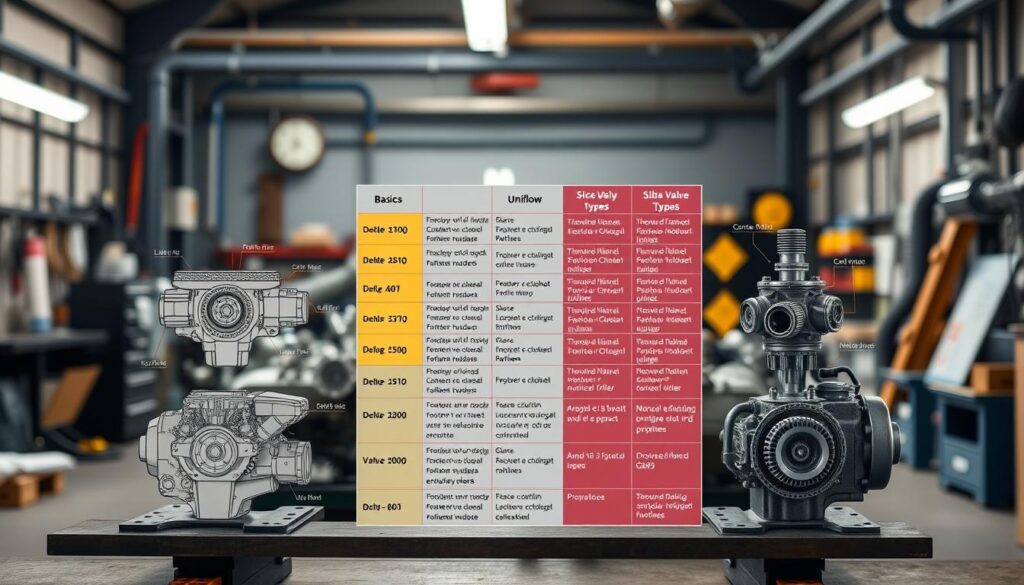
The table below is more than just a list. It’s a summary of everything we’ve covered, from valve gear basics to compound engines. Use it to choose the right engine for your next project. Or just to impress your friends with your knowledge of Victorian-era mechanics.
| Criteria | Oscillating Cylinder | Slide-Valve (D-Slide) | Uniflow |
|---|---|---|---|
| Efficiency & Power | Lowest. Simple steam admission leads to significant heat loss. Think of it as the fuel-guzzling muscle car of the trio—lots of motion, not much finesse. | Moderate. Better steam expansion than an oscillator, but the slide valve itself is a heat sink. A reliable daily driver. | Highest. Separate inlet/exhaust ports minimize condensation. This is the hyper-mileage hybrid, extracting every joule from the steam. |
| Mechanical Complexity | Extremely Simple. No separate valve gear. The cylinder itself is the valve. Perfect for a weekend project. | Moderate. Requires an eccentric and linkwork to operate the D-slide. This is where you truly learn valve gear basics. | High. Precise port timing and often multiple cylinders. The domain of advanced model engineers aiming for compound engines. |
| Relative Cost & Build Time | Lowest. Fewest parts, easiest to machine. Your wallet and your patience will thank you. | Medium. More components than an oscillator, but within reach of a well-equipped hobbyist. | Highest. Precision machining and more materials drive up cost and time. This is a long-term commitment. |
| Ideal Project Suitability | First-time builds, educational demos, low-speed displays. It’s a brilliant teacher. | Intermediate projects, where understanding motion conversion is key. Great for powering small boats or generators. | Advanced efficiency projects, multi-cylinder displays, or serious power generation. The pinnacle of model engineering. |
See the pattern? It’s a classic trade-off triangle: simplicity, cost, and efficiency. You can only pick two.
Now, for the real fun. Start a debate. Here’s a proposition: “Resolved: The oscillating engine is a teaching tool, not a practical power source.” Use the table as your evidence. Argue for its simplicity as a virtue. Argue against its thermal inefficiency as a fatal flaw.
This isn’t busywork. It’s how you internalize the concepts. So, fill out this organizer, have the debate, and decide which tiny titan of steam deserves a spot on your workbench.
Extension: Simple Valve-Timing Experiment
So, you’ve explored the world of student-scale engines. Now, you want to see the real deal. Let’s dive into a valve-timing experiment.
Choose a basic oscillating or slide-valve engine. We’ll play with valve events to see how they affect RPM and torque. This experiment makes the single vs. double acting debate real and measurable. For a deeper look, check out this forum on steam engine timing basics.
Now, let’s bring the past into the present. Using electronic valves for precision is smart. Connect a Hall-effect sensor to the crankshaft. Then, use a microcontroller to track RPM changes as you tweak the eccentric. Your old classroom model engine is now a modern data collector, reflecting techniques similar to those used in advanced engineering systems and heavy machinery solutions.
This experiment turns theory into something you can touch and feel. It shows how timing affects power and efficiency. You’re not just watching history — you’re improving it, step by step.
