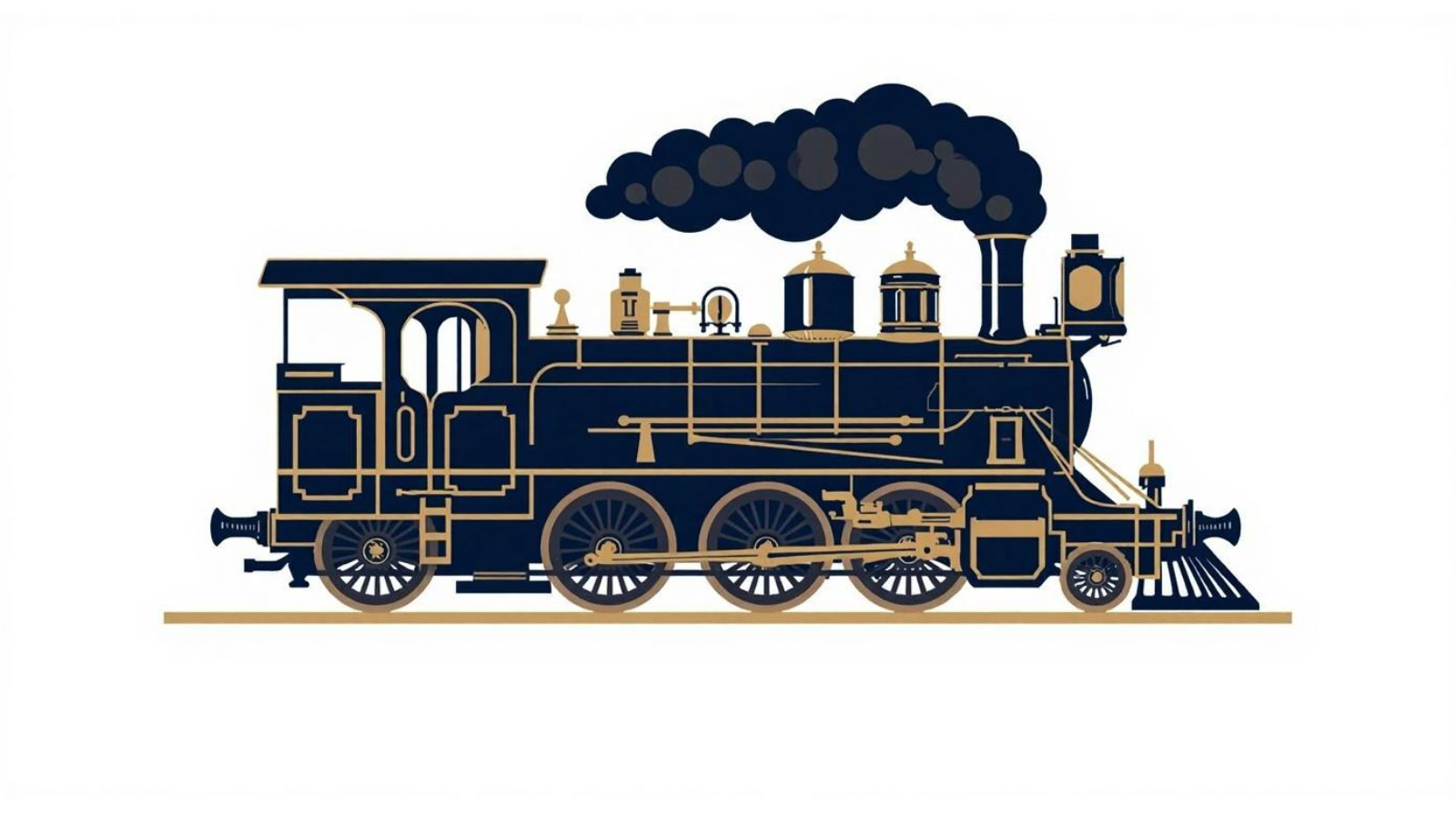
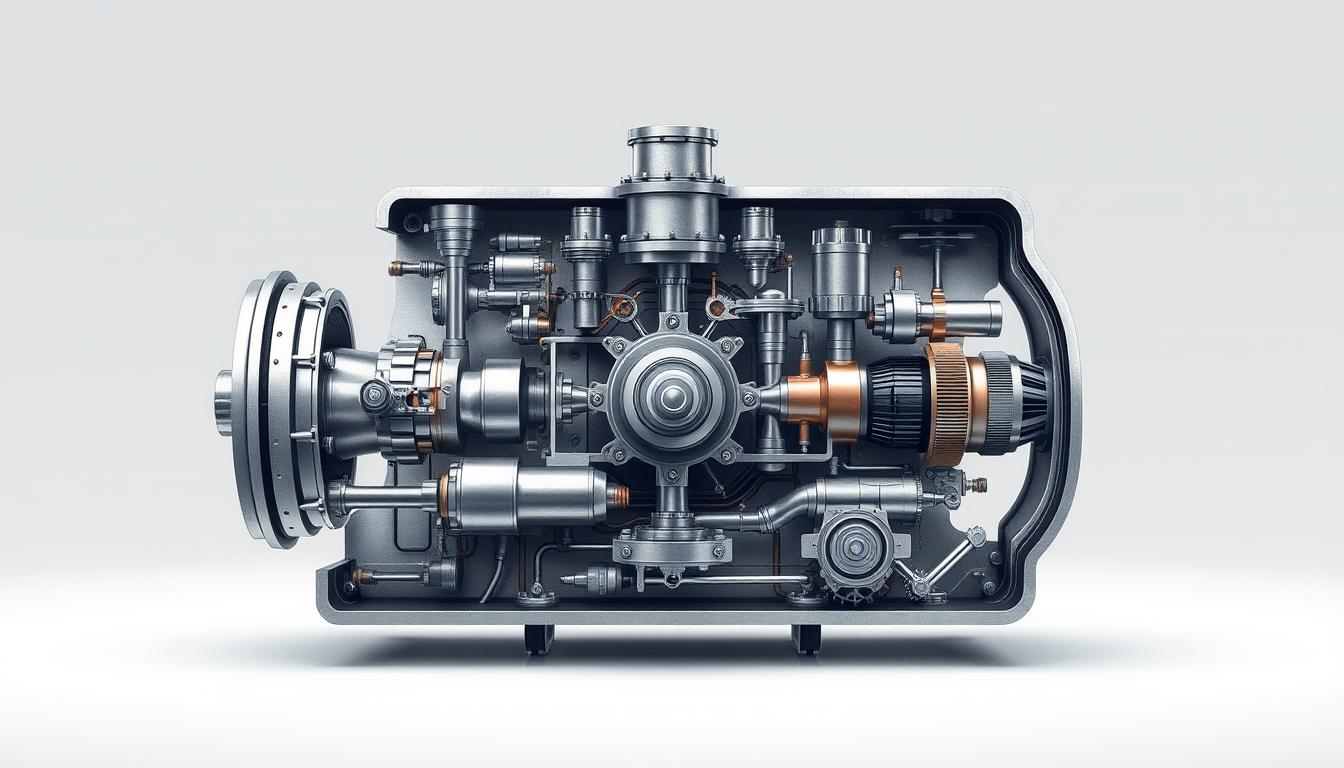
A 1st-century Greek inventor named Hero created a metal sphere that spun using steam. It was like a fidget spinner powered by boiling water. Later, French physicist Denis Papin turned this idea into something big. It went from a fun trick to a key part of the Industrial Revolution.
Today, students might ask: How did we go from steam toys to huge locomotives? The answer is simple physics. Boiling water can move pistons and turbines. It’s like your Instant Pot could power factories.
Modern makers are exploring these ideas with beginner-friendly STEM projects. They use 3D-printed parts to make steam engines. Whether it’s Hero’s design or something new, learning about steam engines connects us to history.
Basic Parts of a Steam Engine
A steam engine is like a rock band. Each part has its own role, but together they create magic. Let’s explore the boiler, piston, and condenser. They turn water into motion.
Boiler Breakdown 101
The boiler is not just a tea kettle. It’s like a pressure cooker and a stage for water molecules. When heated, they turn into steam, powerful enough to move old trains or blow off your socks.
“You can’t have power without containment – that’s the first law of steam economics.”
James Watt made a big change with his separate condenser. It’s like a lemonade stand that keeps using the same lemons. Watt’s design cooled the steam, turned it back into water, and reused it. This made the engine 75% more efficient, showing simple ideas can be powerful.
Pistons: The Muscle Behind the Machine
Pistons are the heart of the steam engine. They turn pressure into strong force. Trevithick’s designs made them very powerful, able to:
- Lift mining equipment from coal pits
- Drive paddle wheels across oceans
- Power factories during the Industrial Revolution
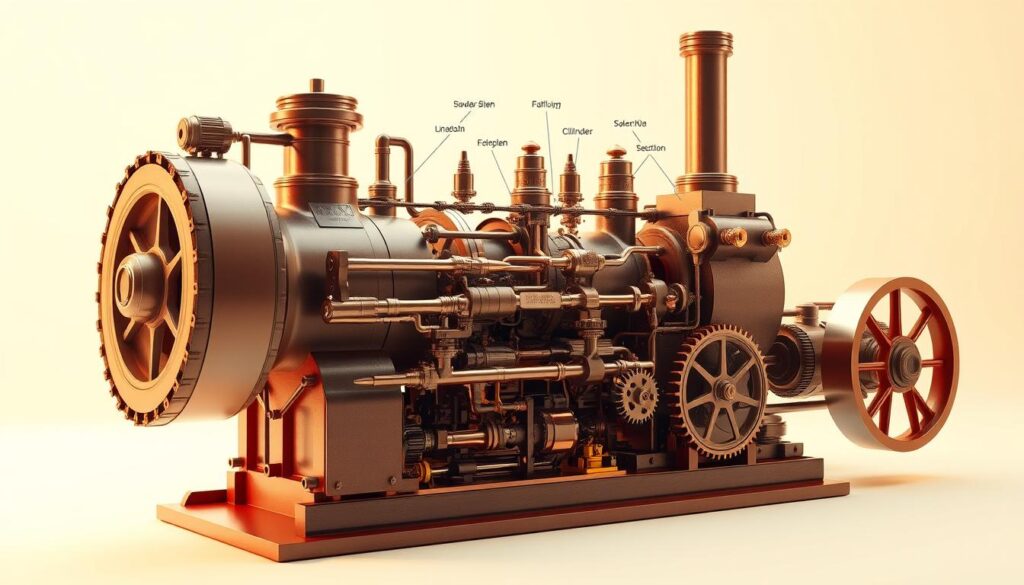
Now, try to find these parts in our SteamPunk diagram (see above):
- The steam inlet valve (look for the angry cloud entrance)
- Connecting rod (the piston’s dance partner)
- Flywheel (the spinning peacekeeper regulating motion)
See how the piston’s movement turns into spinning energy? That’s the science of steam at work. It changes straight force into circular motion, like a dancer spinning on a turntable.
How Heat Makes Motion
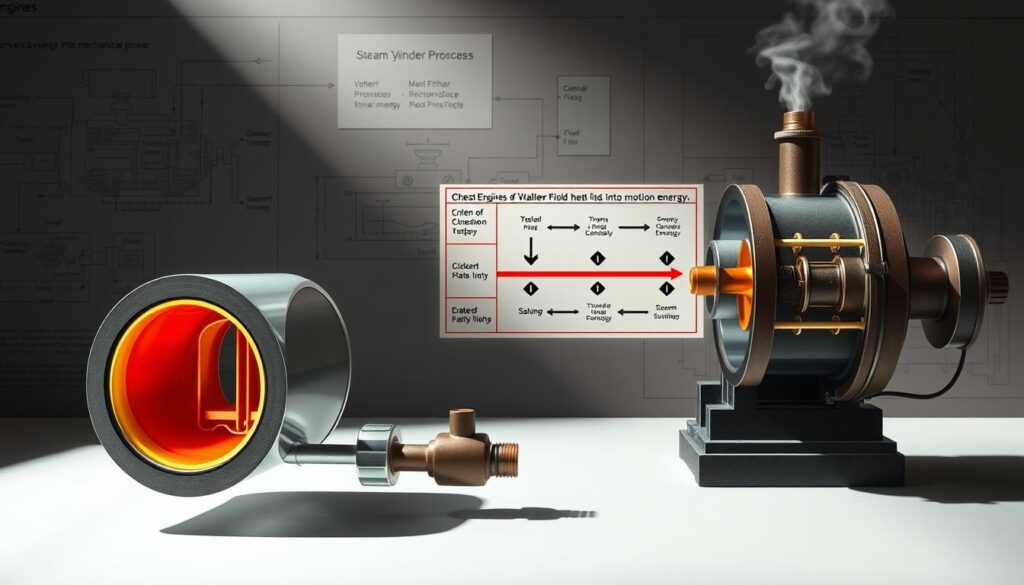
Imagine your pepperoni pizza delivery arriving via steam locomotive. That’s energy transformation in action – turning crust-burning heat into wheel-spinning motion. Let’s break down this fiery magic trick that powers everything from 19th-century factories to your hypothetical pizza-powered time machine.
Thermodynamics for Teens
Meet Carl the Carbon Atom – our rebellious protagonist buried in Appalachian coal. When Carl gets fired up (literally), he becomes the ultimate hype man for kinetic energy. Here’s his glow-up journey:
| Energy Stage | Skatepark Equivalent | Temperature Range |
|---|---|---|
| Chemical Energy | Skater waiting at the top | Room temp to 500°F |
| Thermal Energy | Drop-in moment | 500-1000°F |
| Mechanical Work | Grinding the rail | Steam pressure @ 150+ psi |
From Coal to Kinetic Energy
The Rankine Cycle isn’t some dystopian YA novel – it’s thermodynamics’ greatest hits album. Picture a pizza oven with commitment issues:
- Fire Up: Coal burns hotter than your last Twitter feud
- Boil Zone: Water transforms into steam like influencer merch drops
- Power Move: Pistons pump faster than a caffeine-fueled TikTok scroll
- Chill Out: Steam condenses back to water, ready for round two
This energy transformation chain reaction converts about 8% of coal’s energy into actual work. The rest? Lost like AirPods in a couch cushion – mostly through heat escaping up the smokestack.
Modern power plants boost efficiency to 40%, but steam engines remain the OG proof that heat to motion isn’t magic – just physics with better PR. Next time you see a locomotive, remember: it’s basically a metal dragon breathing kinetic energy instead of fire.
Real-Life Steam Engine Examples
Imagine Tony Stark making locomotives instead of Iron Man suits. Welcome to the golden age of steam. Here, engineering rivalries led to fast innovations. Let’s look at the mechanical stars that made railroads like the internet of the 1800s.
Iron Horses That Changed History
Before streaming, we had steaming services. Richard Trevithick’s 1804 engine was the first to move heavy stuff without horses or miracles. But George Stephenson’s 1829 Rocket was the real star. It won the Rainhill Trials like it was Eurovision for engineers.
Stephenson’s Rocket vs. Union Pacific 844
Let’s compare these rail legends:
| Rocket (1829) | Big Boy 844 (1940s) | |
|---|---|---|
| Top Speed | 30 mph (Usain Bolt pace) | 80 mph (angry cheetah) |
| Fuel Efficiency | Coal-powered snack machine | Oil-guzzling beast |
| Legacy | Invented passenger rail | Last steam survivor in U.S. service |
The Rocket was like the iPhone 1 of trains – revolutionary but basic. Its design became a standard. The Union Pacific 844, on the other hand, is the steam era’s final boss. It’s a legend at railfans’ conventions today.
Early trains needed “walking” engineers because brakes didn’t exist. Imagine someone running alongside your car to slow it down. That’s how we got weekend getaways!
Fun Animations/Diagrams
Ever wanted to take apart a steam engine without getting dirty? Let’s use digital tools to make thermodynamics fun. We’re mixing virtual reality with paper crafts to make learning hands-on.
Interactive Steam Simulations
Cornell University’s engineering department has cool PDF diagrams. Their boiler pressure simulator is like Guitar Hero for engineers. If you mess up, your engine will smoke instead of run.
Try their labeling exercises to learn about pistons quickly. You’ll learn faster than you can sing “Old Town Road.”
DIY Paper Engine Blueprints
Why use a machine shop when you have scissors and glue? Our printable Stephenson’s Rocket template turns your kitchen into a 1829 workshop. Here’s what you need:
| Material | Cost | Difficulty |
|---|---|---|
| Cardstock | $3/sheet | ⭐️⭐️ |
| Bamboo Skewers | $1/pack | ⭐️ |
| 3D Printer Filament | $20/spool | ⭐️⭐️⭐️⭐️ |
Build while watching The Railway Men. Suddenly, history class is like a Netflix show. Move the paper piston rod and see your model move like a fast-moving inchworm.
Hands-on: Make a Balloon-Powered Engine
Transform your kitchen into a Victorian workshop without the mess. Our beginner model steam engine is easy to make and super fun. It uses simple materials like soda cans and balloons, inspired by ancient ideas.
Kitchen Table Engineering
Find these items in your recycling bin or grandma’s attic:
- Empty soda can (diet preferred – we’re health-conscious inventors)
- Balloon (standard party size – no hot air monstrosities)
- Plastic straws (the mortal enemy of sea turtles)
- Duct tape (the redneck’s carbon fiber)
Here’s how to do it:
- Punch holes in the can’s base – be precise like a Swiss watchmaker
- Insert straws at 160° angles (or “sorta diagonal” for non-nerds)
- Seal everything with duct tape to last a zombie apocalypse
- Attach balloon to the can’s opening – welcome to the 18th century, punk
“Safety isn’t just a guideline – it’s what separates Edison from Icarus.”
Safety First: Steam Without the Scream
Before you start:
- ⚠️ Adult supervision required (they’ll pretend to hate it)
- 🔪 Use safety scissors – this isn’t a slasher film audition
- 🌡️ Hot water? More like warm water – we’re not brewing tea here
When you pour warm water into the can and watch the balloon inflate, you’re seeing history come alive. The steam creates a force that powered the Industrial Revolution. Add food coloring for a cool effect that’ll impress Newton.
Conclusion
We’ve followed steam power’s path from ancient Greek tricks to today’s railroads. But here’s a surprise. The same principle that heats your espresso machine now powers 80% of the world’s electricity. This is thanks to modern steam turbines.
The 21st century revival of steam power isn’t just a throwback. It’s used in nuclear plants and solar thermal stations too. They all rely on pressurized water.
My grandfather’s Lionel train set showed me how steam works. It’s all about fire, water, and motion. Today, engineers create complex symphonies with these elements.
Modern turbines spin faster than any TikTok trend. They turn heat into megawatts with incredible efficiency. Yet, every turn follows the same thermodynamic laws we learned.
Want to keep the steam engines running? Check out the Henry Ford Museum or read Neal Stephenson’s The Difference Engine. Or join a local model engineering club. There, you’ll see the magic of turning physics into future possibilities.
Steam power isn’t just history. It’s a modern marvel, blending old and new. What will you create when you light the fire?
