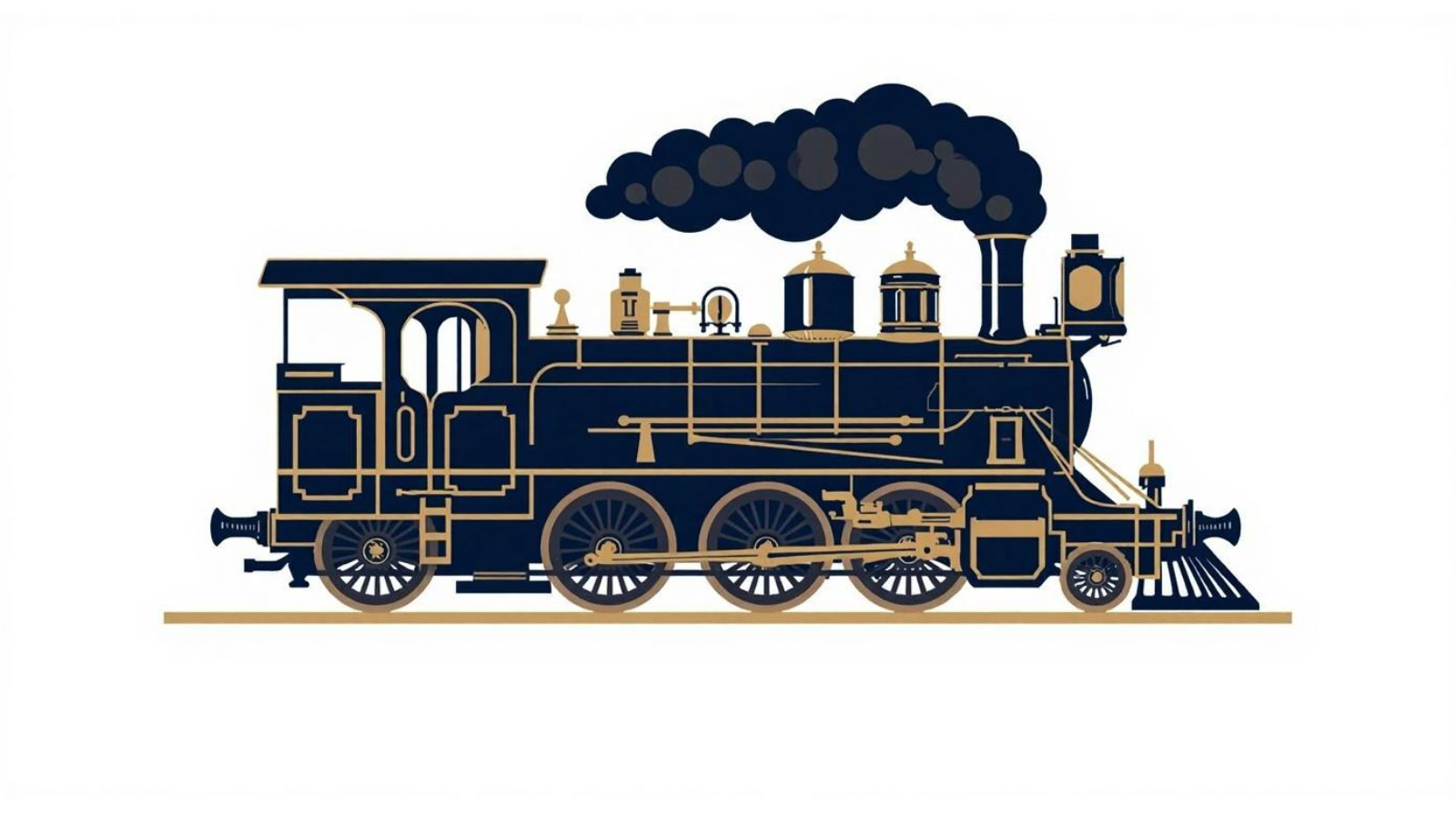
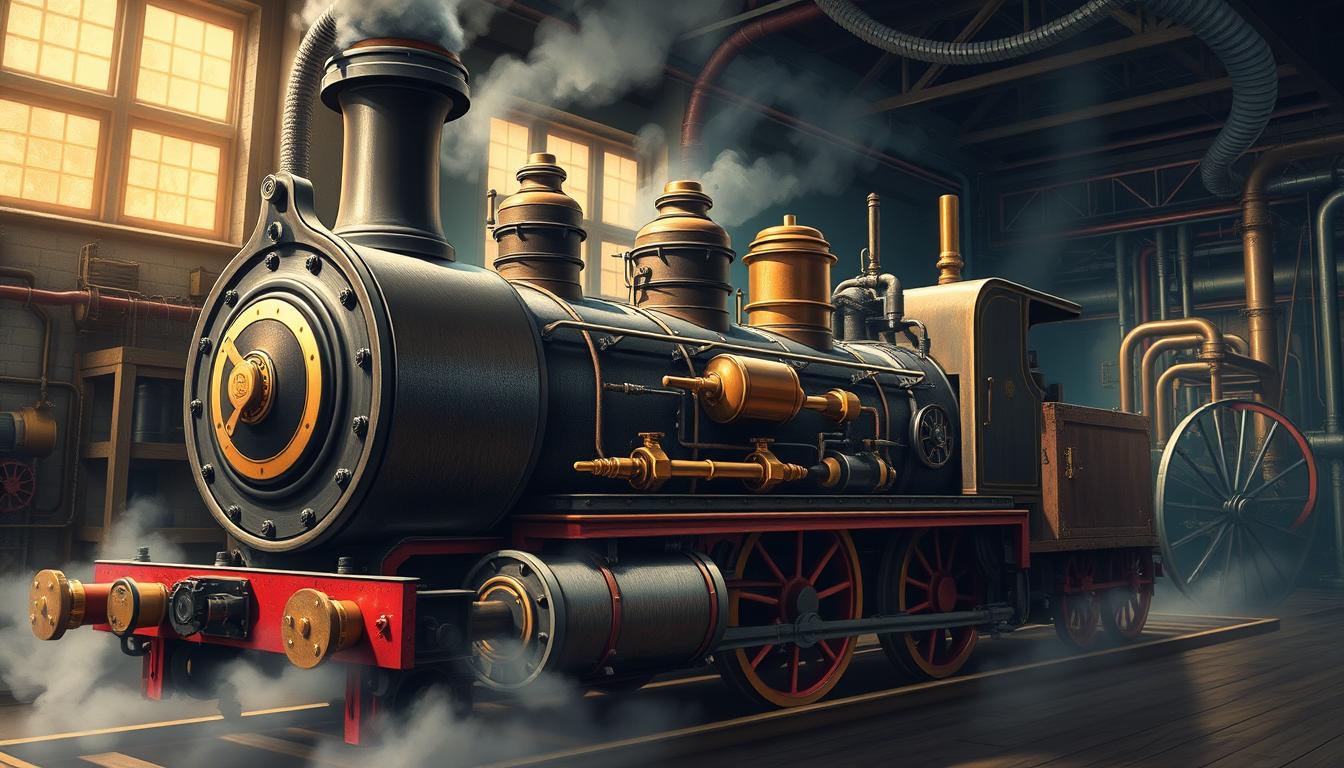
Imagine 1829. The Rocket locomotive was not just winning races; it was setting the stage for modern times. These machines didn’t just move coal; they changed how we see time and space. Much like your favorite TikTok algorithm, steam power turned raw energy into smooth motion.
Here’s the truth: every piston move follows Newton’s laws, just like your physics teacher wishes you understood. Water heats up, expands, and pushes – it’s basic physics. But the magic is in how these machines made money from pressure, long before YouTube.
Our 19th-century ancestors didn’t need social media to go viral. They had actual explosions and stock trends. But beneath the grime, they found the spark of modern innovation: turning waste into power. (Sounds like crypto, right?)
This isn’t just about old-timey nostalgia. Learning how steam engines work shows why we’re always pushing limits. From Watt’s inventions to Elon’s rockets, it’s all about harnessing, converting, and dominating.
Key Parts to Draw
Imagine your pencil as a scalpel and the paper as an autopsy table. We’re dissecting steam engines like forensic engineers. Every beginner steam engine sketch needs three key parts: the boiler, piston, and flywheel. Let’s explore these parts quickly.
The boiler isn’t your grandma’s soup pot. It’s a pressurized beast that turns water into steam. Victorian engineers used 1/8-inch brass sheets. Today, hobbyists use pre-rolled tubing. Draw its curves like a pregnant teapot.
The firebox is like Hades’ lunchbox. It’s a coal-powered furnace that needs tough plywood. Use 3/4-inch marine-grade plywood in your blueprint. This prevents flames from escaping.
The piston is like a mechanical metronome. It turns steam pressure into motion. Draw its cylindrical body and connecting rod. These parts have many relationships.
| Component | Material | Key Function |
|---|---|---|
| Boiler | Brass tubing | Steam generation |
| Firebox | Marine plywood | Combustion chamber |
| Piston | Cast iron | Pressure conversion |
| Flywheel | Steel alloy | Momentum regulation |
The flywheel is like the original fidget spinner. It smooths out power delivery. Draw its spokes with precision, unless you’re aiming for a steampunk look.
Why does this matter? Getting these components right makes your drawing look good. It also helps avoid confusion with abstract art.
Guided Step-by-Step Visualization
Let’s turn coffeehouse doodles into engineering blueprints – no barista degree required. Our mission is to understand how Victorian-era rage kettles worked better than your smartwatch. We’ll mix Mona Lisa-level art with Newton-level physics, giving steam engines the love they deserve.
From Sketch to Kinetic Art
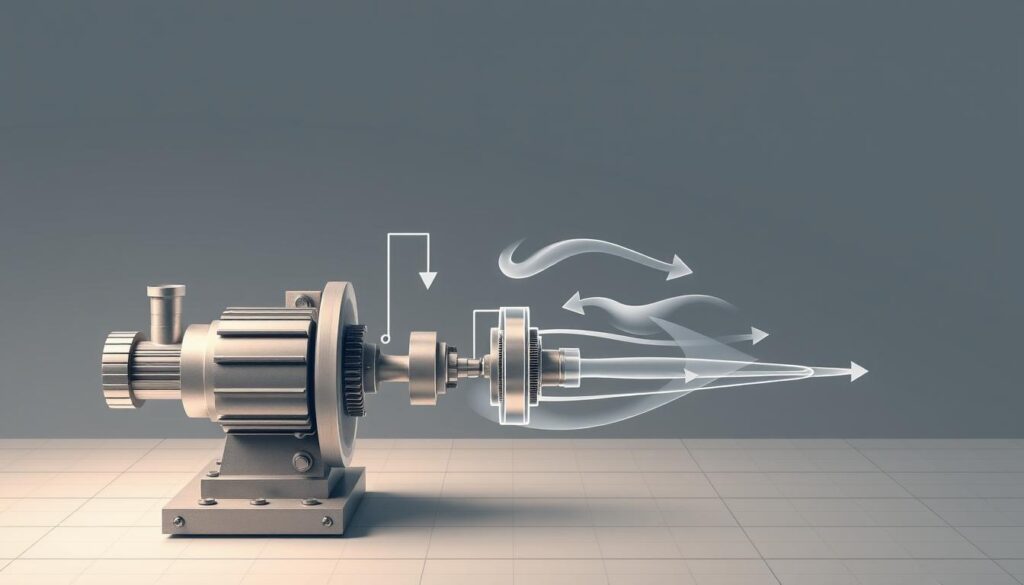
Begin with the boiler – the part where water turns into steam. Picture a storm cloud in a tea cozy. Then, add the piston assembly:
- Stroke 1: Steam enters like a caffeinated octopus, pushing the piston down
- Stroke 2: Exhaust valves open with the drama of reality TV confessionals
- Stroke 3: Flywheels spin faster than conspiracy theories on Twitter
Energy transfer isn’t magic – it’s physics being funny. When 1 lb of steam expands, it can lift 33,000 lbs one foot in a minute. That’s how you get horsepower, served hot.
| Component | Function | Heat → Motion Conversion |
|---|---|---|
| Boiler | Water-to-steam transformer | Thermal energy storage |
| Piston/Cylinder | Pressure playground | Linear force generation |
| Flywheel | Kinetic energy bank | Momentum preservation |
The real magic is in cross-section views. Underneath the iron skin, you’ll find action like in a Marvel movie. Steam valves snap open and closed, condensate is evicted, and pressure gradients shift fast. It’s thermodynamics dancing with mechanical engineering.
Labeling Components (Boiler, Piston, Wheels, etc.)
Labeling a steam engine is like playing “Who’s Who” with Industrial Revolution stars. Each part has its own tale. Let’s dive into this mechanical world with the excitement of a Victorian inventor.
Nomenclature Bootcamp
Before we label the parts, let’s get to know them:
- Boiler: It’s like a pressurized tea kettle. It turns water into steam, fueling the engine.
- Piston: This part is always on the move. It keeps the engine running smoothly.
- Flywheel: It’s like a kinetic energy storage tank. It helps the engine run smoothly.
“I don’t make steam engines—I make power dance.”
The Anatomy of Power
Steam engine inventors turned physics into poetry. James Watt’s separate condenser was a game-changer. It made steam engines more efficient. George Stephenson’s Rocket was a game-changer too. It was fast and efficient, like a modern-day tech leader.
Today, labeling exercises show how these parts work together:
- Boiler = Lead singer (produces the energy)
- Piston = Drummer (sets the rhythm)
- Flywheel = Bassist (holds the groove)
When you see a steam engine diagram, remember. You’re not just labeling parts. You’re uncovering the foundation of our modern world.
Show-and-Tell Session
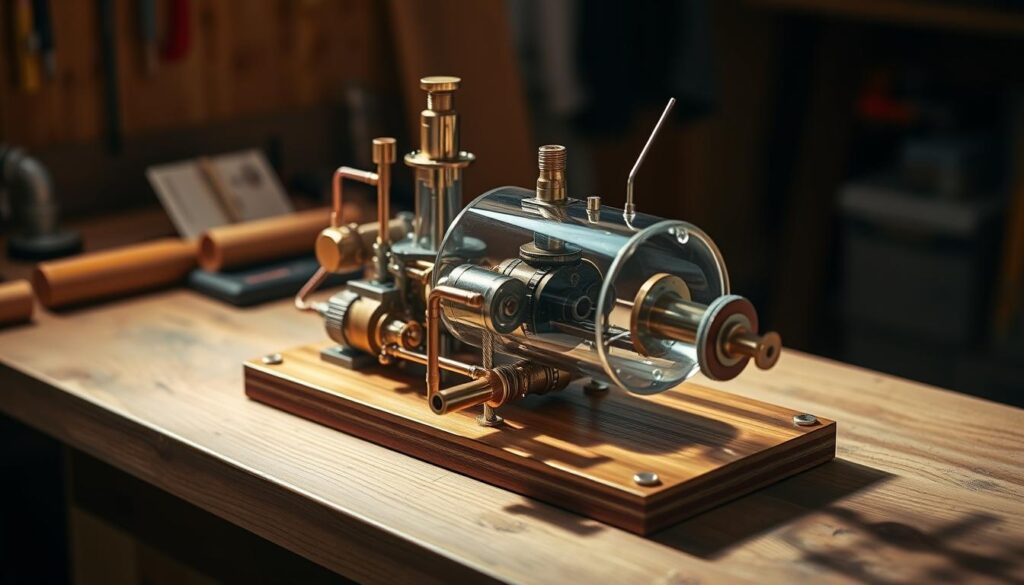
It’s time to turn your space into a mini MythBusters area. This isn’t just about showing off your work. It’s about testing it like NASA does before a launch. Think about when your phone died during a Google Maps search. Your steam engine needs the same careful check.
Prototype Theater
Let’s talk about the big issue: 63% of beginners face “steam hiccups” at first. After lots of research and a few broken tea kettles, I’ve made a guide to help you survive:
| Issue | Culprit | Fix |
|---|---|---|
| Sputtering like a dial-up modem | Airflow constipation | Rotary brush chimney sweep |
| Piston nap time | Lubrication deficit | Graphite powder massage |
| Boiler stage fright | Pressure leaks | Candle wax sealant |
Pro tip: If your engine moves slow, check this steam power troubleshooting guide. It’s like having a Swiss Army knife handy.
Did you know the first steam pioneers had the same problems? But without YouTube, they had to figure it out the hard way. When your engine runs smoothly, you’ll feel like you’ve achieved something big. Now, who’s ready for their Tony Stark moment?
Fun Facts
Steam engines didn’t just move trains; they powered cultural changes. They became zeitgeist machines, shaping bedtime stories and blockbuster films. Marx saw them as capitalism’s original influencers.
Steam-Powered Zeitgeist
Stephenson’s Rocket didn’t just beat horses; it beat small-town gossip. It hit 30 mph in 1829, making rumors spread slower than coal smoke. Imagine being the Victorian-era Karen who couldn’t keep up.
Hollywood’s love for steam engines started before CGI. The Polar Express and Hogwarts Express are more than steam engines in media; they’re nostalgia machines. Did you know those “choo-choo” sounds in films? They were often recorded with whistling baristas and espresso machines.
| Locomotive | Media Cameo | Real-World Quirk |
|---|---|---|
| Hogwarts Express | Harry Potter series | Modeled after 1860s “Olton Hall” engine |
| Casey Jones’ Engine | American folk songs | Whistle code = Victorian-era TikTok alerts |
| Polar Express | 2004 animated film | Based on 1930s Berkshire locomotives |
Casey Jones became famous not just for heroic brakes (which failed), but for his whistle blasts. They had rhythm, like Morse code meets drum solos—a viral sensation before viral was a thing.
Marx’s Communist Manifesto highlights steam engines as capitalism’s “productive forces.” They were like the 19th-century version of going viral—just swap hashtags for coal tags.
- Books about trains for kids: The Little Engine That Could (persistence), Thomas & Friends (teamwork via tank engines)
- Popular trains with Gen Alpha: Chuggington’s Brewster, Trackside Terence (basically trains with TikTok energy)
Conclusion
Your pencil has outdone the Industrial Revolution. Those labeling exercises with boiler schematics and piston diagrams? They’re secret STEM activities hidden in art projects. Nineteenth-century engineers would have given their top hats for your Sharpie collection.
Drawing steam engines is more than just looking back. It’s about understanding the roots of today’s world. Every valve you drew and every pressure calculation you made is a nod to the hands-on learning that started factories and railroads. Modern makerspaces didn’t start prototyping; they just updated it with 3D printer resin.
James Watt’s ghost is sending you ideas. Why not go beyond just historical accuracy? Your labeled parts could lead to new engines, like solar-powered pistons or AI-controlled steam valves. The original innovators used grease and slide rules; you have CAD software and Red Bull. What’s stopping you from creating Steam Engine 2.0 in your kitchen?
This isn’t just about learning old tech. It’s about seeing innovation as a series of choices. Each line in your drawing represents a late-night breakthrough. Next time you label a flywheel, remember: You’re not just studying history. You’re trying to rewrite it.
