
Planning a trip that’s more than just a ride and a meal is exciting. If you dream of the perfect adventure that’s both fun and educational, you’re in the right place. Planning an educational experience for students can seem daunting, but we’re here to guide you.
Picture your students, full of wonder, as they explore science and technology. The opportunities are vast, from NASA sites to local science centers. These places spark curiosity and help students think critically. It’s not just about where you go; it’s about the journey and what they learn.
Let’s start with some practical tips. Check out this piece on enhancing your educational outings. It’s full of ideas to make your planning better.
So, grab your notepad and let’s start this adventure. Your students are about to find out that learning can be as exciting as a roller coaster—without the queasiness!
Pre-Trip Planning Essentials: Setting Educational Objectives and Safety Protocols
Planning a STEAM field trip without clear goals is like sailing without a compass. You might end up somewhere, but it’s unlikely to be where you intended. Without clear educational goals, a STEAM field trip risks being just another day out of the classroom, complete with a gift shop at the end. To avoid this fate, ask yourself: What do we want students to know, feel, and do after this experience?
Setting objectives is not just a formality; it’s the intellectual compass that guides your planning. The first step is to outline what success looks like. This could range from understanding the mechanics of a power plant to appreciating the intersection of art and technology. Each logistical choice, from the destination to the activities planned, should stem from these defined objectives.
Safety protocols are the unglamorous backbone of your trip—the seatbelt on this educational rollercoaster. A well-structured behavior contract, like the one used by the Space Club, is essential. This contract sets clear expectations, such as maintaining 80% attendance for trip eligibility. It transforms the trip from an entitlement into a privilege, subtly teaching students that real-world opportunities are earned.
Before you even book a bus, consider piloting your objectives with a small group. Gather feedback as if you were a startup testing a minimum viable product. This step ensures that your objectives resonate with both students and educators, paving the way for a more enriching experience.
Here’s a quick look at some essential components for planning your STEAM field trip:
| Component | Description | Importance |
|---|---|---|
| Educational Objectives | Define what students should learn. | Guides planning and activities. |
| Behavior Contract | Sets expectations for student conduct. | Promotes responsibility and respect. |
| Safety Protocols | Outlines safety measures and emergency procedures. | Ensures student safety during the trip. |
| Feedback Mechanism | Gather input from students and teachers. | Refines objectives and improves future trips. |
In conclusion, a field trip without a pedagogical soul is merely tourism, and we’re not running a travel agency. By establishing clear educational objectives and safety protocols, you set the stage for a successful STEAM field trip that truly engages students and enhances their learning experience.
Top Field Trip Destinations: Steam Museums, Power Plants, and Engineering Facilities
Choosing a field trip location is like casting a lead actor. Get it right, and the trip is a hit. The top choices are science museums, power plants, and engineering facilities. Each offers a unique experience of wonder.
A steam museum is more than old machines. It’s a journey through time where science comes alive.
The Scobee Education Center and Planetarium is a standout. Students become NASA Mission Control Specialists and Astronauts. They learn by doing, not just watching.
The Challenger Centers were started after the 1986 Challenger accident. They offer space-themed learning. Students feel the excitement of mission control.
Local spots like the Doseum’s Spy Academy are also great. Math becomes a secret mission. The Danish Udeskole concept shows how changing the classroom can be educational magic.
Avoid generic science centers. Look for places that challenge your views. Where history meets high-tech engineering. Where touching a Mars rock makes geology exciting.
| Destination Type | Highlights | Educational Focus |
|---|---|---|
| Steam Museums | Interactive exhibits, historical artifacts | Thermodynamics, engineering history |
| Power Plants | Guided tours, energy production insights | Renewable energy, physics of power |
| Engineering Facilities | Hands-on activities, design challenges | Engineering principles, problem-solving |
For more ideas on innovative educational experiences, check out this resource.
Permission Slip Templates: Legal Requirements and Parent Communication Strategies
The permission slip is a document that can cause both worry and confusion. It’s a legal protection, a way to communicate, and sometimes, a source of stress for parents and teachers. To make a permission slip that parents will actually read, you need to be clear, friendly, and include enough legal stuff to make the district happy.
Begin by explaining the “why” before the “what”. Tell parents that this trip is more than just a day off. It’s a special educational STEM outing where their child will do cool things like learn about turbine efficiency or talk about AI ethics. This helps parents see the trip’s value beyond just fun.
Then, add the details with the care of a lawyer. Include things like:
- Departure times
- Lunch plans
- Emergency contact info
- The important “I hereby release the school from liability” clause
These details are key to easing parents’ worries. Digital slips are great, but they don’t fix the problem of parents not paying attention. My trick? Send a short, funny video with the form. Think of it as a trailer for the trip.
Also, team up with other classes to split bus costs. This is smart and shows you’re careful with money. By working together, you can save money and make the trip better for everyone.
The permission slip is your chance to tell a story. Make it so good that parents want to sign it because they don’t want to miss out. For templates and examples, check out this resource for free printable permission slips.
Transportation Logistics: Charter Buses, Safety Checklists, and Route Planning
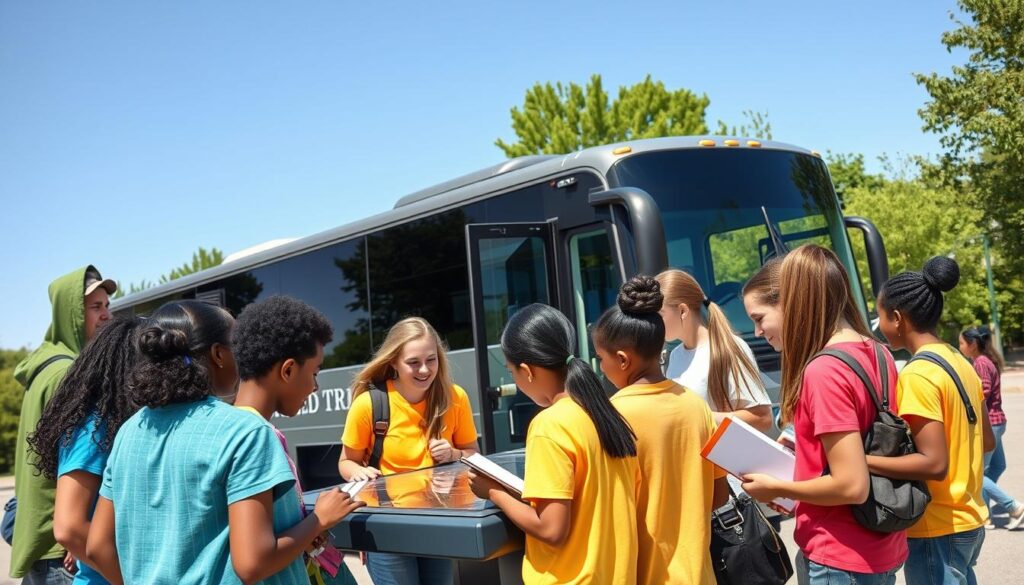
Transportation is like a trusty sidekick for school group STEAM activities. It’s always there, but often overlooked. Without a reliable bus, your trip could turn into a chaotic search for new routes and stops.
Think of transportation as the heart of your educational trip. It’s essential but often ignored. I’ve planned many trips where buses moved through the city like a hippopotamus on roller skates. The trick is to plan your route like a heist movie, with a main route, a backup for traffic, and a plan B for unexpected detours.
Safety checklists are your best ally. They should cover student allergies, the bus driver’s mood, and emergency exit locations. It’s all about being ready. Book your bus, get parent slips, and maybe team up with other classes to save money and make the trip more fun.
Costs can add up quickly, but a well-timed rest stop can save the day. A bus full of students waiting to go is not a good learning environment. Plan your rest stops carefully to keep everyone happy. I once saved a lot of money by combining our trip with the drama club’s to the same museum. It was a unique experience for everyone.
In conclusion, getting transportation right is key for a successful trip. With good planning, attention to detail, and a bit of humor, your students will arrive ready to learn and explore.
Educational Preparation: Pre-Visit Activities and Background Knowledge Building
Imagine going on an adventure without a map. That’s what a hands-on learning excursion feels like without preparation. Students need background knowledge to fully enjoy their experience. A recent feedback from the STEAM Builders pilot program showed the importance of an introductory session before the trip.
After a disappointing visit to a hydroelectric dam, I started a “dam boot camp” before the trip. We built mini waterwheels, talked about renewable energy, and used 3D modeling software. The results were amazing; students asked questions that amazed even the engineer chaperone.
Why is pre-visit preparation so important? It turns students into detectives, not just tourists. They come with vocabulary, history, and questions, ready to explore. For example, 3D-modeling a medieval trebuchet before seeing one makes history come alive.
Here’s a quick overview of effective pre-visit activities:
| Activity Type | Description | Expected Outcome |
|---|---|---|
| Introductory Session | Discuss the cultural significance of the destination. | Familiarity with key concepts and vocabulary. |
| Hands-On Projects | Build models or prototypes related to the excursion. | Enhanced understanding of practical applications. |
| Debates and Discussions | Engage in conversations about relevant topics. | Critical thinking and analytical skills development. |
| Technology Integration | Use software tools to visualize concepts. | Increased engagement and excitement for learning. |
In conclusion, preparing students before a trip makes it unforgettable. This approach ensures that the learning lasts, making every hands-on learning excursion memorable and educational.
Budget Management: Fundraising Ideas and Cost-Effective Trip Planning
Budgeting for STEAM field trips is like magic. It needs creativity and boldness. Finding money can turn dreams into real trips.
Start by looking for grants. Science centers and museums often give money to schools, like Title I ones. These funds go fast, so apply early. For example, the Scobee Education Center gave us over $2,000, and NASA offered cheap tickets for off-peak visits.
Don’t forget about the students. One student worked for three months to buy a souvenir. This shows we must make sure all kids feel included. So, add a souvenir budget to your plans.
Fundraising can be creative, like your students’ projects. Try a “Pi Day” pie-throwing contest or a “STEAM night” for parents. These events raise money and involve the community.
Plan trips smartly to save money. Look for free days or membership deals. A good trip isn’t about being fancy; it’s about making learning accessible to all.
For more ideas on STEAM communities and funding, check out this guide. It’s full of tips for great STEAM field trips.
Group Management: Supervision Ratios, Student Responsibilities, and Behavior Expectations
Managing groups on student engineering trips is like conducting a symphony. It’s not just about numbers; it’s about the atmosphere. The right number of adults is key—too many, it feels like jail; too few, it’s chaos. Good group management turns the trip into a fun, hands-on experience.
Students sign a behavior contract on the first day. It’s their guide for the trip. This contract sets clear rules, like attending 80% of the time to go on field trips. It’s smart because it uses the fear of missing out to keep students involved. This way, they feel part of a community and take responsibility.
But, too much freedom can lead to trouble. I once had a chaperone say her group spent two hours in the cafeteria. They claimed they had “finished everything.” Clearly, we didn’t give them enough to do. Now, each team has a mission with challenges to complete.
Chaperones are now more like guides, helping students learn instead of telling them what to do. I suggest giving each team roles like navigator, documentarian, and timekeeper. This makes the trip a team effort, making everyone more engaged and responsible.
When students push the limits, the behavior contract reminds them of their choice to join. It’s not a threat; it’s a way to show they’re committed. By setting clear rules and letting them explore, we help them grow.
| Role | Responsibilities | Expected Outcomes |
|---|---|---|
| Navigator | Guide the team through the venue | Enhanced teamwork and communication |
| Documentarian | Record observations and findings | Improved critical thinking and reflection |
| Timekeeper | Ensure the team stays on schedule | Effective time management skills |
Educational Activities: Worksheets, Scavenger Hunts, and Interactive Learning Tools
Forget the old-fashioned worksheets; let’s revolutionize educational STEM outings! These experiences need more than just fill-in-the-blank questions. It’s time to add gamification to make them exciting.
Enter Goosechase, the app that lets you create digital scavenger hunts. Students can recreate famous engineering failures, interview docents, or solve gear ratios from photos. This turns a simple walk into a fun adventure.
The best part is what happens after. You can save all the photos and videos, making a fun learning highlight reel. Even without an app, a good scavenger hunt on paper can be amazing. Just make sure the questions are challenging and thought-provoking.
Interactive tools like augmented reality apps or circuit-building kits add a hands-on element. The goal is to make the museum a playground for the mind. Every exhibit should be a clue that leads to more questions.
Post-Trip Follow-Up: Reflection Activities, Thank You Notes, and Knowledge Reinforcement
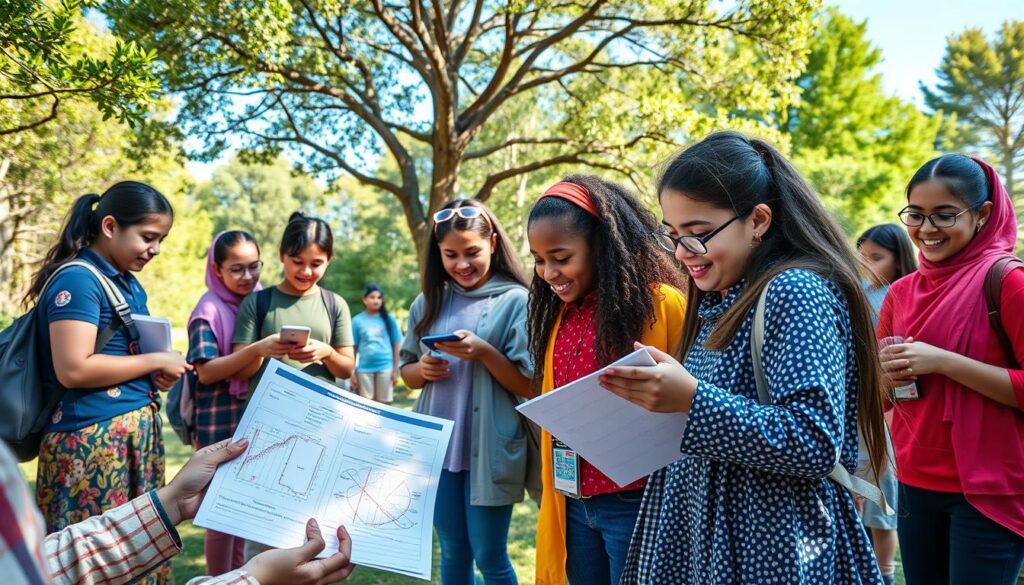
The adventure may have ended, but the learning doesn’t have to stop. After the bus parks, it’s time for school group STEAM activities to reinforce what students learned. This follow-up is key to solidifying knowledge and making sure lessons last beyond the trip.
Begin with reflection activities that make students think deeply. Instead of asking what they learned, ask them to write a one-paragraph “engineering post-mortem” on an exhibit. They can also sketch a redesign of a flawed machine they saw. This encourages critical thinking and creativity, making their experiences valuable learning opportunities.
Then, let’s use media to our advantage! Share all those Goosechase photos and videos and make a highlights reel together. Let students narrate, edit, and curate their own trip video. This project reinforces their memories, promotes teamwork, and enhances communication skills.
Gratitude is also powerful. Thank you notes may seem old-fashioned, but they’re a great way to assess learning. Have students write to the engineers or museum educators they met, sharing what they found most impactful. For example, one student thanked a Boeing engineer for showing them that math is more than just for tests. Such reflections show appreciation and deepen understanding of STEAM fields.
Lastly, connect the trip’s knowledge to the curriculum. Use data from the trip for lab analysis or have students present their findings to another class. The trip should be part of an ongoing learning journey, not a standalone event. By integrating these experiences into their studies, learning continues long after the trip.
In conclusion, the post-trip follow-up is where the real magic happens. It’s when students turn their experiences into lasting knowledge. If learning stops when the bus parks, then the trip was just an expensive field trip.
Assessment Strategies: Measuring Learning Outcomes and Trip Effectiveness
How do we capture the magic of hands-on learning excursions without dull quizzes? Traditional tests often miss the skills these trips teach: curiosity, teamwork, and asking smart questions. Instead, I suggest a portfolio approach.
Students can gather their pre-visit research, Goosechase mission evidence, reflection essays, and thank-you notes into a digital “field trip dossier.” This method allows for a deeper assessment. Did they move from thinking “turbines are cool” to understanding how blade angles affect efficiency? That’s real learning.
Feedback from the STEAM Builders pilot program was insightful. Students felt empowered while exploring on their own. Educators wanted to add technology, like 3D modeling, to history lessons. Adding a self-assessment part can improve this process. Ask students to check their growth in certain skills.
Don’t ignore the soft data: attendance, behavioral incidents, and parent emails about their child’s new interest in gear ratios. These show the trip’s real impact. The best assessment might be a student choosing an engineering elective months later, inspired by that day. That’s not just data; it’s a life-changing experience.
