
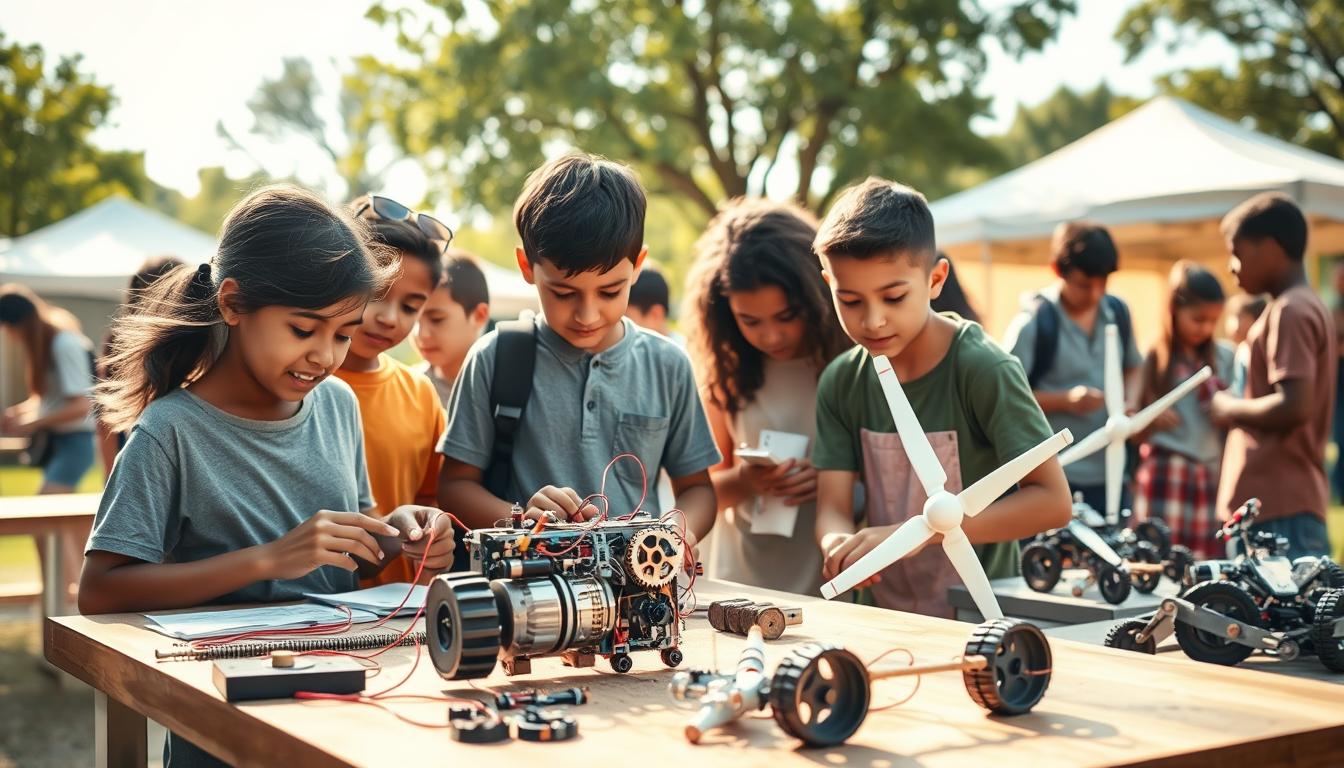
Summer is more than a school break. It’s a chance for young minds to dive into innovation. Imagine a place where curiosity meets skill, where kids build and create. Welcome to the world of mechanical engineering camp activities, where the next innovators are shaped.
At camps like Purdue’s INSPIRE, students from grades 1 to 9 get hands-on with tools like laser cutters and microelectronics. Dr. Morgan Hynes guides them, tackling real challenges. These tasks are the start of understanding complex systems.
This first week teaches vital skills like tool literacy. It’s pretty cool to see a nine-year-old explain torque over lunch.
As we start this journey, we’ll see how camps enhance learning. The goal is to create a curriculum that challenges and inspires. Get ready for a summer of exploration and discovery, each day bringing you closer to becoming an innovator. Want to learn more about energy concepts? Check out this resource on building a classroom mini steam turbine.
Week 2: Simple Machines and Mechanical Advantage Experiments
Welcome to Week 2, where we explore simple machines and mechanical advantage. We turn play into deep physics lessons. Simple machines like levers and pulleys are key in engineering.
Picture a fourth-grader lifting a counselor with a block-and-tackle. It’s fun and teaches mechanical engineering. These machines, old as Archimedes, are both relevant and exciting.
Students will learn about levers, inclined planes, and more. Each activity is a hands-on investigation. They’ll see how mechanical advantage works in real life.
Failure is celebrated here. It sparks curiosity and discussion. “That’s not supposed to happen” is a valuable lesson. By the end, students will see the importance of these machines in our lives.
Let’s get ready for a week of exploration and discovery. Simple machines lead to deep conversations about physics.
Week 3: Steam Power Fundamentals and Safety Training
Welcome to Week 3, where we explore steam power and safety. In this exciting week of summer STEM camps, we introduce young engineers to steam power. We balance fun experiments with vital safety training.
Imagine the thrill of seeing pistons hiss and turbines spin. It’s not just fun; it’s a deep dive into the Industrial Revolution. Students will discover phase change and energy transfer through hands-on experiments.
Safety is a big part of our approach. We teach safety in every experiment. Checking pressure valves is as routine as checking a phone. This makes safety a key part of learning.
Why do top summer STEM camps focus on safety? It’s because engineering needs real-world lessons. Learning about steam’s power teaches students to innovate safely.
This week, students learn more than just mechanics. They develop a sense of responsibility. It’s about valuing safety as much as creativity and innovation.
Week 4: Advanced Projects and Individual Design Challenges
Welcome to Week 4, where campers get to design their own engineering solutions. This week is a big change. They’re not just students anymore; they’re budding engineers ready to take on hands-on engineering projects.
This week, campers face open-ended challenges that make them think deeply. They have to come up with solutions using limited resources. This can lead to both success and failures. But isn’t that what engineering is all about? Every failure teaches them something new, showing that failure is a step towards innovation.
As they work on these individual design challenges, the atmosphere changes. Campers are not just competing; they’re working together, learning from each other. The excitement of presenting their work to peers adds to the thrill. It’s like performing on stage, but with an audience of fellow engineers.
This transition sparks something in their minds. When they start designing on their own, they begin to think like engineers. This week is not just about building; it’s about coming up with ideas, trying them out, and dealing with the challenges of engineering.
To make sure these challenges are both tough and doable, a supportive environment is key. Encouragement and helpful feedback will help them on their creative journey. The best projects often come from those who faced the most challenges earlier on.
Daily Schedule Template: Balancing Learning, Building, and Fun Activities
Creating a daily plan for young engineers is all about balance. At Purdue’s INSPIRE camp, the day starts at 8:30 AM and ends at 3:00 PM. It’s more than just a list of things to do; it’s a way to keep minds sharp and hands active.
The morning begins with introductions to new concepts. These sessions get students excited and ready for the hands-on projects ahead. They turn theory into real skills.
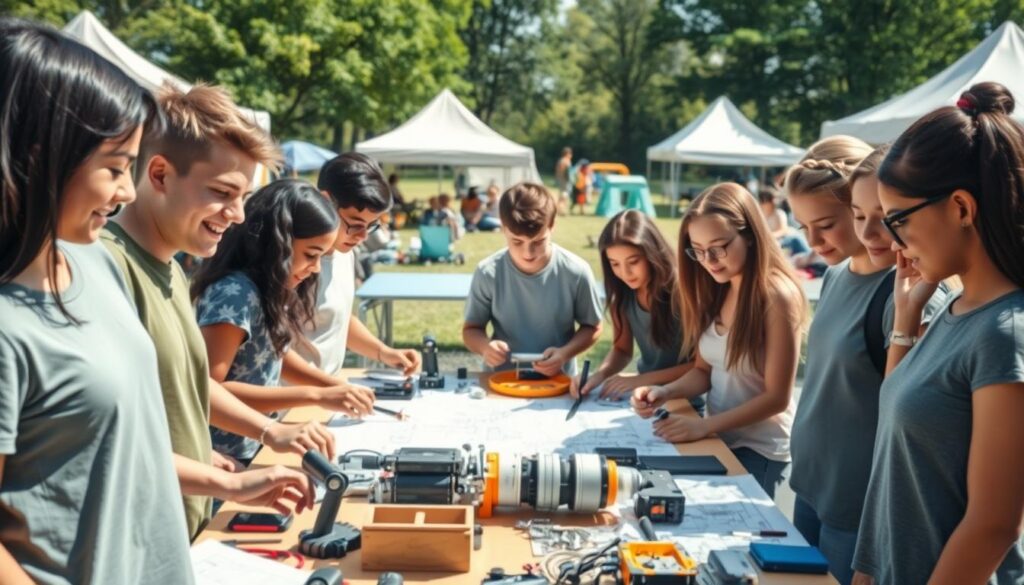
After lunch, which includes pizza, subs, and chicken nuggets, things get even more fun. Bonus activities like engineering lab tours and campus walks happen. These help students see what university life is like.
Teamwork is a big part of the day. Students learn to work together, innovate, and support each other. This mix of learning, building, and fun helps young engineers grow.
Also, students can store their lunches in the fridge. This shows respect for everyone’s food choices. It makes sure everyone feels welcome without focusing on what they eat.
In short, Purdue’s INSPIRE camp shows how to mix learning with fun. It’s not just about what students learn. It’s about how they learn it, making every moment count in their future as innovators.
Material Lists: Tools, Supplies, and Equipment Needed for Each Week
Starting a project at camp means having the right materials. Every engineering camp activity needs a detailed list of tools and supplies. From basic tools in Week 1 to advanced equipment in Week 4, each week is different.
Here’s a breakdown of what you’ll need:
- Week 1: Basic Hand Tools
- Hammers
- Screwdrivers
- Wrenches
- Measuring tapes
- Week 2: Simple Machines
- Pulleys
- Levers
- Inclined planes
- Week 3: Steam Power Fundamentals
- Steam engines
- Boilers
- Safety equipment
- Week 4: Advanced Projects
- Laser cutters
- Microelectronics equipment
- Computer programming tools
Having the right tools is key, but knowing how to use them is even more important. Campers will learn to create and solve problems each week. They’ll use lots of fasteners and sometimes not enough heat-shrink tubing!
Investing in quality tools like laser cutters is a smart choice. These tools offer hands-on learning that sparks creativity.
When making your lists, think about cost and durability. Also, have extra supplies on hand. Running out of a key part can stop engineering camp activities in their tracks.
For more ideas on affordable science experiments, check out affordable STEAM science experiments you can do at.
Skill Progression: Building Complexity Throughout the Camp Experience
In the world of mechanical engineering for kids, growing skills is an art. The Purdue INSPIRE camp, led by Dr. Morgan Hynes, is more than just fun activities. It’s a carefully planned journey that helps kids learn and grow.
Each week of the camp adds to the last, making a clear learning path. Here’s how it works:
- Week 1: Learning to use tools is the first step. Campers start with basic tools, getting ready for more.
- Week 2: Mechanical advantage is explored. With a solid base, campers dive into how simple machines work.
- Week 3: Steam systems are the focus. Understanding mechanical advantage helps grasp steam power basics.
- Week 4: The final week is all about independent design. Campers use what they’ve learned to create their own projects.
This growth is not just about learning tools; it’s about the mind too. By the end, a camper who didn’t know a Phillips-head screwdriver on Monday is talking about gear ratios by Friday. This change is planned, not just hoped for.
Each challenge is just right, not too easy or too hard. This is called the zone of proximal development. It means the task is challenging but doable. This way, campers not only learn but also grow to love mechanical engineering for kids.
Assessment Methods: Portfolio Development and Project Presentations
In summer STEM camps, assessment is a celebration of growth and creativity. Portfolios and project presentations are more than just formalities. They are a way to show off what students have learned. Imagine students sharing their engineering projects, from sketches to prototypes.
These camps focus on the journey, not just the end result. Unlike traditional tests, they value the process. This makes learning feel real and fun.
Portfolios show a camper’s growth in a real way. They include all the ups and downs of engineering. Teachers get to see how each student learns differently.
Project presentations take it a step further. Students share their work with others. This turns them into the authors of their own stories. It helps them feel proud of their achievements and challenges.
Here’s a quick look at how these assessment methods stand out:
| Assessment Method | Purpose | Benefits |
|---|---|---|
| Portfolios | Document learning journey | Tangible evidence of growth |
| Project Presentations | Showcase individual projects | Encourages public speaking and confidence |
| Feedback Sessions | Provide constructive commentary | Enhances understanding and improvement |
These methods celebrate learning, not just test it. They help students face their engineering challenges head-on. As we keep improving summer STEM camps, let’s focus on showing personal growth and inspiring the future.
For more inspiration on creating impactful portfolios, check out these 10 inspiring mechanical engineer portfolio examples.
Guest Speakers: Bringing Professional Engineers to Inspire Students
Real-world engineers add a special ingredient to camps. They don’t just give lectures; they spark a love for hands-on engineering projects. Their stories make complex ideas real and exciting for students.
At UT Austin’s LESC, engineers connect with campers through art, sports, and sustainability. This way, they show how engineering can change the world. It’s not just about formulas; it’s about seeing the world anew.
The right guest speaker can open doors to new possibilities. They dive into activities, asking campers about their problems. This makes young minds feel important and part of a team.
Seeing engineers who are like them inspires students. It’s not about getting them to join a career; it’s about broadening their dreams. The goal is to help them see themselves as future leaders.
It’s important to prepare guest speakers well. Tell them about the camp’s goals and the projects students will do. This way, their input will enhance the camp, not disrupt it.
Guest speakers are more than speakers; they spark change. They turn a regular camp into a journey of discovery and creativity.
Field Trip Integration: Combining Camp Activities with Educational Excursions
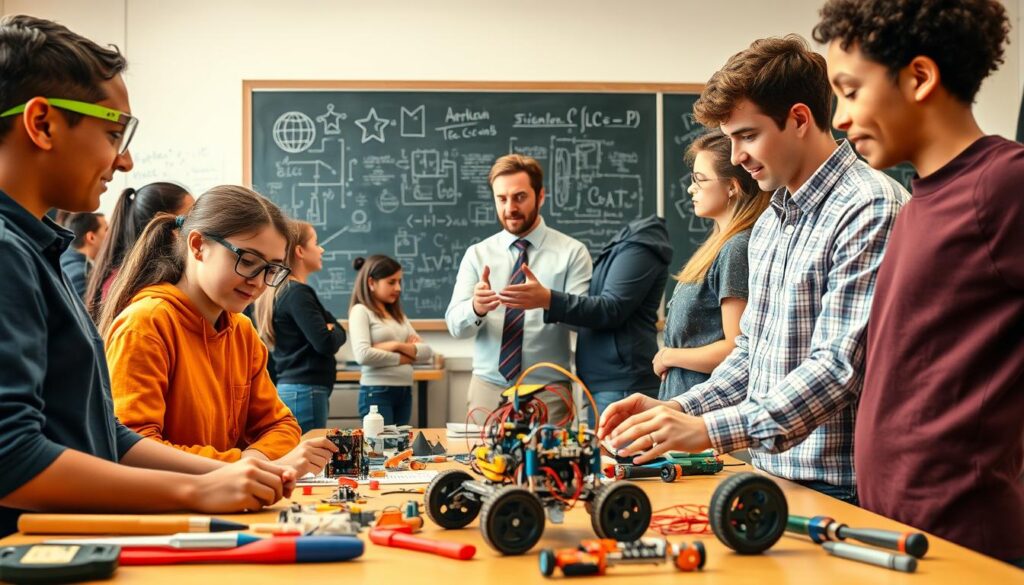
Field trips in student engineering programs turn a regular day into an adventure. These trips are more than just outings. They make abstract ideas real. Students see where their dreams can come true.
The Purdue INSPIRE camp is a great example. It mixes lab tours and campus walks into its schedule. These activities make learning fun and real. Students see their projects as more than just toys.
When is the best time for a field trip? It should be right after learning something new. This way, what they learn sticks with them.
Planning a trip for 30 students can be hard. It’s important to keep everyone engaged without disturbing others. Good planning and clear communication are key. Don’t forget to get permission slips signed on time.
The bus ride back is often the most memorable part. Students talk freely, sharing what they’ve learned. This moment can be more powerful than the trip itself.
| Field Trip Type | Purpose | Impact on Learning |
|---|---|---|
| Engineering Lab Tours | Showcase real-world applications | Enhances understanding of concepts |
| Campus Tours | Expose students to academic paths | Inspires future aspirations |
| Manufacturing Facility Visits | Demonstrate production processes | Bridges gap between theory and practice |
Adding field trips to student engineering programs makes learning better. They create lasting memories and spark curiosity. So, think about adding these trips to your camp plans. They’re not just outings; they shape young minds.
Counselor Training: Preparing Staff for Technical Content and Safety
Turning college students into skilled mentors is vital for great camps. Engineering camp activities require a lot of knowledge. A good program needs staff who know the technical stuff and keep everyone safe.
A counselor who can’t explain gear ratios is like a chef who can’t boil water. They must understand the tech and safety rules. This training should cover mechanical basics and how to spot dangers early.
It’s also important to make sure everyone feels included. Groups like UT Austin’s LESC focus on this. Counselor training should teach more than just tech skills. It should also cover how to work well with others.
Counselors need to learn when to help and when to let campers figure things out. Finding this balance helps young engineers grow strong and solve problems.
The best engineering camp activities are designed to be open to all. When counselors are ready, everyone can explore and learn together.
Parent Communication: Progress Updates and Home Extension Activities
Keeping parents informed is key. They want to know their child is learning, not just surviving the day. Camps like UT Austin’s LESC prepare parents with orientations before the first project.
Updates, whether daily or weekly, help bridge the gap between camp and home. Simple emails or portfolio snapshots keep parents involved without being intrusive. The car ride home is a chance for kids to share their adventures, making parents feel more connected.
Activities at home can make the camp experience last longer. Mechanical engineering for kids can continue beyond the camp. Parents can use kitchen tables as mini-labs with simple projects and conversation starters.
Points of contact, like Purdue’s Jen Heap or UT Austin’s outreach email, offer more than just info. They provide a supportive network for parents. This network is essential for making the camp experience a lasting educational journey.
