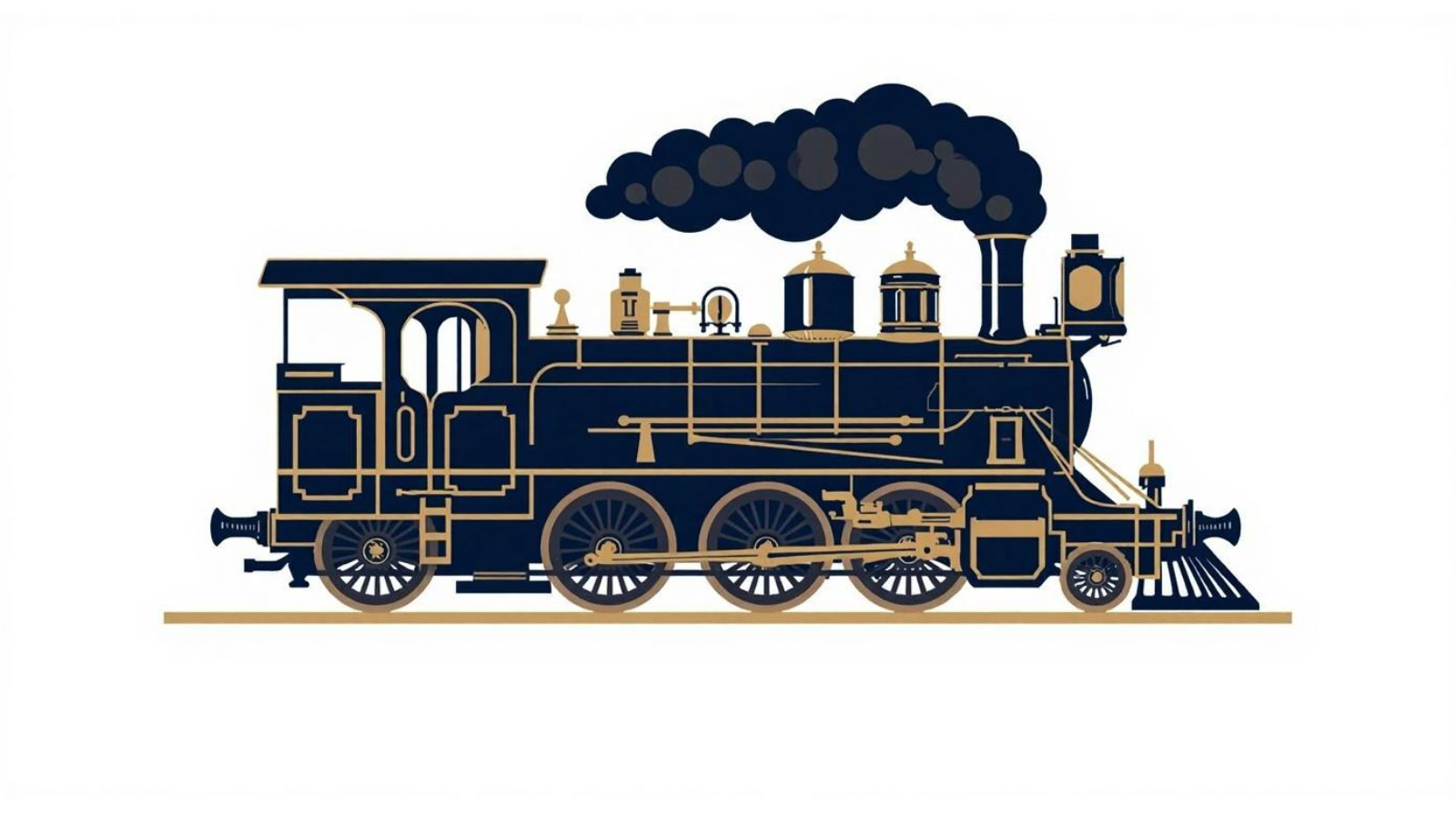
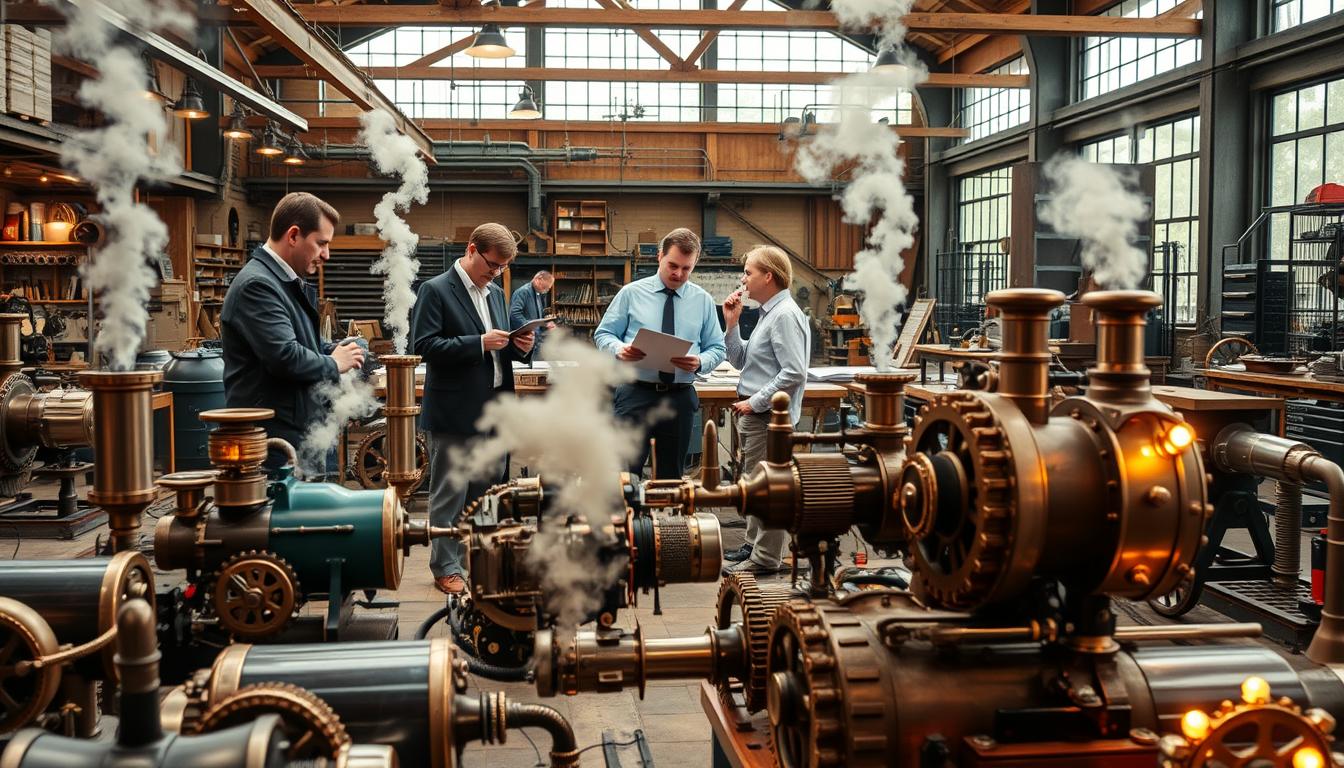
The world of steam power is captivating. It turns old items into working wonders, sparking curiosity in those who like to tinker. For example, a soda can can become a whirring engine with a few simple changes. This shows how thermodynamics works in a fun way.
I’m the Chef Too! says hands-on STEM projects spark curiosity and improve problem-solving skills. The pop-can steam engine is a great example. It teaches about pressure and motion in a fun way. Seeing students’ excitement when their can engine works is truly magical.
Using fire and water instead of batteries is thrilling and connects us to history’s inventors. The pop-can engine is more than a craft. It opens the door to understanding early industrial design’s beauty. Are you ready to explore this amazing world?
Project 2: Steam-Powered Boat: Applying Propulsion Principles
Let’s explore the world of steam-powered boats, where physics and fun meet on the water. This project is more than just building a boat. It’s about learning how things move. You’ll see Newton’s third law in action as your boat moves forward.
The steam-powered boat is a key project for students. It shows how we can use heat and water to overcome nature. Imagine heating water, making steam, and then your boat moves on the water. It’s like the SS Savannah’s historic journey, but smaller.
Your first try might not be perfect. Your boat might spin like a caffeinated duck. But that’s okay. Each failure helps you learn about how things move.
Here’s what you’ll learn from this fun project:
- Understanding Propulsion: Learn how steam can make a boat move and the science behind it.
- Iterative Learning: Enjoy the trial-and-error process that’s key in engineering.
- Real-World Applications: See how classroom ideas apply to real engineering projects.
Watching your steam-powered boat move is exciting. It’s powered by the same force that drove old industrial empires. Yes, we love steam! If you can’t find joy in a boat that runs on candle flame, what can you find joy in?
Project 3: Model Steam Train: Miniature Railroad Engineering
Let’s explore the world of model steam trains, where engineering meets art. Building a model steam train is more than a hobby. It’s a journey through history, just like George Stephenson’s in 1829. Each part teaches you about physics and creativity.
Model trains are not just toys; they celebrate DIY steam engines and thermodynamics. Imagine building a tiny locomotive and watching it move. It’s mesmerizing. Who wouldn’t feel excited seeing their creation come to life?
This project is not just about putting parts together. It’s a lesson in materials science and industrial history. You’ll learn if you can make a piston move a wheel with steam. History shows yes, steam can power everything from trains to industries.
Building a model steam train is educational. It boosts creativity and innovation. It’s a mix of history and hands-on creativity that inspires future engineers.
| Component | Function | Materials |
|---|---|---|
| Boiler | Generates steam | Metal, copper |
| Piston | Converts steam pressure into motion | Aluminum, brass |
| Track | Guides the train | Plastic, metal |
| Coal Car | Holds fuel for the boiler | Wood, plastic |
Are you ready to build tracks and show your engineering skills? If you want to learn more about steam projects, check out this resource on building a classroom mini steam. It’s a fun way to learn about steam!
Project 4: Steam Whistle: Sound Production Through Steam Pressure
Engineering has few inventions as captivating as the steam whistle. It turns steam into sound waves, making physics *audible*. This shows how thermal energy can become the *screeching* sounds of industrial towns.
Creating a steam whistle is more than just mechanics. It’s an *educational engineering build* that requires precision and creativity. You’ll make a controlled leak that vibrates air at a specific frequency. The slit’s size is key, balancing between a whisper and a *deafening roar*.
Our modern world often seeks silence, yet we crave devices that can be heard far away. The first note of a steam whistle shows why factory whistles were so important. They weren’t just loud; they were *presence* itself.
If you’re ready for a project that’s both scientific and theatrical, start now. With patience and precision, you’ll make a steam whistle. It will teach you about acoustics and celebrate the *joy of engineering*.
Project 5: Steam Hammer: Demonstrating Industrial Applications
Imagine a machine that doesn’t just spin but delivers a punch. Welcome to the steam hammer. Invented by James Nasmyth in 1839, it’s like the industrial world’s fist. Your tabletop version won’t forge battleship armor, but it will show the power of steam in a fun way.
The steam hammer is a hands-on STEM activity at its most exciting. It uses pressure to lift a weight, with gravity and steam doing the work. This project is all about trial and error. Students learn that sticking with it pays off and that mistakes teach the best lessons.
When the miniature hammer drops for the first time, it’s a shock followed by excitement. They can’t wait to try again. It’s a cycle of learning that’s hard to stop.
The steam hammer teaches us about controlled violence. It shows how we can turn explosive energy into useful work. Before algorithms and microchips, we used force. And force, when used right, is really cool.
Below is a table that outlines the key features and applications of the steam hammer:
| Feature | Description | Application |
|---|---|---|
| Power Source | Steam pressure | Forging metals |
| Operation | Controlled drops | Shaping materials |
| Learning Outcome | Understanding force dynamics | Hands-on STEM activities |
In a world full of digital tech, there’s something special about a machine that works by hitting things hard. The steam hammer reminds us of the real impact of engineering. It shows the joy of hands-on STEM activities.
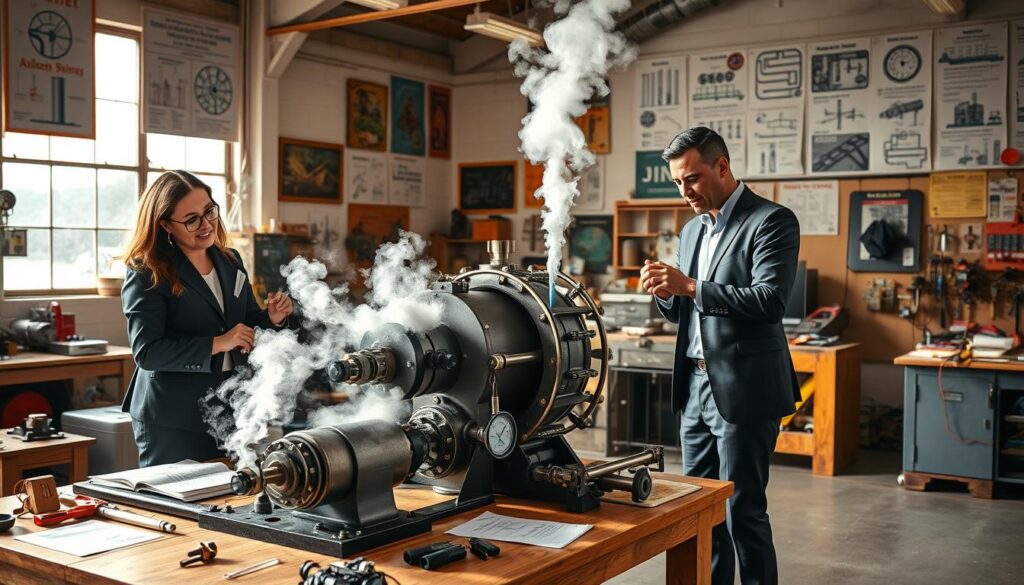
Project 6: Reciprocating Steam Engine: Understanding Piston Motion
Let’s explore the world of reciprocating steam engines. Here, pistons move in a rhythm that brings mechanical dreams to life. This engineering marvel is not just a machine; it’s the heartbeat of innovation.
Building a reciprocating steam engine is a challenge for aspiring engineers. You’ll deal with timing, valve gears, and the need for precision. I’ve seen more steam escape from poorly sealed cylinders than from a politician’s press conference!
The beauty of this project is in its simplicity and complexity. The reciprocating engine is like a mechanical haiku—simple yet infinite in refinement. Each part must work together, showing the art of engineering. When you get that flywheel spinning, you’ll feel a connection to James Watt, who made steam power practical.
In the world of student engineering projects steam, the reciprocating steam engine is unique. It teaches that perfection is a journey, not a goal. For more on steam engines and their uses, check out this resource on engineering concepts.
Project 7: Steam Turbine Generator: Converting Steam to Electricity
Imagine a tiny power plant on your desk, turning steam into electricity. The steam turbine generator is a wonder of engineering. It shows how thermal energy can become the electricity we use every day. In this project, you’ll explore the basics of beginner steam construction and how it works.
The steam turbine is like a simple composer, creating energy with just a few parts. Its design is simple, but its function is complex. As steam moves through the turbine blades, it spins fast, making electricity. It’s like making the steam’s chaos into the calm flow of electrons.
You’re basically building a small power plant. You’ll learn about blade angles, RPMs, and how actual output differs from theory. This hands-on project will show you why steam is key in making over 80% of the world’s electricity.
When you see that LED light up, you’ll get how important this project is. It’s not just about the parts; it’s a small tribute to the power grid. By the end, you’ll appreciate how we turn raw energy into the electricity of our digital lives.
Project 8: Pressure Cooker Steam Engine: Repurposing Everyday Items
Imagine turning your kitchen pressure cooker into a steam engine. It’s like a cooking show twist. This project mixes cooking and engineering in a unique way. The pressure cooker is more than just for cooking lentils; it can power a student steam project.
There’s genius in making everyday items special. The pressure cooker, made for steam, just needs a piston or turbine. This turns a simple kitchen tool into something amazing.
This project also challenges our throwaway culture. It shows students the value in old items. Instead of throwing things away, we can make them new again. This project is more creative than many 3D printers.
Safety is key. We’re working with steam, not a baking soda volcano. Learning to handle this risk is part of the lesson. When your engine starts, dinner will never be the same.
| Component | Function | Safety Precautions |
|---|---|---|
| Pressure Cooker | Steam containment | Ensure proper sealing |
| Piston | Converts steam pressure to motion | Use durable materials |
| Turbine | Generates rotational energy | Monitor steam release |
In conclusion, the pressure cooker steam engine project is more than engineering. It’s a celebration of creativity and making do. So, let’s get started and turn that pressure cooker into a steam-powered wonder!
Project 9: Solar Steam Generator: Renewable Energy Applications
Why use fossil fuels when the sun can power us? The solar steam generator is a green alternative to traditional steam power. It uses sunlight to heat water, making steam without any carbon emissions. This is a smart solution that makes us wonder why we didn’t think of it sooner.
Augustin Mouchot showed us solar steam engines in the 1860s. But, the cheap coal of the time made his work forgotten. Now, with the need for clean energy, solar steam technology is back in the spotlight.
Building a solar steam generator is a great DIY project for those into engineering and green living. You’ll learn about optics and heat transfer. Plus, you’ll face the challenges of weather, as getting steam from the sun isn’t always easy.
Imagine spending an afternoon adjusting mirrors, like Archimedes, to get a few watts from the sky. Seeing your engine run on sunlight is incredibly rewarding. It shows that the steam age can be cleaner with the right heat source.
| Feature | Traditional Steam Engine | Solar Steam Generator |
|---|---|---|
| Fuel Source | Fossil Fuels | Sunlight |
| Emissions | High | None |
| Cost of Operation | Variable | Low |
| Environmental Impact | Negative | Positive |
In a world facing climate change, the solar steam generator is a beacon of hope. It’s a project that teaches and inspires us to use renewable energy. So, get your materials ready, think like a scientist, and dive into the world of DIY steam engines!
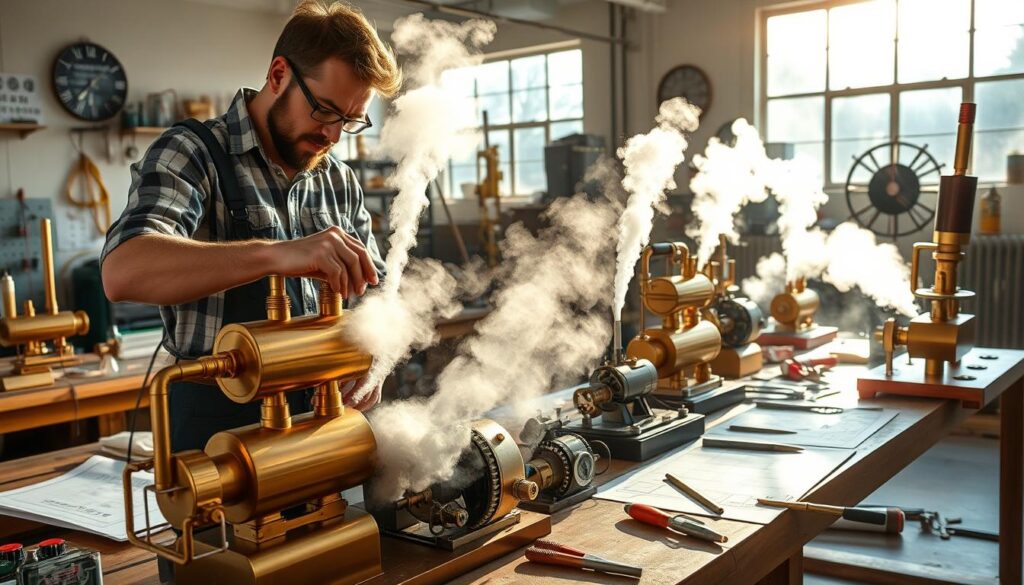
Project 10: Steam Clock Mechanism: Time-Keeping Through Steam Power
Ever thought about how steam can turn telling time into art? The steam clock is a mix of time-telling and steam power. It shows how steam can power a device to measure time.
A steam clock is like a tiny capitalist dream. It uses steam to power a clock, showing how steam can mark time. It’s like taming chaos with steam, reminding us we can control our world, even a little.
Building a steam clock is more than just putting parts together. It’s a mix of precision mechanics, thermodynamics, and patience. Watching a pendulum swing is mesmerizing, showing the beauty of steam and gears.
This project teaches us engineering is about control, not just power. Can you use steam to keep time? If yes, you’ve made a steampunk metronome. It’s a rewarding project with a beautiful result.
| Feature | Description | Benefits |
|---|---|---|
| Steam Source | Uses a boiler to make steam | Efficient energy use |
| Pendulum Mechanism | Keeps time with its swinging motion | Precision in time measurement |
| Clockwork Design | Has complex gears and levers | Visual and mechanical interest |
Safety Guidelines: Essential Precautions for All Steam Projects
Steam is a powerful force that requires careful handling. When working on steam projects, safety is a must. We’re dealing with high temperatures and intense pressure here. So, let’s focus on safety.
Never seal a boiler completely. It’s a bad idea that could lead to an explosion. Always have a safety valve to let steam out safely. We want our projects to end well, not with fire trucks.
Wearing protective gear is key. Make sure you have eye protection and gloves. Steam burns are not fun teachers. Also, keep a fire extinguisher nearby. It shows you’re ready, even if you don’t need it.
Hands-on STEM activities build confidence and resilience. But they also need respect for the forces involved. Engineering is about smart risks, not being reckless. So, be smart, be prepared, and make your steam project a success, not a trip to the ER.
Documentation Process: Recording Your Engineering Journey
When a steam engine works in a workshop, the magic is not just in the steam. It’s also in the documentation. For student engineering projects steam, keeping a detailed journal is essential. It turns simple tinkering into a deep dive into innovation.
Many might share only the best moments on Instagram. But true engineering is about learning from failures. My notebooks are full of sketches that look like art, each showing my thought process. Recording failures can teach us more than successes.
Think about how you document your work. You could use a lab notebook, a video diary, or an annotated photo album. Each method captures the engineering process, where every change helps us understand better. Engineers are like data curators, documenting their work with numbers and sketches.
So, pick up your pen or stylus and start documenting. Your future self will thank you for the insights. Whether it’s a steam engine or another project, documenting your journey is vital for growth and understanding in engineering.
